
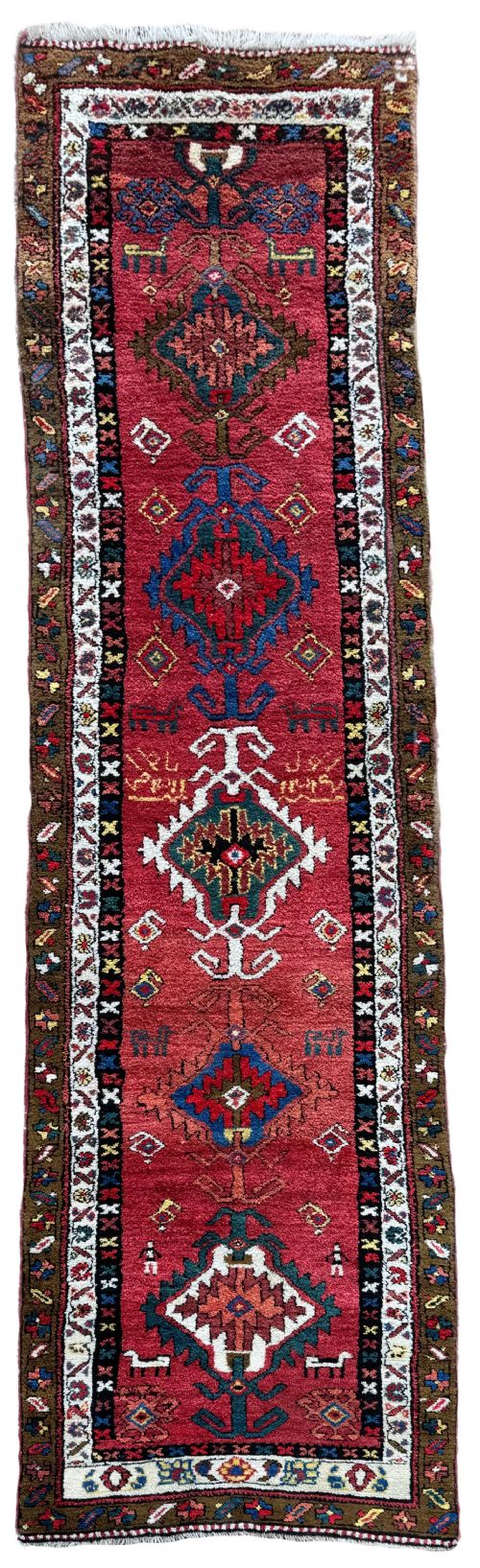
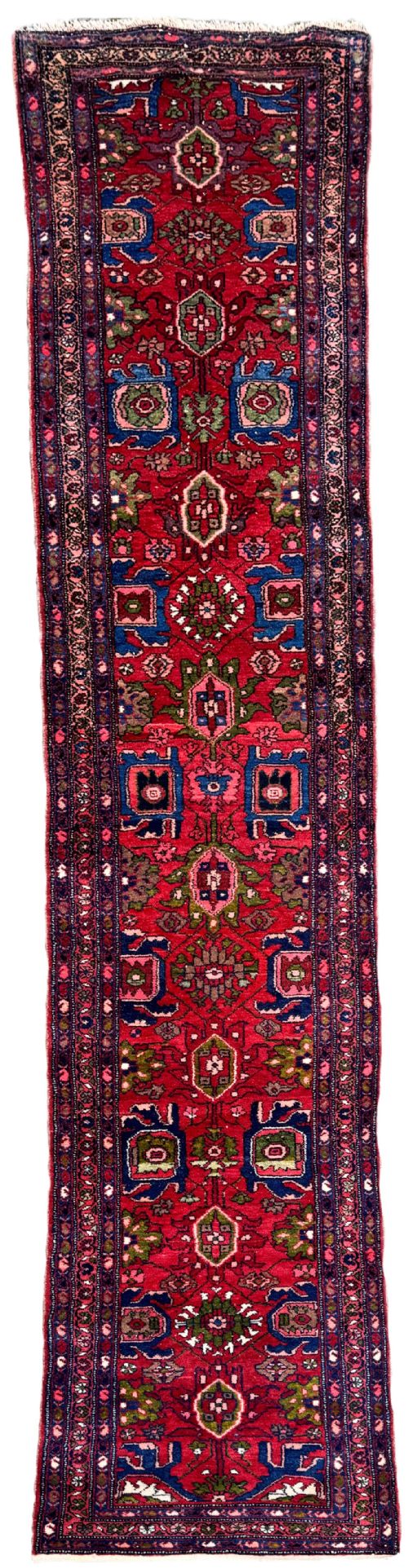
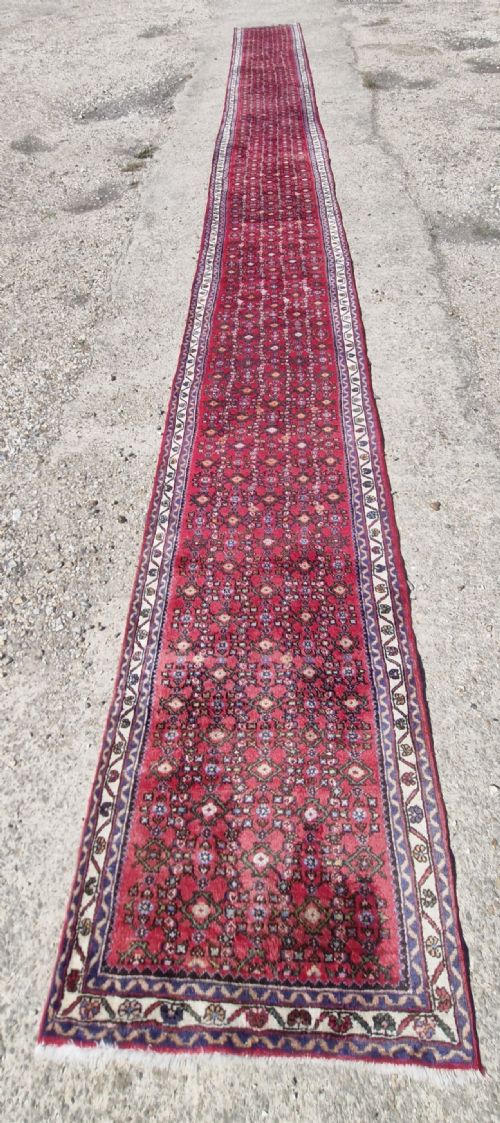


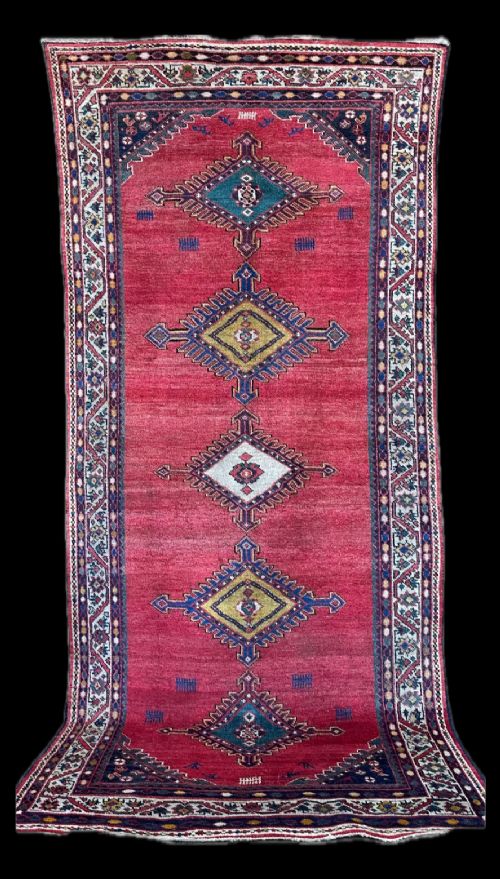


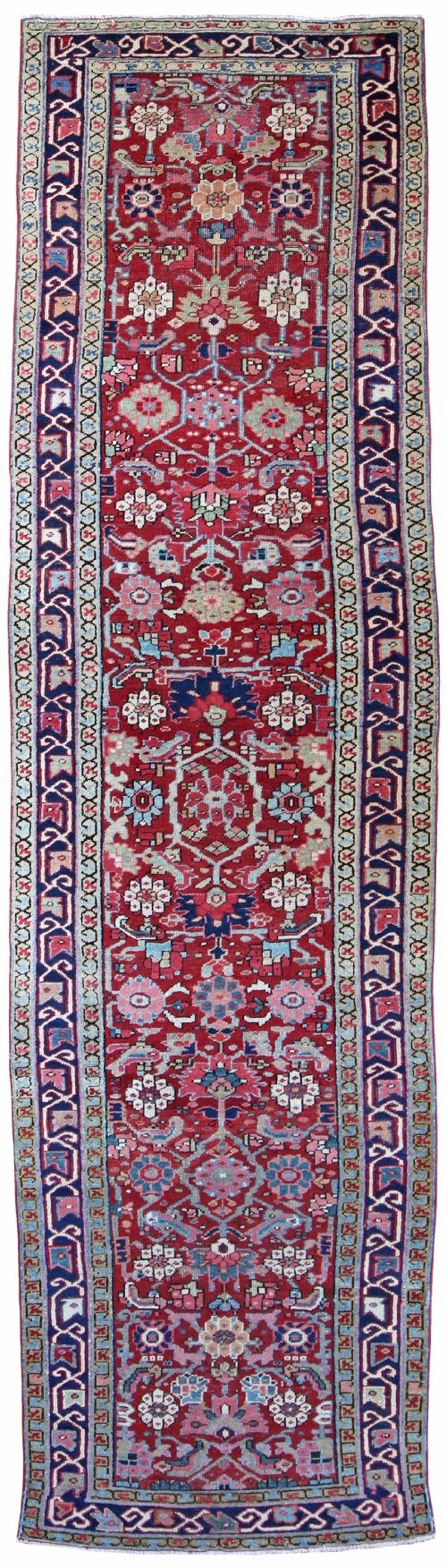
Crimson Wool Corridor Carpet
These crimson wool corridor carpet examples bring deep red warmth and long proportions to narrow spaces, offering the classic scale every interior needs for a hall.
Crimson Wool Corridor Carpet
When you search for a crimson wool corridor carpet, you are looking at long, narrow floor coverings designed specifically for hallways, corridors, and landings. These pieces span production from the late nineteenth century through the mid twentieth century, originating primarily from Persian workshops and tribal weaves.
The format you are most likely to meet here is the runner rug or long hallway runner, often featuring traditional Persian styles alongside Turkmen and Kurdish tribal designs. These rugs measure narrow proportions to fit passages while stretching to significant lengths.
Materials and construction
These carpets rely entirely on wool for the pile, providing durable surfaces suited to heavy foot traffic in corridors. Cotton foundations support the wool structure, maintaining the stability required for exceptionally long narrow proportions.
Weaving traditions encompass Heriz, Hamadan, Feraghan, and Tekke Turkoman origins. Each tradition employs distinct knotting techniques and natural dyes to achieve the deep crimson tones characteristic of these hallway runners.
Listings feature periods spanning from 1890 to 1960, utilising wool and cotton across traditional Persian and tribal styles.
Assessing quality
Quality rests upon the precision of the weave and the depth of the wool pile across the runner. Finer knots permit more intricate geometric and floral patterns to emerge clearly from the crimson background.
Proportion and integrity define the upper tier of these pieces. Exceptional examples maintain straight parallel edges and balanced designs over lengths exceeding thirty feet.
The Crimson Wool Corridor Carpet Glossary
- Runner
- A long, narrow carpet format designed for hallways, corridors, and stairs. These pieces measure significantly longer than they are wide.
- Heriz
- A style of Persian carpet known for bold geometric medallions and durable construction. Pieces from this origin often feature robust wool suited for heavy use.
- Feraghan
- A nineteenth-century Persian weaving style originating from north-west Persia. These carpets typically exhibit fine wool and refined traditional motifs.
- Tekke Turkoman
- A tribal weaving style characterised by distinctive gush elements and deep red colour palettes. These runners display precise geometric organisation.
Crimson Wool Corridor Carpet: Frequently Asked Questions
Where should I place a corridor carpet?
These long runners suit narrow spaces such as hallways, corridors, and long landings where standard rectangular rugs do not fit.
The elongated proportions guide the eye down the passage while protecting high-traffic wooden floors.
How do I measure for a hallway runner?
Measure the clear floor space of your corridor, leaving an equal border of exposed wood or stone on all sides.
Ensure you account for door clearances so the thicker wool pile does not obstruct the swing of interior doors.
What materials make up these carpets?
The pile consists of natural wool, which provides both resilience underfoot and rich absorption of traditional dyes.
Cotton typically forms the warp and weft foundation, lending structural stability to pieces that measure over thirty feet in length.
How do tribal runners differ from city pieces?
Tribal runners from sources like Kurdish or Khamseh weavers feature geometric designs born from nomadic traditions.
City carpets from Heriz or Feraghan display more formal architectural medallions and structured floral layouts.