
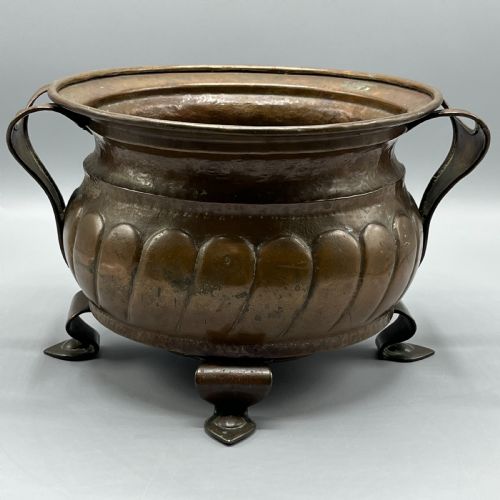


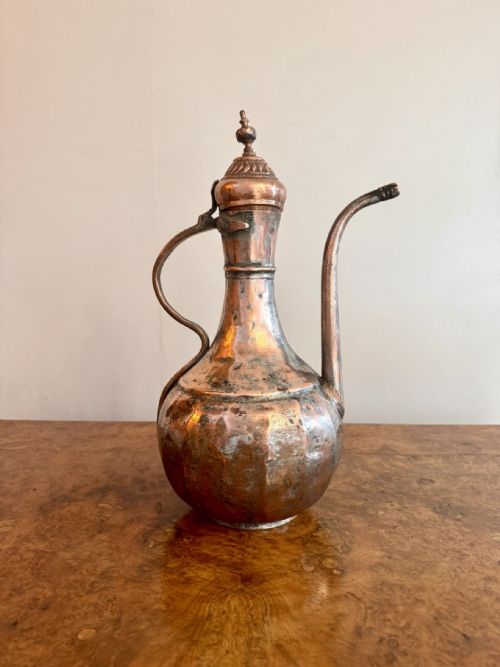


Hand Hammered Copper Pot
A hand hammered copper pot brings warmth and texture to a room, forged by makers who left the lively mark of the hammer on the metal.

Hand Hammered Copper Pot
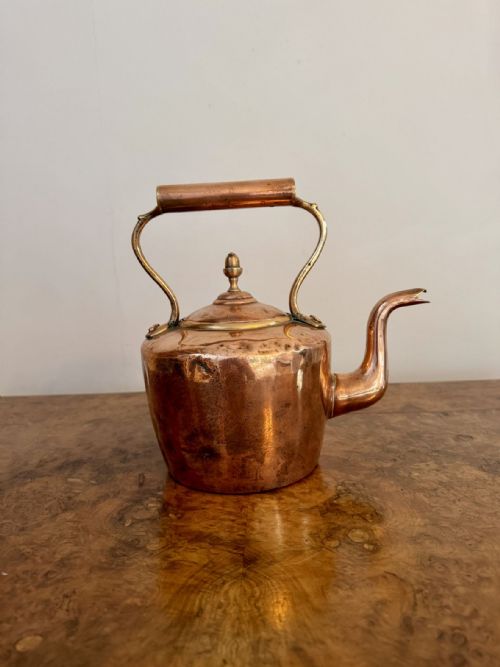
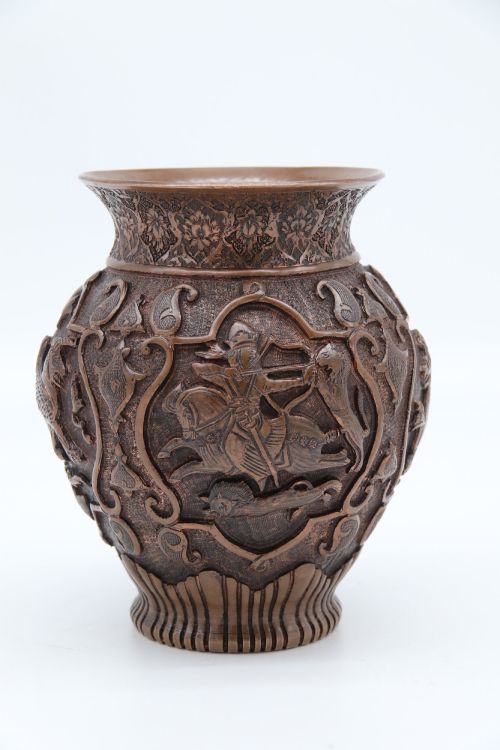
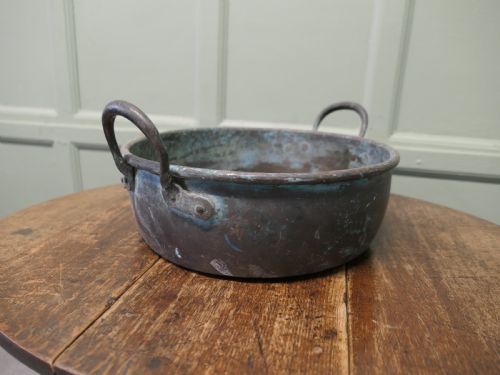
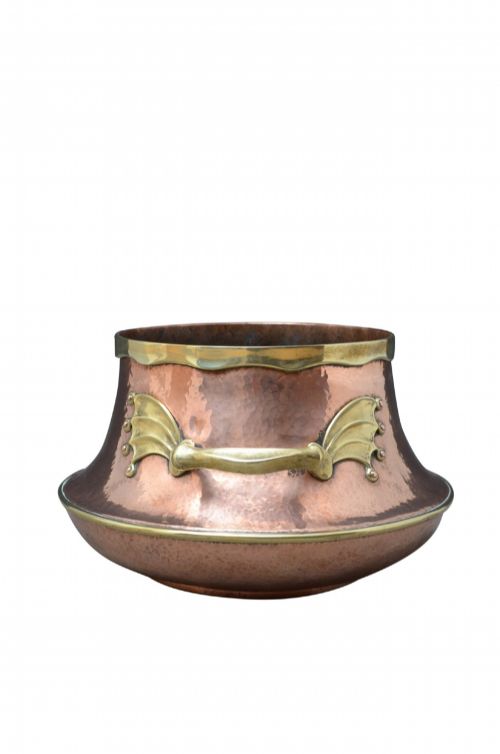
A hand hammered copper pot encompasses domestic vessels and display pieces ranging from utilitarian kitchenware to decorative jardinieres. You will frequently encounter nineteenth-century kitchen pans, kettles, and cauldrons alongside Arts and Crafts planters.
The selection draws on varied origins, spanning Georgian pieces, Victorian vessels, and items with Middle Eastern or Indian influence. These objects bridge the gap between heavy-duty culinary use and the decorative interior tastes of the later nineteenth century.
Form follows function in these vessels, whether intended for preserving fruit, boiling water, or housing indoor plants. The hammering technique gives each piece a distinct surface texture that sets it apart from later mass-produced metalware.
How they were made
The primary metal is copper, frequently combined with brass for handles, rims, or decorative mounts. Iron and wrought iron appear in structural swing handles and fixings, while tin often lines the interior of culinary vessels.
Makers shaped the metal by hand, beating sheets of copper over stakes and anvils to achieve the desired hollow form. This process leaves characteristic facets across the surface, recording the rhythmic strikes of the hammer.
Materials span pure copper, brass, iron, wrought iron, and tin linings, often combined within a single preserving pan or kitchen kettle.
What varies in quality
Weight and thickness of the metal dictate the structural integrity of the vessel, with heavier pieces showing greater substance and durability. Lighter pots tend to bend more easily under stress.
The crispness and regularity of the hand-hammered texture reveal the skill of the metalsmith. Finer examples display deliberate, evenly spaced blows rather than erratic surface marks.
The Hand Hammered Copper Pot Glossary
- Repoussé
- A metalworking technique where the design is hammered into relief from the reverse side. This method creates raised decorative motifs on vases and vessels.
- Jardiniere
- An ornamental pot or stand designed to hold a plant or flowers. These items often feature heavy copper construction and decorative handles.
- Ferrat
- A specialised French term denoting a type of metal cooking or preserving vessel. Such items were essential for heavy domestic kitchen tasks.
- Cauldron
- A large round pot with a large capacity, often fitted with a swing handle for suspension or lifting. They are typically found in heavy copper or brass.
Hand Hammered Copper Pot: Frequently Asked Questions
How do I clean an antique copper pot?
Wash the surface gently with mild soap and warm water to remove surface dirt, avoiding harsh abrasive pads that scratch the metal. Natural acids combined with salt can lift stubborn tarnish if you prefer a brighter finish.
Many collectors choose to leave a dark, aged patina intact rather than polishing the metal to a high shine. The natural oxidation often highlights the hammer marks and age of the piece.
Are these old copper pots safe for cooking?
Many older culinary vessels were lined with a thin layer of tin to prevent food from reacting directly with the copper. If the tin lining is worn away, the metal can leach into acidic ingredients during food preparation.
For practical kitchen use, inspect the interior coating closely to ensure it remains intact. Pieces with damaged or missing linings are better suited for decorative display or dry storage.
How can I tell a Georgian pot from a Victorian one?
Georgian pieces often display simpler, utilitarian construction methods associated with early domestic kitchens and open-hearth cooking. They tend to feature hand-dovetailed seams and heavy, honest shapes.
Victorian and later Arts and Crafts pieces frequently incorporate more decorative elements like embossed brass mounts or planished surfaces. Stylistic influences from the Middle East and India also emerge strongly in the later nineteenth-century items.
What is the purpose of the iron handles?
Wrought iron and cast iron components provided the structural strength needed to lift heavy pans filled with boiling water or preserving fruit. Iron resists heat transfer better than copper, keeping handles cooler during use.
These sturdy attachments also allowed heavy cauldrons and cooking vessels to hang safely over hearth fires. Over time, the iron develops a dark surface texture that contrasts with the warm tones of the copper body.