




Hand Embroidered Wall Art
Hand embroidered wall art brings together centuries of textile tradition, offering rich pattern and texture for display.
Hand Embroidered Wall Art
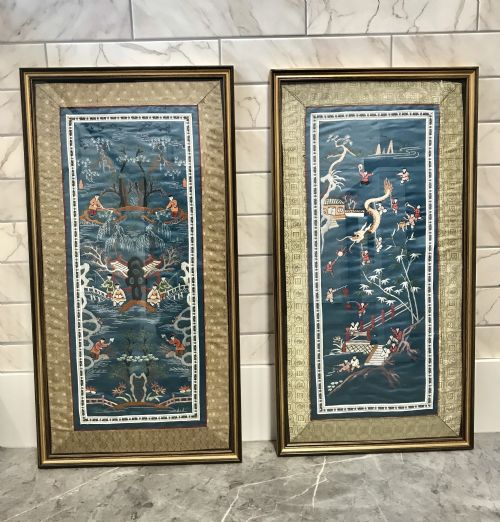
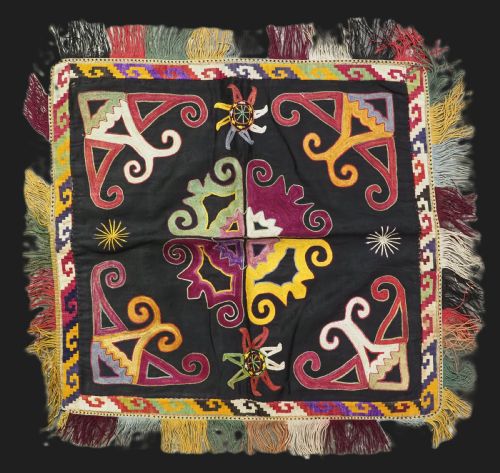
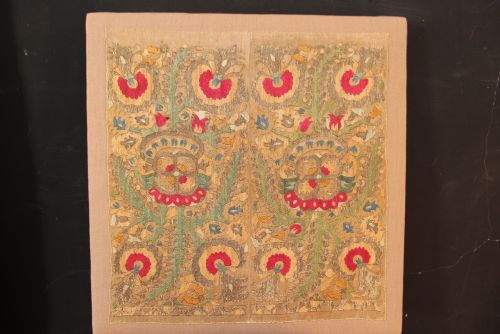
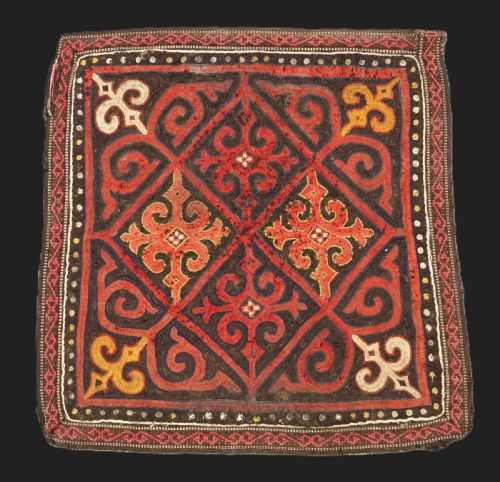
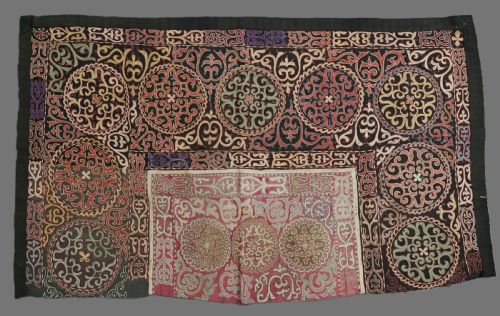
When you search for hand embroidered wall art, you encounter diverse historic textiles adapted for display, spanning English samplers and Greek island fragments to Central Asian tribal panels. These works take the form of framed needlework pictures, mounted wall hangings, and large embroidered panels designed to bring colour and texture into an interior space.
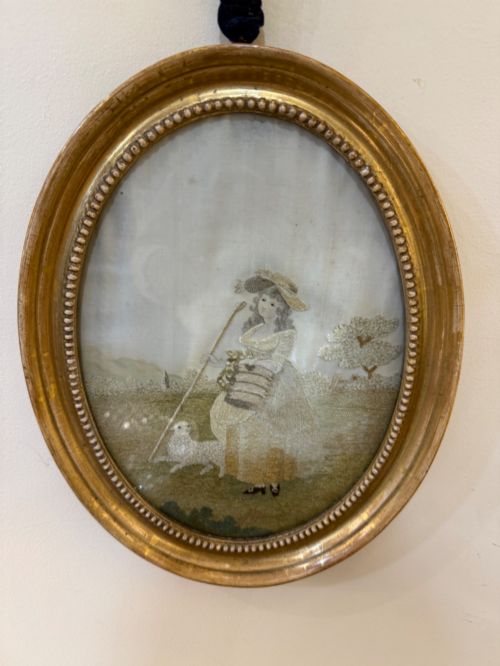
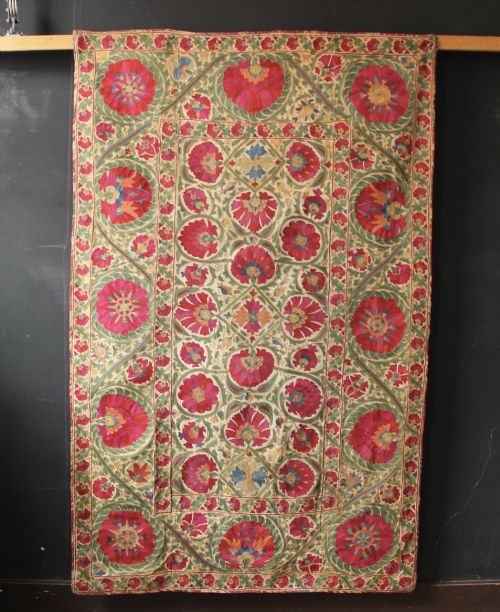
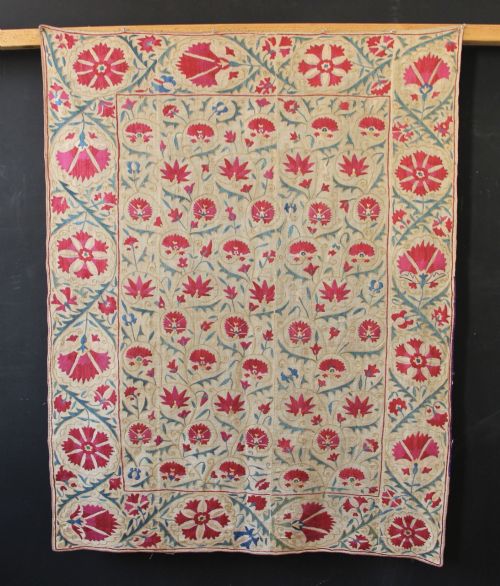
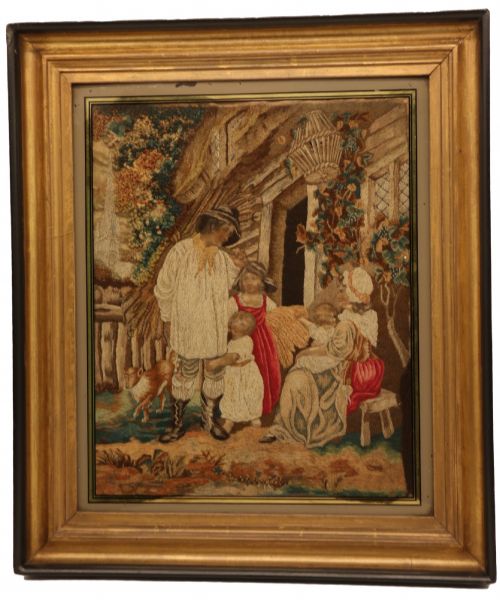
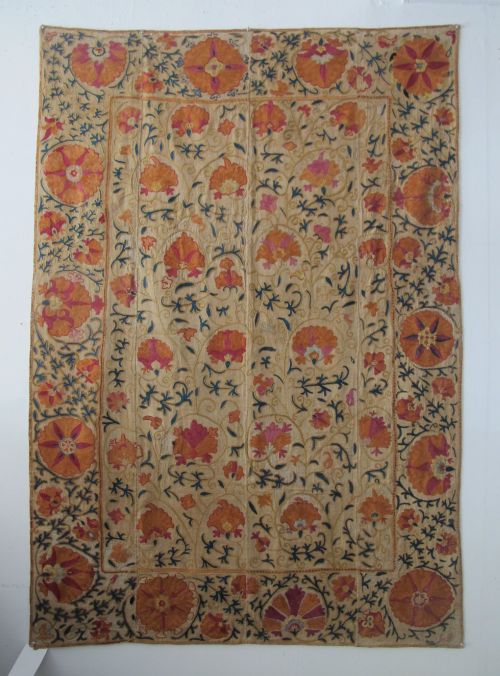
The pieces on this page are most commonly Central Asian Suzanis, English needlework pictures from the Georgian period, and Greek folk art panels. These textiles reflect regional decorative traditions, utilising techniques passed down through generations to create complex floral and geometric compositions.
Originating from domestic, ceremonial, or trade contexts, these textiles now function primarily as visual focal points in a room. Their varied scale allows them to fit diverse wall spaces, from small mounted fragments to large format Suzanis.
Materials and Techniques
Makers utilised natural textile grounds such as linen, cotton, wool, and silk, providing a stable foundation for dense stitching. Threads of dyed silk and wool supply the vibrant colour palette seen across these panels, often worked in specialised regional embroidery stitches.
Certain pieces incorporate painted elements alongside needlework, combining media to achieve depth and detail in figurative or landscape scenes. Protective framing under glass preserves delicate silk threads and paper supports on specific needlework pictures.
Current listings span from the eighteenth century to the early twentieth century, incorporating silk, cotton, linen, wool, and velvet grounds.
Assessing Quality and Execution
The standard of hand embroidered wall art is determined by the precision of the needlework and the complexity of the design execution. Full work panels, where the ground is densely covered in stitching, demonstrate a higher investment of labour than simpler outlines.
Visual impact relies heavily on the survival of original colour and the integrity of the textile ground. Pieces that retain vibrant dyed tones and show minimal degradation in the fabric represent the upper tier of surviving examples.
The Hand Embroidered Wall Art Glossary
- Suzani
- A large embroidered tribal hanging from Central Asia, traditionally made as part of a bride's dowry. These textiles usually feature bold floral motifs on cotton or linen grounds.
- Sampler
- A piece of needlework produced to demonstrate proficiency in various stitches and alphabets. These works often include names and dates, providing a record of the maker.
- Chyrpy
- A ladies ceremonial coat from Turkmenistan, heavily embroidered in silk. When displayed, these garments function as striking panels of textile art.
- Ilgich
- A specific type of dowry embroidery produced by the Lakai tribe in Central Asia. They are characterised by dynamic tribal motifs and energetic stitching.
- Ground
- The base fabric upon which embroidery is executed. Common materials include cotton, linen, velvet, and silk.
Hand Embroidered Wall Art: Frequently Asked Questions
How do I hang antique textiles?
Larger panels and Suzanis are often mounted on professional conservation grade stretchers or backed with a sleeve for a concealed wooden rod. This distributes the weight evenly and protects the historic fabric from direct tension.
Smaller fragments and needleworks are typically framed behind glass to shield the fragile silk and cotton threads from dust and atmospheric moisture.
Where should I place these pieces?
These textiles require protection from direct sunlight to prevent the fading of natural and historic dyed silk and wool threads. Interior walls away from direct heat sources provide the most stable environment for display.
Placing them in rooms with controlled humidity helps preserve organic materials like cotton, linen, and wool over the long term.
How are different regional styles identified?
Regional attribution relies on distinct combinations of motifs, stitch types, and ground fabrics. For instance, Central Asian Suzanis typically feature large sunburst and floral roundels in vibrant silk on cotton, whereas Greek island embroideries display geometric and stylized organic patterns.
English needlework pictures from the Georgian era often incorporate silk painting and focus on pastoral or figurative subjects.
What is a Tush Kyiz?
A Tush Kyiz is a large, elaborately embroidered wall hanging traditionally made by Kyrgyz women to commemorate the marriage of a son. These pieces feature dense symbolic embroidery celebrating family and local traditions.
They were customarily hung inside the central yurt to honour the newlyweds.