





Hand Embroidered Rug
When you search for a hand embroidered rug, you uncover vibrant textiles and wall hangings born from nomadic traditions and centuries-old needlework.
Hand Embroidered Rug
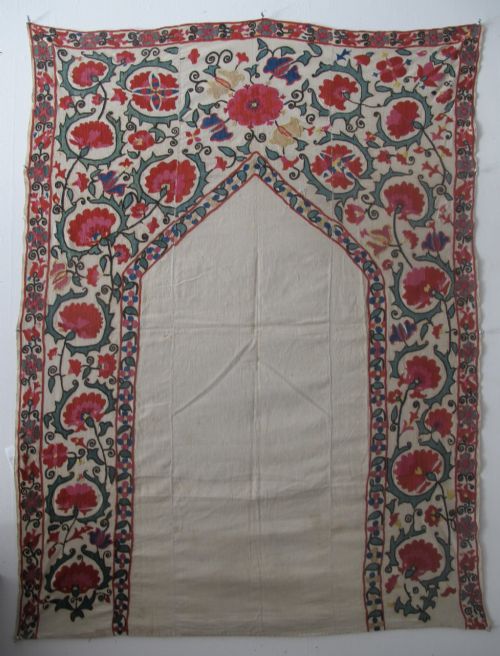
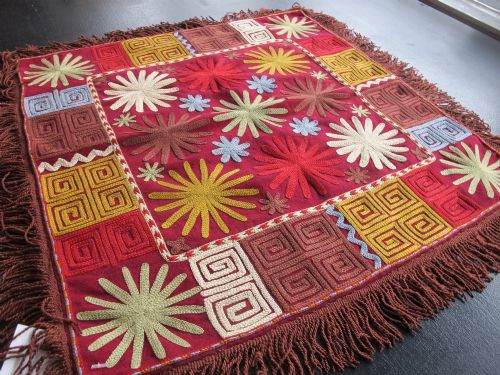
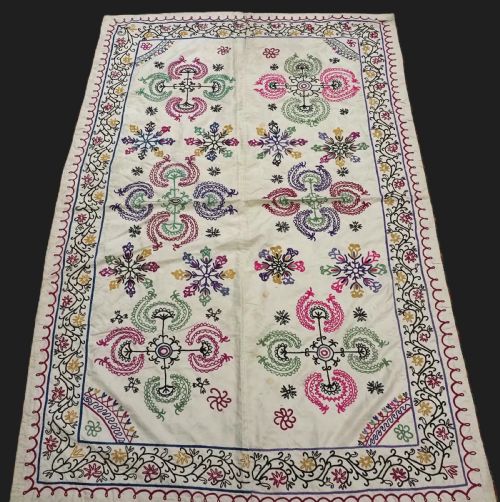
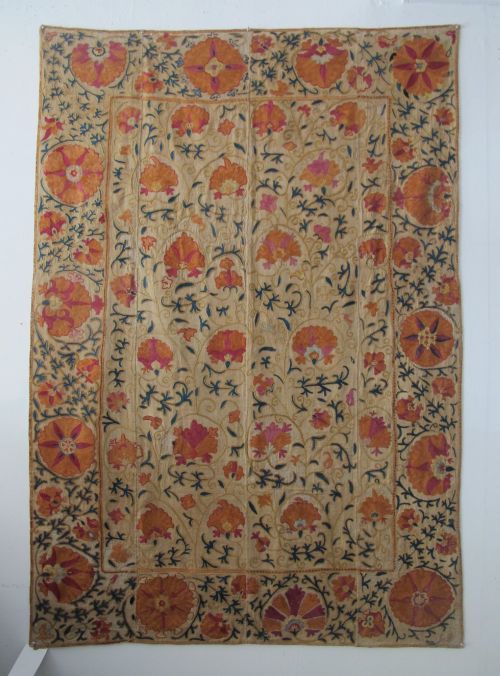
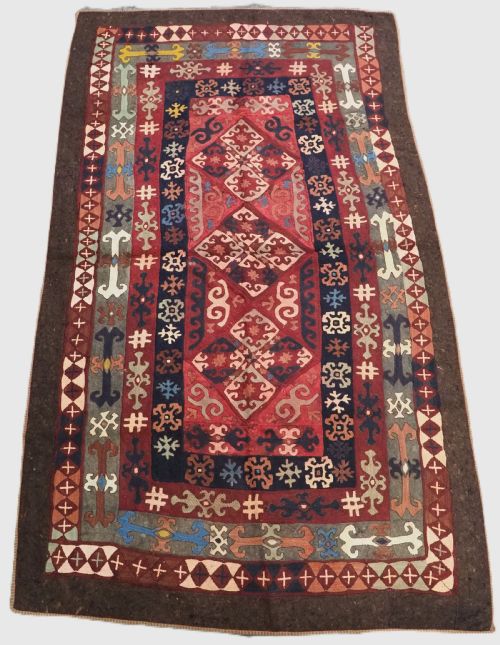
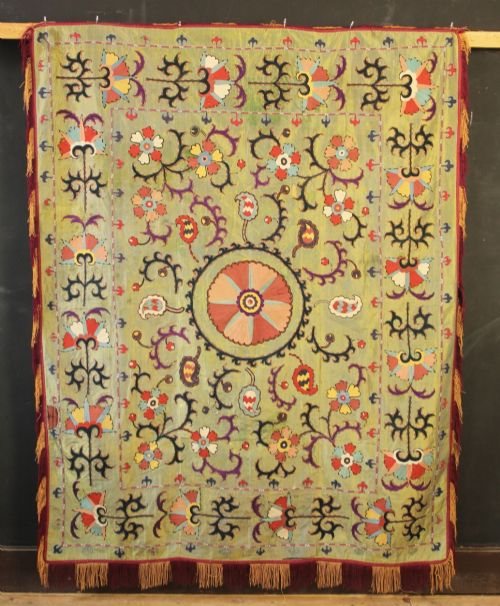
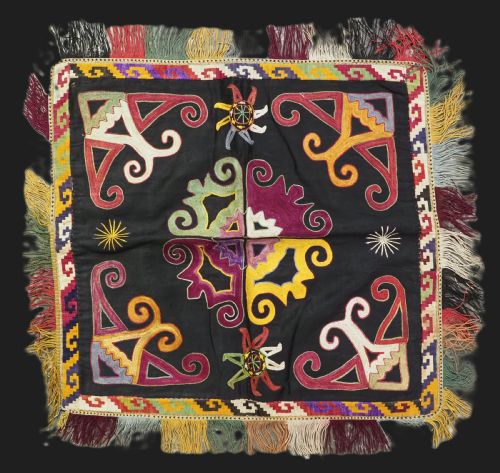
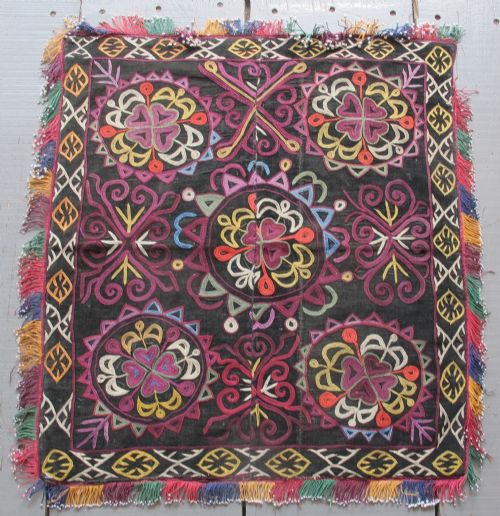
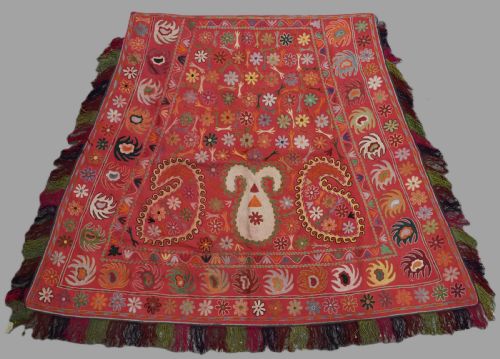
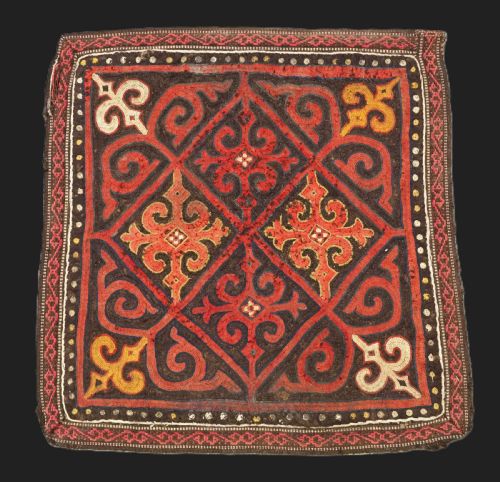
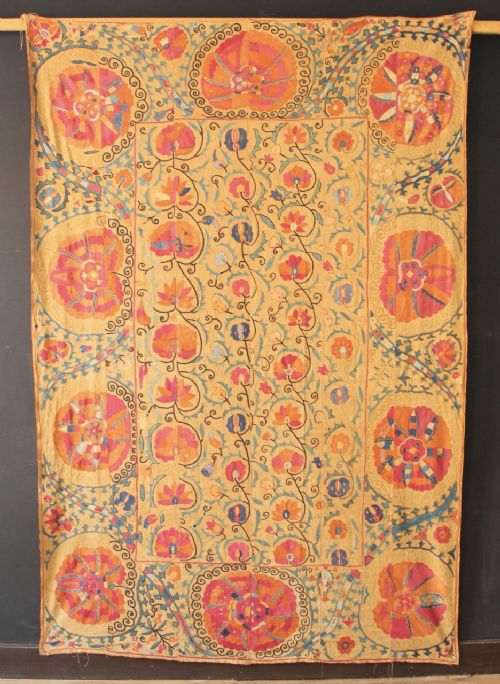
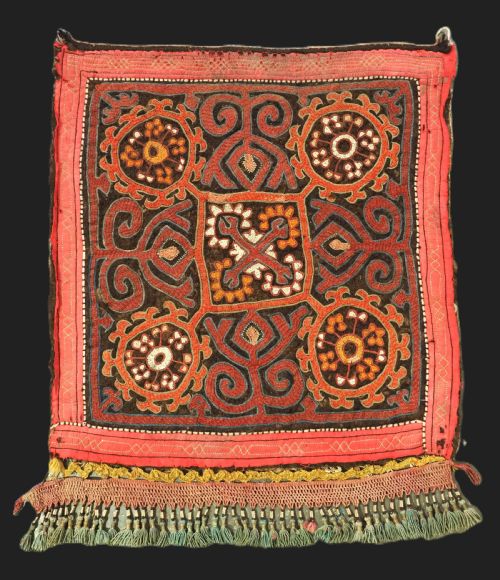
A hand embroidered rug encompasses a rich variety of Central Asian and regional textiles, including Suzanis, tribal horse covers, yurt wall hangings, and Portuguese needlepoint pieces. These textiles served domestic, ceremonial, and dowry purposes within their communities, ranging from small mirror covers and saddle rugs to large wall hangings and floor coverings.
The pieces listed here span the nineteenth and twentieth centuries, originating primarily from Uzbekistan, Kyrgyzstan, and regions associated with Lakai and Tajik traditions. Buyers encounter everything from delicate silk-on-cotton Nim Suzanis to sturdy felt panels and chain stitch carpets.
Materials and Construction
Artisans constructed these textiles using foundational grounds of cotton, wool, felt, or silk, upon which they worked intricate designs using silk thread and occasionally glass beads. Many Suzanis and tribal pieces rely on a dense silk embroidery applied to a woven cotton or adras silk-cotton base, while others utilise heavy felted wool for durability.
Stitch techniques varied by region and purpose, incorporating fine needlepoint, chain stitching, and applied fringe to create textured surfaces. The interplay between the dyed threads and the underlying fabric ground defines the tactile quality of each surviving piece.
Hand Embroidered Rug Retail Price Guide 2026
Typical asking prices for hand embroidered rug among the pieces listed under this phrase on Sellingantiques today, from the lower quarter to the upper quarter. They describe what is for sale here now, not the wider market.
Several nomadic masterpieces here began life as festive decorative covers designed specifically to dress up a local horse for important tribal ceremonies.
Assessing Quality and Execution
Quality in these textiles rests upon the density of the stitching, the fineness of the thread work, and the complexity of the design layout. Superior examples display precise needlework with minimal distortion across the ground fabric, reflecting the skill of the original embroiderer.
The stability of the foundation material and the preservation of the natural dye colours also influence the standing of a piece. Finer works maintain clear botanical or geometric motifs where the silk thread remains securely tensioned against the cotton, wool, or felt backing.
The Hand Embroidered Rug Glossary
- Suzani
- A large, embroidered tribal textile from Central Asia, traditionally made as part of a bride's dowry. These pieces often feature bold floral and architectural motifs worked in silk on a cotton or linen ground.
- Nim Suzani
- A smaller version of the standard Suzani wall hanging or cover. The term denotes a half-size format, frequently utilised for intimate domestic spaces or specific ceremonial uses.
- Lakai
- Pertaining to a Central Asian Uzbek tribal group known for distinctive, energetic embroidery styles. Lakai pieces often incorporate geometric appliques and dense silk stitching on felt or wool.
- Adras
- A traditional Central Asian fabric woven from a mixture of silk and cotton yarns. It frequently serves as the striped or plain ground for embroidered Suzanis.
Hand Embroidered Rug: Frequently Asked Questions
What is a suzani used for?
Historically, families used suzanis as decorative wall hangings, bed covers, or ceremonial dowry items during weddings. They brought colour and texture into nomadic yurts and permanent homes alike.
Today, collectors primarily display them as wall textiles or use smaller formats as decorative table covers and accent pieces.
How do I care for an antique textile?
Protect these delicate silk and cotton embroideries from direct sunlight to prevent fading of the natural dyes. Gentle vacuuming through a mesh screen can remove surface dust.
Avoid hanging heavy textiles by single points to prevent fabric distortion along the top edge. Professional textile conservation cleaning is recommended for deep maintenance.
Are these pieces made for the floor?
While modern terminology includes the word rug, most traditional Central Asian embroideries were intended as wall hangings, bed covers, or horse blankets rather than heavy-traffic floor coverings. Sturdier felt panels and certain chain stitch carpets handle light floor placement better than fine silk-on-silk suzanis.
Using delicate needlework pieces on walls or tables preserves the fragile silk threads from abrasion.
How can I tell the region of origin?
Regional attribution relies on specific design motifs, colour palettes, and embroidery techniques associated with groups like the Lakai, Tajiks, or Kyrgyz people. Urban centres like Shakrisabz developed distinct compositional styles compared to nomadic tribal areas.
Examining the backing fabric, such as red cotton or adras silk, also provides clues to the local workshop traditions.