



Floral Wool Tapestry Rug
These floral wool tapestry rugs bring rich textile traditions from French, Portuguese, and Eastern European workshops directly onto your floor.
Floral Wool Tapestry Rug
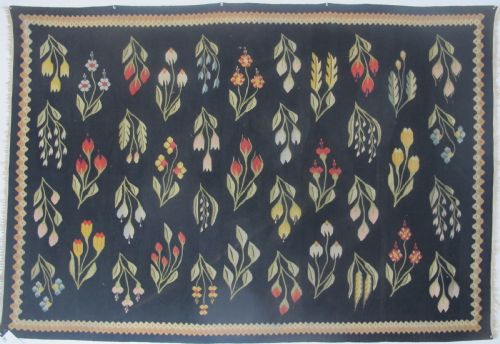
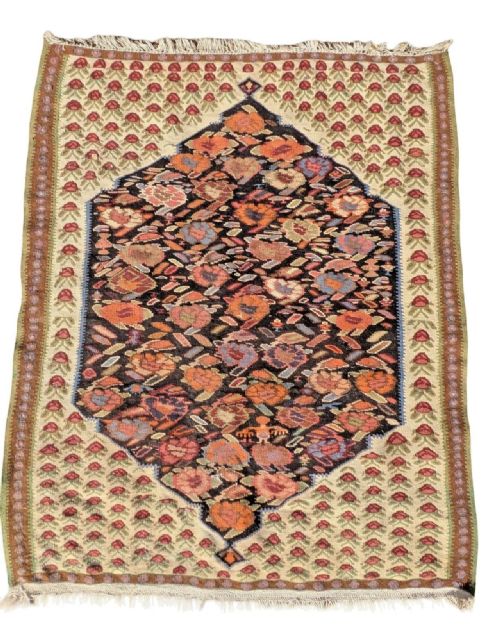
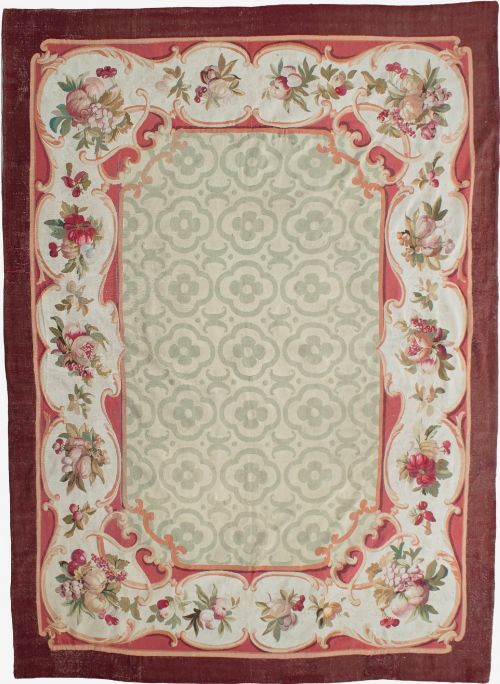
A floral wool tapestry rug combines flatweave technique with botanical motifs, spanning periods from the nineteenth century into the twentieth century. These textiles encompass regional expressions including Bessarabian kilims, Portuguese needlepoints, French Aubusson carpets, and Scandinavian folk art pieces.
The most common examples encountered in this selection are antique Bessarabian kilims and Portuguese needlepoint rugs. Buyers will also find larger French Aubusson carpets alongside crewelwork wall hangings, Bidjar kilims, and American hooked rugs.
How they were made
These textiles rely primarily on wool, cotton, canvas, linen, jute, and burlap as foundational materials. Artisans worked wool yarn through supportive backings or wove them flat to create durable floor coverings.
Techniques range from needlepoint stitching and flatweave kilim construction to hooked pile work and crewel embroidery. Each method requires careful manipulation of coloured threads to form intricate floral patterns.
Floral Wool Tapestry Rug Retail Price Guide 2026
Typical asking prices for floral wool tapestry rug among the pieces listed under this phrase on Sellingantiques today, from the lower quarter to the upper quarter. They describe what is for sale here now, not the wider market.
Every floral wool tapestry rug carries the quiet patience of hands that spent countless winter evenings stitching petals into wool.
What varies in quality
Quality rests upon the fineness of the weave and the complexity of the botanical design execution. Superior pieces demonstrate tight stitching and clear definition within the floral motifs.
The choice of wool quality and the preservation of original dimensions also separate standard examples from finer works. Historical regional provenance further influences the character of each textile.
The Floral Wool Tapestry Rug Glossary
- Kilim
- A flatwoven carpet or rug produced without a pile, commonly associated with Eastern European and Persian traditions. These textiles feature crisp geometric and floral designs.
- Needlepoint
- A type of canvas work embroidery where yarn is stitched through a stiff open-weave mesh. Portuguese examples frequently utilise this technique for floral rugs.
- Aubusson
- A traditional French woven carpet or tapestry originating from the town of Aubusson. These pieces often display classical floral arrangements and rococo influences.
- Flatweave
- A textile construction method where warp and weft threads interlace without creating a raised pile surface. This technique produces durable, thin floor coverings.
Floral Wool Tapestry Rug: Frequently Asked Questions
How do I clean an antique rug?
Gentle surface vacuuming without a beater bar removes loose debris safely from wool tapestry textiles.
Professional specialist cleaning is necessary for addressing deeper dirt to protect the delicate fibres.
Where should I place a tapestry rug?
These textiles suit low-traffic areas such as bedrooms or studies where physical wear remains minimal.
Using a quality rug underlay prevents slipping and protects the flatweave or needlepoint structure.
Are these rugs suitable for daily use?
Sturdy wool construction allows these rugs to handle moderate walking traffic in residential spaces.
Delicate needlepoint or fine Aubusson pieces benefit from placement out of direct heavy footpaths.
How do I identify the period of a rug?
Examining the specific floral motifs, regional weave structure, and material combinations helps determine age.
Comparing construction traits against established Bessarabian, French, and Portuguese examples clarifies the origin.