



Hand Embroidered Lakai Suzani
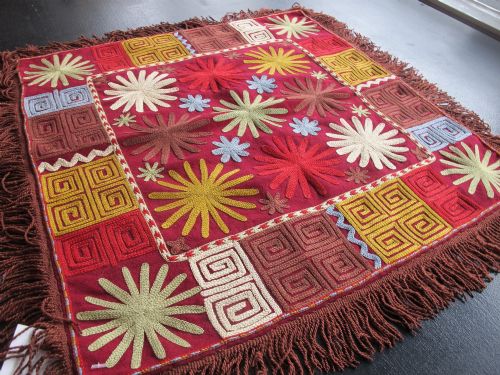
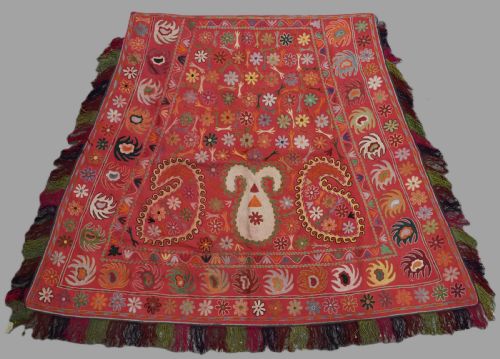
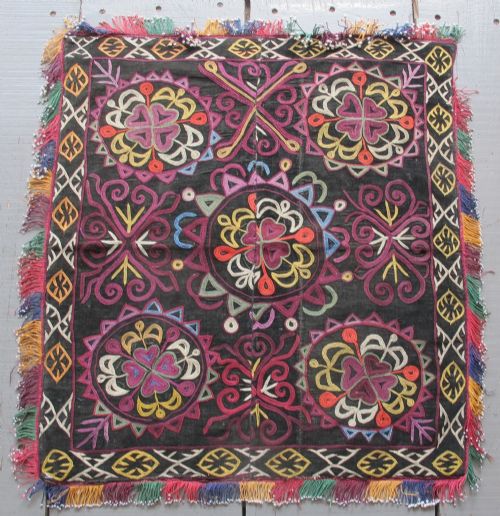
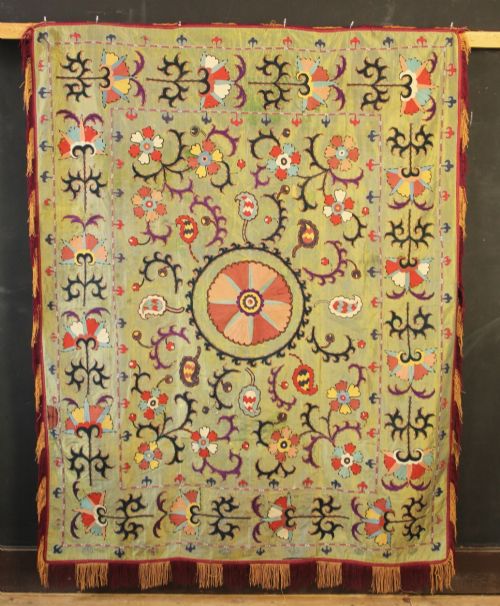
These hand embroidered lakai suzani pieces are Central Asian tribal textiles worked in silk, wool, and cotton.
Hand Embroidered Lakai Suzani
A hand embroidered lakai suzani brings the bold folk art of Central Asian tribal communities directly into a modern interior as wall art or a textile panel. These pieces originate primarily from Uzbekistan and take forms such as wall hangings, nim suzanis, mirror covers, and horse or saddle covers.
The version most commonly met on this page is the nineteenth or early twentieth century textile panel worked by the Lakai tribe. Buyers select these works for their vibrant geometric energy and rich textile history originating from Shakrisabz and surrounding regions.
How they were made
Artisans stitch fine silk thread onto a supportive ground of woven wool or cotton, creating dense patterns across the fabric. Selected examples incorporate glass beads to add texture and catch the light within the traditional Central Asian designs.
Needlework techniques rely on traditional tribal motifs passed down through generations of Uzbek makers. The foundational textiles combine local cloth with hand-spun yarns dyed in deep red, green, and neutral tones.
Hand Embroidered Lakai Suzani Retail Price Guide 2026
Typical asking prices for hand embroidered lakai suzani among the pieces listed under this phrase on Sellingantiques today, from the lower quarter to the upper quarter. They describe what is for sale here now, not the wider market.
Horse covers embroidered for ceremonial use reveal that nomadic tribes wanted their steeds to look every bit as stylish as their owners.
What varies in quality
The visual strength of a piece depends on the precision of the needlework and the vitality of the colour palette used across the silk embroidery. Earlier nineteenth-century examples often display greater complexity in the arrangement of geometric motifs and tribal symbols.
Condition and completeness alter the character of each textile panel, particularly where intricate mirror covers or horse caparisons survive with intact borders. The quality of the underlying wool or cotton ground also dictates how well the embroidery withstands decades of display.
The Hand Embroidered Lakai Suzani Glossary
- Suzani
- An embroidered textile panel originating from Central Asia, traditionally worked by women as part of a bride's dowry or for household decoration. These hangings range from full-sized wall pieces to smaller nim suzanis.
- Nim suzani
- A smaller format suzani piece, typically about half the size of a full wall hanging. The term describes compact embroidered covers suited for specific domestic uses.
- At torba ilgich
- A specific type of hanging or bag used within nomadic and tribal households in Central Asia. These items relate to horse tack and domestic storage.
- Caparison
- An ornamental covering placed over a horse, corresponding to the antique horse and saddle covers produced by the Lakai tribe. Such textiles combine practical equestrian use with elaborate ceremonial embroidery.
- Ground
- The foundational fabric of cotton, wool, or silk upon which the primary embroidery is stitched. The choice of ground material influences the weight and drape of the textile.
Hand Embroidered Lakai Suzani: Frequently Asked Questions
How do I hang a textile panel safely?
Mount your textile using a padded wooden batten with cotton tape stitched gently to the back edge of the piece. This distributes the weight evenly without piercing the delicate silk and wool ground.
Keep the hanging away from direct sunlight and moisture to protect the natural dyes and fibres from fading over time.
What is a nim suzani?
A nim suzani is a smaller version of the traditional Central Asian embroidered wall hanging. These pieces offer the same intricate silk needlework in a more compact format.
They function well in smaller interior spaces where a full-sized textile would dominate the room.
How do I identify Lakai embroidery?
Lakai embroidery is distinguished by its bold geometric shapes, dynamic tribal motifs, and spirited use of colour. These pieces often diverge from official urban Uzbek styles through their asymmetrical energy.
Stitching on Lakai pieces frequently employs hooked designs and expressive arrangements of silk on wool or cotton grounds.
How should I clean my textile?
Surface dust can be removed very carefully using a low-suction vacuum cleaner applied through a fine mesh screen. Professional textile conservators should handle deeper cleaning to prevent dye transfer or shrinkage.
Avoid washing these antique silk and wool pieces with water or standard detergents at home.