




Hand Carved Timber Animals
These hand carved timber animals bring nineteenth-century craft into modern rooms through expressive domestic and wildlife subjects.
Hand Carved Timber Animals
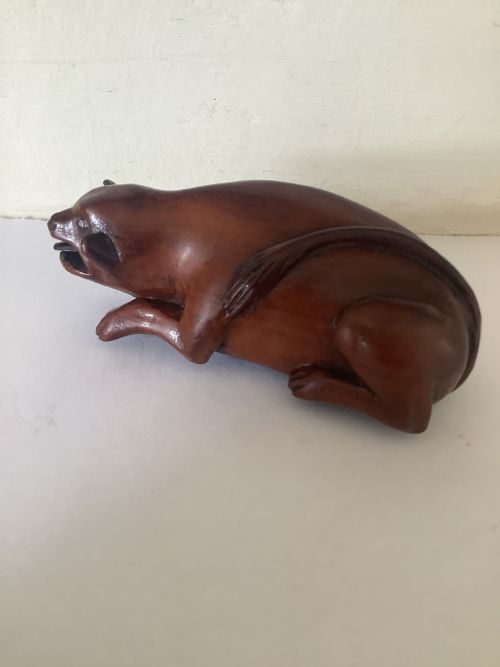
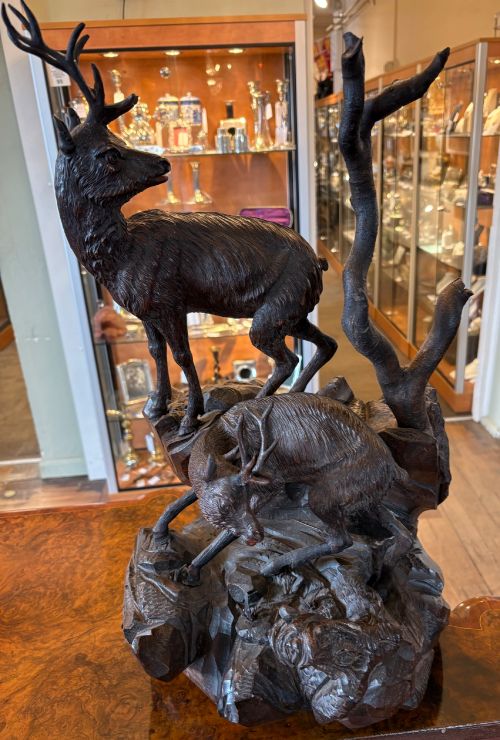
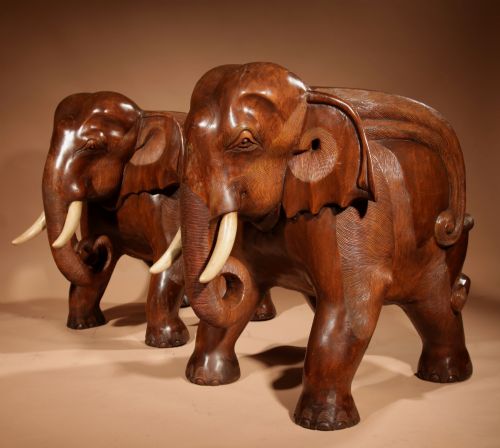
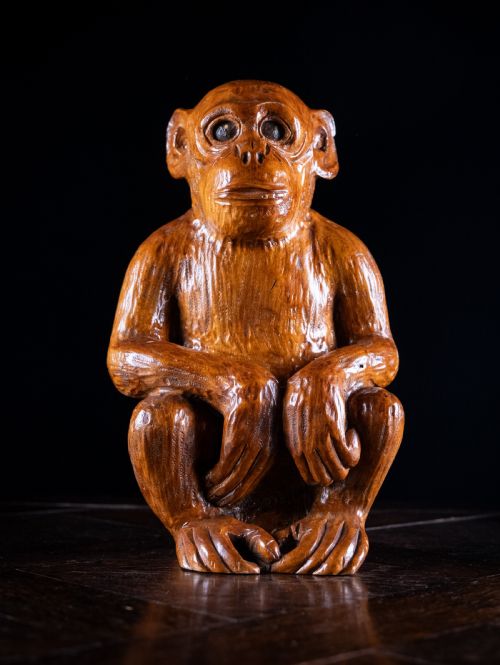
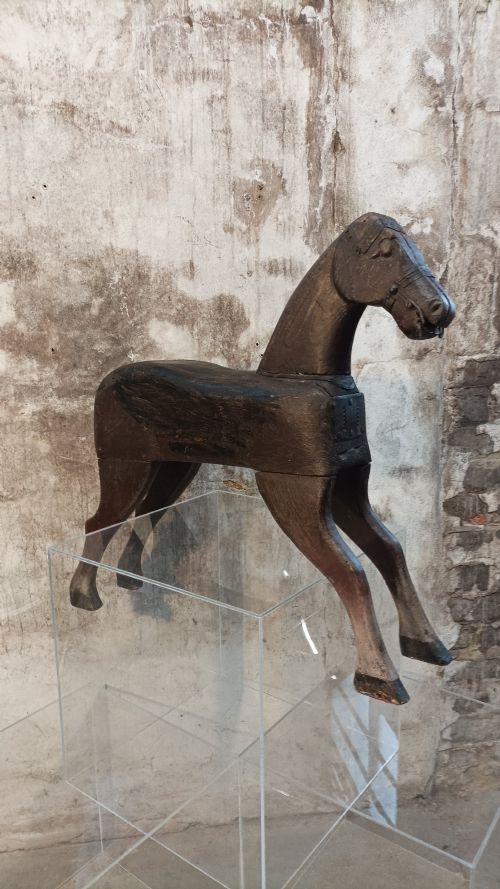
When you search for hand carved timber animals, you encounter sculptural forms shaped from various woods across the eighteenth, nineteenth, and early twentieth centuries. The selection ranges from domestic dogs and farm livestock to exotic elephants, lions, and bears.
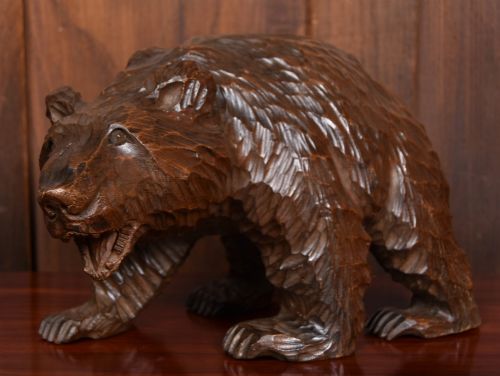
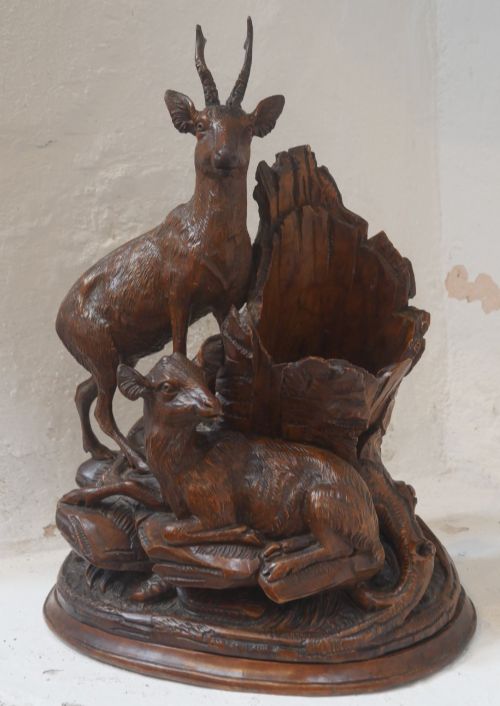
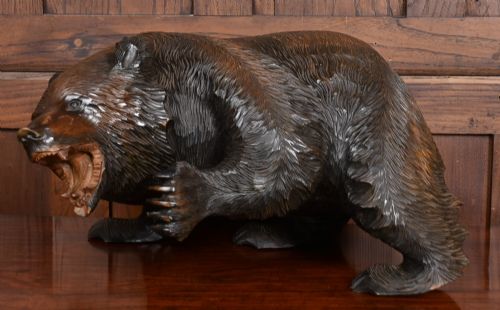
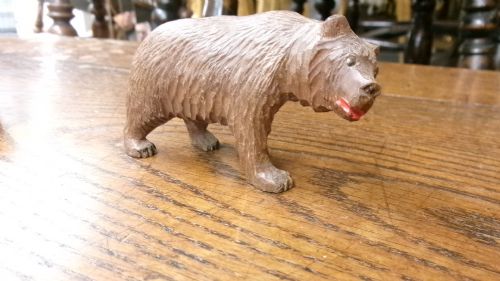
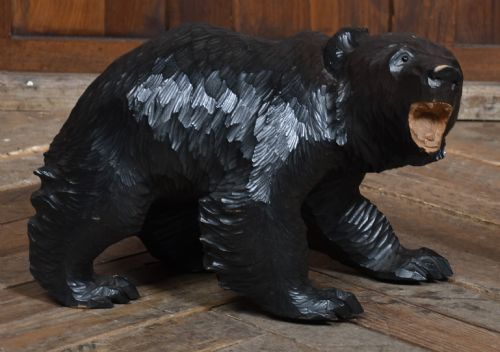
Black Forest and Japanese regional schools dominate the forms available here, alongside folk art, Anglo-Indian colonial pieces, and Chinese traditional carvings. You will frequently find bears rendered as bookends, inkwells, or freestanding figures, alongside large wall masks and tabletop animal studies.
The objects serve multiple historic functions, functioning as utilitarian bookends, snuff boxes, and inkwells, or purely as decorative sculptures and architectural wall carvings. Their origins span European alpine workshops, British colonial outposts, and East Asian carving traditions.
Materials and carving techniques
Carvers utilised local and imported timbers including walnut, pine, teak, hard woods, and lindenwood to achieve fine anatomical detail. Grain orientation dictated the carving approach, allowing artisans to exploit natural timber patterns in fur, feathers, and hide.
Hand tools such as gouges and chisels created the textured surfaces seen on these sculptures, occasionally supplemented by paint, glass eyes, or metal studs. Regional workshops employed specific finishing techniques, from smooth polishing to naive painted surfaces on folk art pieces.
The inventory spans the eighteenth century through to the Art Deco era, encompassing Black Forest, folk art, and Anglo-Indian styles.
Distinctions in craftsmanship
Quality rests upon the naturalism and anatomical conviction of the carving, distinguishing lifelike studies from rigid or generic forms. Master carvers captured musculature, movement, and expression with economy and precision.
The sophistication of surface texture determines the caliber of a piece, separating deep, undercut fur and feather work from superficial scoring. Preservation of the original timber patina and integrity without aggressive modern restoration also governs the standing of each animal.
The Hand Carved Timber Animals Glossary
- Black Forest
- A nineteenth-century Swiss and German carving tradition centred on animal figures, particularly bears, executed in walnut and lindenwood.
- Kibori Kuma
- A Japanese style of wooden bear carving originating from Hokkaido, often depicted holding a salmon or rendered in a naturalistic pose.
- Folk Art
- Objects created by self-taught or traditional artisans outside academic canons, often displaying naive charm and simplified forms.
- Raj Period
- Items produced during British rule in India, frequently featuring indigenous hardwoods such as teak carved with ceremonial elephants and wildlife.
- Linden Wood
- A pale, fine-grained timber favoured by European carvers for its softness and suitability for intricate, detailed undercut work.
Hand Carved Timber Animals: Frequently Asked Questions
What woods were used for these animals?
Makers utilised a range of timbers depending on their geographic origin and workshop traditions. Walnut, lindenwood, pine, and dense exotic hardwoods such as teak appear frequently across the pieces.
European carvers often selected lindenwood for its cooperative grain, while Anglo-Indian artisans worked with durable regional hardwoods suited to intricate undercutting.
How do I identify Black Forest carvings?
Black Forest carvings typically originate from nineteenth-century Switzerland or Germany and feature deep, dark patinated walnut or lindenwood. Common subjects include bears, deer, dogs, and alpine livestock rendered with realistic textures.
Many of these pieces served a dual domestic purpose, incorporating inkwells, card trays, or bookend structures into the animal sculptures.
Are these animal carvings antique?
The pieces span the eighteenth, nineteenth, and early twentieth centuries, encompassing Victorian, Edwardian, and Art Deco periods. Dating relies upon material patination, tool marks, and stylistic conventions associated with specific regional schools.
Documentation and historic design traits help distinguish nineteenth-century production from later revival work.