






Hand Carved Saint
These hand carved saint figures are timber devotional carvings shaped by hand down the centuries, prized for their quiet spiritual presence and tactile artistry.
Hand Carved Saint
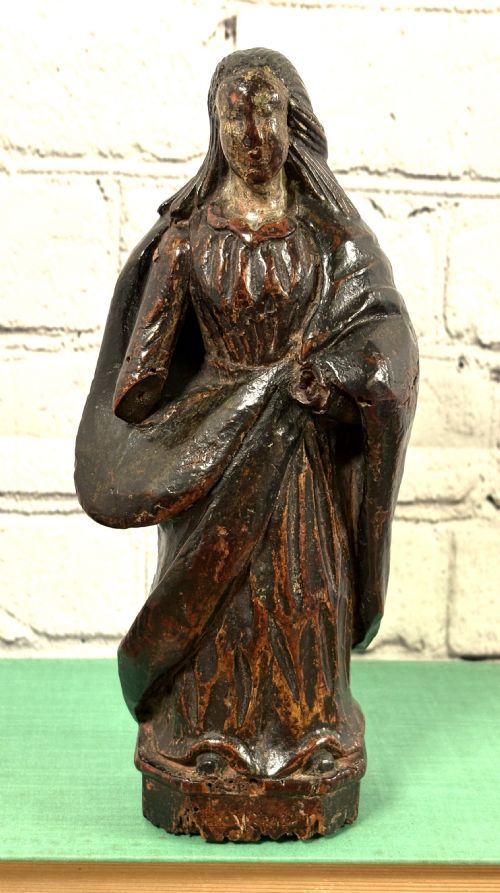
When you search for a hand carved saint, you encounter timber sculptures shaped for devotion, ranging from diminutive folk art figures to monumental church sculptures. The pieces gathered here span from pre-sixteenth century fragments to twentieth-century workshop pieces, reflecting centuries of pious craftsmanship.
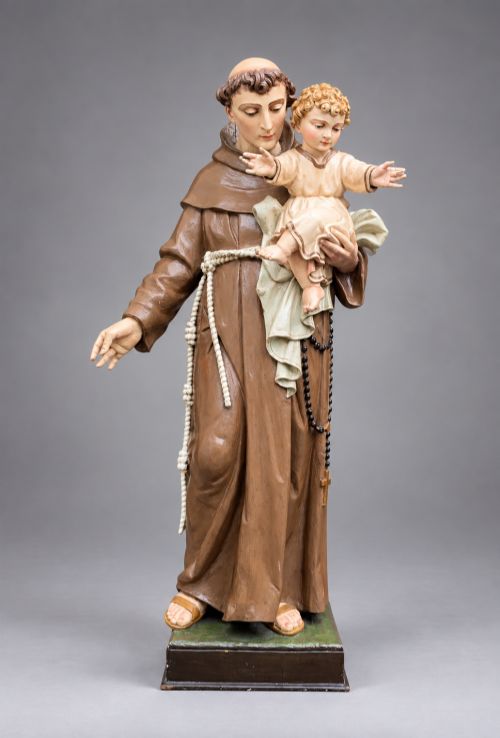
You are most likely to meet nineteenth-century oak and limewood figures alongside eighteenth-century regional statues on this page. These works frequently depict figures such as the Virgin Mary and Child, Saint Anthony, and Saint Jerome, originating from varied European traditions including Italian, German, and Croatian workshops.
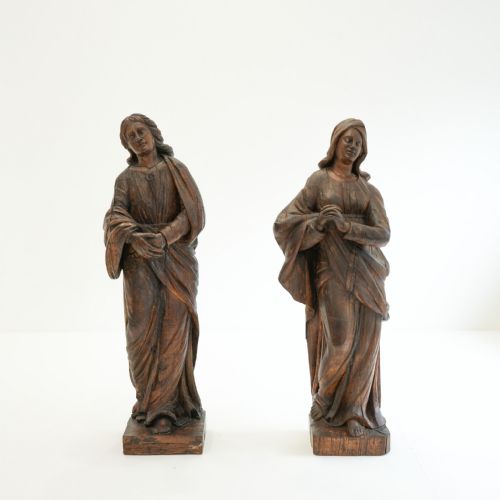
The assortment balances large architectural pairs with smaller devotional statues intended for domestic niches or processional use. Each sculpture carries the distinct marks of its maker's chisel, whether emerging from disciplined Gothic workshops or expressive Alpine folk art traditions.
What varies in quality
The hierarchy of quality rests primarily on the anatomical confidence of the carving and the expressiveness achieved in the hands and face. Superior carvers captured fluid movement in heavy robes and subtle psychological depth in the gaze, whereas lesser pieces remain stiff and formulaic.
The preservation of original surface finishes, such as early polychrome paint and gilding, elevates a piece considerably above examples stripped to bare timber in later centuries. Integration of form and material dictates the artistic success of each surviving statue.
Hand Carved Saint Retail Price Guide 2026
Typical asking prices for hand carved saint among the pieces listed under this phrase on Sellingantiques today, from the lower quarter to the upper quarter. They describe what is for sale here now, not the wider market.
Listings feature oak, limewood, and carved wood sculptures spanning from pre-sixteenth century fragments to the twentieth century.
Franz Keller
The Hand Carved Saint Glossary
- Gesso
- A plaster-like mixture applied to timber as a smooth base for gilding and painting. It helps bind the metallic leaf and pigments to the wooden substrate.
- Limewood
- A close-grained, pale wood favoured by traditional sculptors for its resistance to splitting and ease of carving. It permits remarkably crisp details in historical figures.
- Processional figure
- A sculptural representation carried during religious festivals or street processions. These hollow or lightweight pieces often feature specialised mounting points for poles or stands.
- Ecclesiastical
- Pertaining to the Christian church and its formal liturgy. Objects bearing this description were created specifically for worship spaces rather than domestic settings.
Hand Carved Saint: Frequently Asked Questions
Where were these statues displayed?
Original locations ranged from grand cathedral altarpieces and monastic choir stalls to private domestic shrines in rural homes.
Smaller devotional figures often stood in village chapels or travelled outdoors during religious processions.
Why do many figures lack paint?
Later interior decorating tastes frequently led owners to strip away original polychrome paint to expose the bare timber underneath.
Traces of pigment often remain trapped within deep crevices and tool marks.
How should I care for antique wood?
Keep wooden sculptures away from direct sunlight and sudden humidity shifts to prevent the timber from splitting or warping.
Dust them gently with a dry cloth rather than applying modern polishes or oils.