


Hand Carved Desk Ornament
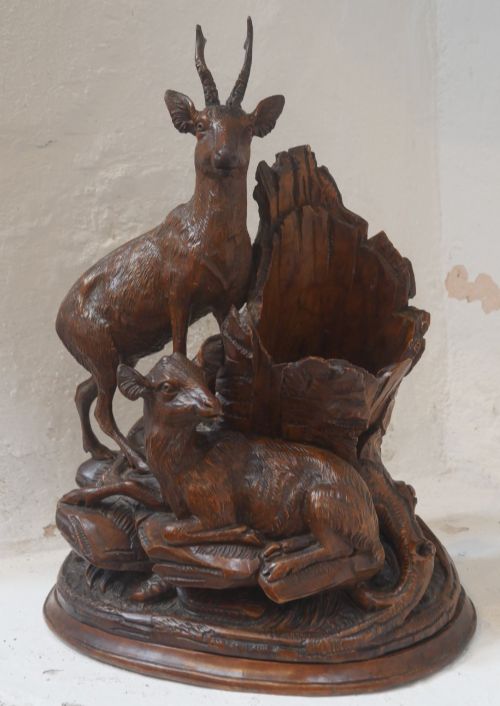
A hand carved desk ornament brings texture and history to a workspace, taking forms from Black Forest mountain goats to Chinese jade cicadas.
Hand Carved Desk Ornament
A hand carved desk ornament encompasses small-scale sculptures, inkwells, match holders, seals and magnifying glasses intended for a desk or study. The selections available span domestic European folk art, British colonial production and East Asian scholarly traditions. Buyers encountering this group will find diverse regional styles rather than a single unified aesthetic.
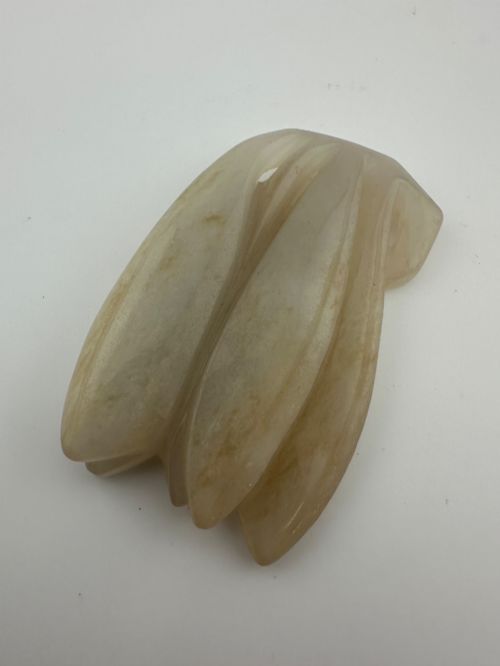
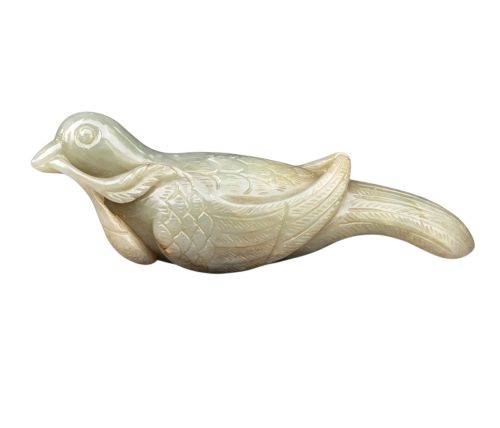
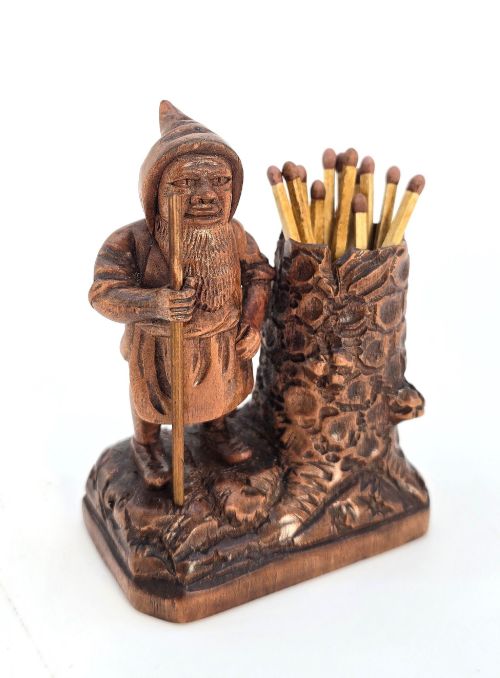
European examples lean towards Black Forest animal carvings, limewood gnomes and folk art models of horses or ships. Asian pieces present soapstone seals, root wood figures, and celadon jade water birds or cicadas reflecting Qing Dynasty conventions. Anglo-Indian workshops contribute ebony, teak and staghorn studies of elephants, root wood and stone forming the bulk of the material record.
How they were made
Natural organic materials dictate the method of manufacture, makers utilising limewood, lindenwood, ebony, teak and root wood for timber subjects. Artisans carve these woods with gouges and knives, capturing the muscular tension of bears or goats and the flowing grain of root wood. Soapstone and nephrite or celadon jade require abrasive cutting and polishing techniques to achieve smooth surfaces on desk seals and scholarly ornaments.
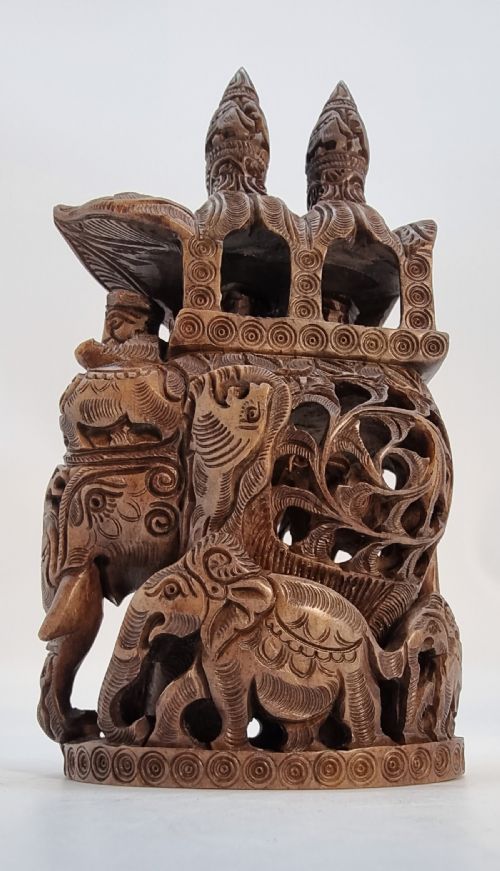
European Black Forest carving relies on deep relief and undercutting to create dense fur and foliage textures on inkwells and animal groups. Anglo-Indian items apply precise surface incising to dense tropical hardwoods and staghorn. Chinese pieces demonstrate meticulous hand abrasion on jade and soapstone, balancing natural stone inclusions with refined sculptural silhouettes.
Materials represented range from soft soapstone and translucent celadon jade to dense tropical hardwoods, limewood, staghorn and root wood.
What varies in quality
Quality rests upon the sensitivity of the carving and the fidelity of anatomical or architectural proportion. A superior piece shows confident tool marks, precise detailing in hair or feathers, and harmonious integration of the natural material's grain or colour. Weaker examples display stiff rendering, clumsy proportions or heavy smoothing that obscures the vitality of the hand work.
The choice of material and depth of execution further distinguish standard items from exceptional ones. Denser stones like jade and harder timbers such as ebony demand greater technical skill to carve cleanly than soft soapstone or pine. The presence of functional integration, such as a hinged inkwell or a balanced magnifying glass mount, adds structural complexity to sculptural merit.
The Hand Carved Desk Ornament Glossary
- Black Forest
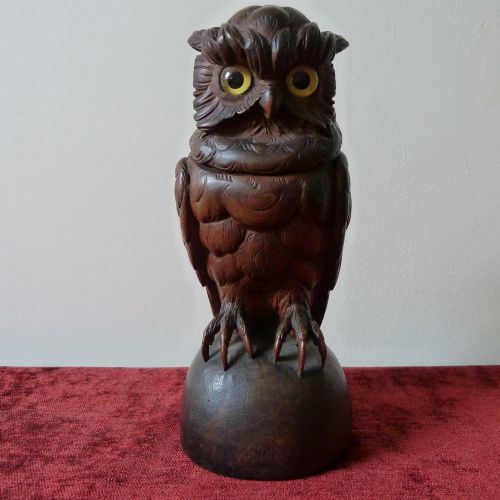
- A style of wood carving originating from the mountainous region of central Europe, renowned for realistic animal studies and desk accessories. Pieces typically employ limewood or lindenwood to depict bears, owls and chamois.
- Celadon
- A term for ceramics and jade displaying a pale grey-green translucent glaze or stone colour. It appears frequently in East Asian scholar's objects and water vessels.
- Root wood
- Timber sourced from the root system of a tree, prized by carvers for its twisted, gnarled grain patterns. Artisans incorporate these natural distortions directly into the final sculptural form.
- Soapstone
- A talc-schist stone soft enough to be worked with basic hand tools, commonly used for Chinese desk seals and Indian animal figures. Its smooth, soapy texture takes a fine matte polish.
- Desk seal
- A carved stamp or signet, often featuring a figurative handle such as a Buddhist lion or deity, used to impress wax for sealing correspondence.
Hand Carved Desk Ornament: Frequently Asked Questions
How do I care for wooden desk ornaments?
Wooden carvings require stable indoor humidity and protection from direct sunlight to prevent the timber from drying out or splitting. Dusting gently with a dry, soft brush is generally sufficient for regular maintenance.
Avoid applying modern furniture polishes or silicone sprays, as these can build up on hand-carved surfaces and darken the natural wood grain over time.
How do I distinguish Black Forest carvings?
Black Forest carvings are identified by their characteristic European subject matter, featuring naturalistic animals like bears, owls, chamois and dogs rendered in limewood or lindenwood. They often incorporate functional elements such as inkwells, match holders or umbrella stands.
The carving style prioritises deep undercutting and realistic fur textures, frequently associated with nineteenth-century Swiss and German production.
What materials were used for Chinese desk carvings?
Chinese desk carvings frequently utilise soapstone, nephrite jade, celadon jade and various native hardwoods, including root wood. These materials were shaped into scholar's objects, brush rests, seals and decorative figures.
The choice of material often reflects scholarly tastes, with jade and soapstone prized for their tactile qualities and association with traditional literati culture.