

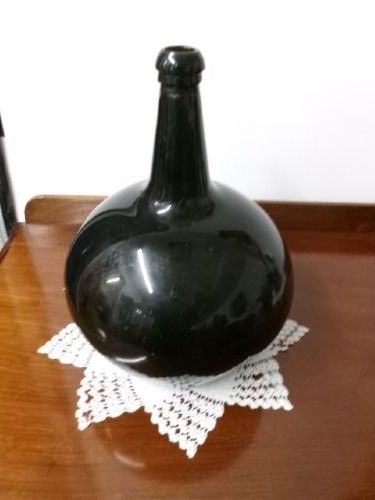
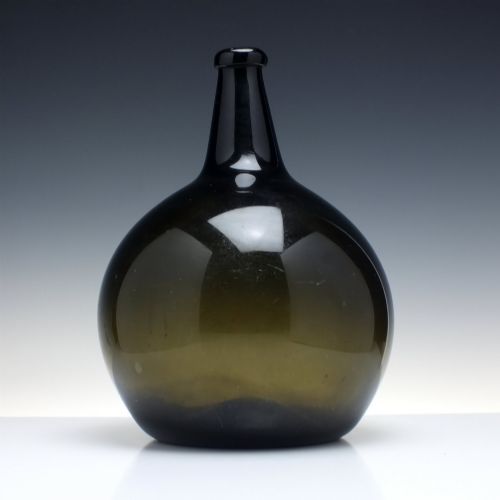


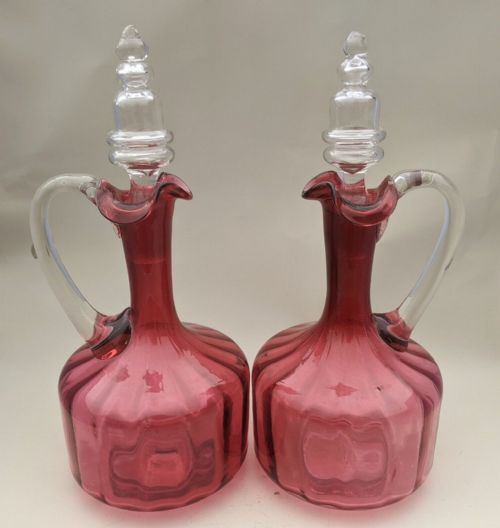


Hand Blown Wine Bottle
These hand blown wine bottle selections offer functional history, bringing tactile glass from past centuries directly into modern entertaining.
Hand Blown Wine Bottle
When you search for a hand blown wine bottle, you are looking at utilitarian and decorative glassware produced across the eighteenth, nineteenth, and early twentieth centuries. These pieces encompass serving bottles, decanters, ewers, and larger liquid jars originating from British, French, and Scottish workshops.
You are most likely to meet Victorian and Georgian examples on this page, alongside Edwardian and Arts and Crafts iterations. Forms range from dark green cylinder bottles and blue Mell decanters to cranberry glass ewers and clear glass vessels.
The historical function of these containers was the storage, decanting, and serving of wine, cider, spirits, and other potables. Each surviving specimen reflects the domestic and social customs of its period, bridging the gap between utilitarian cellar equipment and table display.
How they were made
Glassmakers utilised traditional furnace techniques, gathering molten metal on the end of a blowpipe and manipulating it with basic hand tools. Optical blowing involved expanding the glass inside a ribbed or patterned mould to create internal texture before final free-forming.
Materials span plain clear glass, lead crystal, dark green glass, and coloured glass such as cranberry and blue, sometimes accented with enamel decoration. Artisans shaped necks, applied handles, and finished pontil scars by hand, leaving physical evidence of the manual production process on every vessel.
Hand Blown Wine Bottle Retail Price Guide 2026
Typical asking prices for hand blown wine bottle among the pieces listed under this phrase on Sellingantiques today, from the lower quarter to the upper quarter. They describe what is for sale here now, not the wider market.
Materials recorded on this site range from dark green glass and lead crystal to vibrant cranberry glass and enamelled clear metal.
What varies in quality
The distinction between ordinary and superior examples lies in the weight, clarity, and handling of the molten material. Heavier metal, balanced proportions, and deliberate optical effects separate masterwork productions from simpler utility wares.
Design attribution and decorative application also elevate certain pieces, such as those associated with known glass houses like James Powell or designers like Archibald Knox. The finesse shown in applied handles, hand-painted enamel details, and pontil finish indicates the skill level of the original glasshouse.
James Powell·Archibald Knox for Liberty
The Hand Blown Wine Bottle Glossary
- Pontil mark
- The rough scar left on the base of a vessel where the pontil rod was snapped off after blowing. This physical feature helps confirm traditional hand-manufacturing methods.
- Cranberry glass
- A rich red-pink glass coloured by the addition of gold chloride to the molten batch. It gained popularity during the Victorian era for decorative tablewares.
- Mell decanter
- A specific regional form of Scottish decanter featuring a distinctive mallet or rounded body shape. These serving bottles were utilised for wines and spirits.
- Ewer
- A large jug with a wide spout and handle designed for holding and pouring liquids. In antique glass, these decorative pieces often doubled as serving bottles.
Hand Blown Wine Bottle: Frequently Asked Questions
Are these bottles safe for wine?
Most antique serving vessels are structurally stable enough to hold wine for immediate serving during a meal. However, extended storage of consumable liquids in antique lead glass is generally discouraged.
Inspect the interior for any stubborn residue or cloudiness before use. Hand washing is mandatory to preserve the surface integrity of the historic material.
How can I date an old bottle?
Examine the base for a pontil mark, the overall weight of the glass, and the manufacturing characteristics of the lip and neck. Georgian and eighteenth-century examples often display deeper kick-ups and irregular bubbles compared to later Victorian pieces.
Cross-reference the silhouette and colour with documented styles from the era of origin. Regional variations, such as Scottish Alloa forms, also provide strong clues to specific manufacturing decades.
How do I display them safely?
Position glass vessels away from direct sunlight to prevent fading in coloured pieces like cranberry glass. Ensure they rest on stable, level surfaces where accidental bumps are minimised.
Keep them clear of heavy foot traffic areas or unstable shelving. Proper lighting from the side can highlight the optical effects and bubbles trapped within the hand-blown metal.