



Antique Green Glass Flask
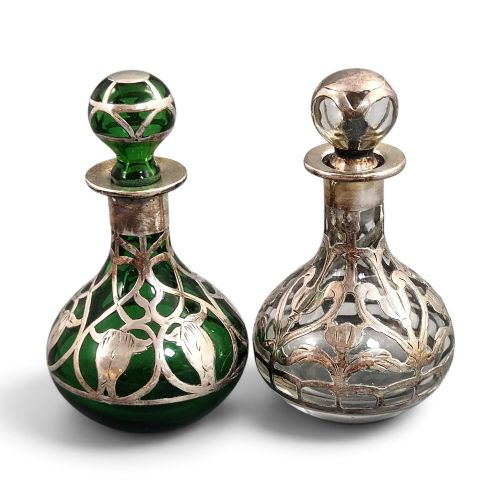
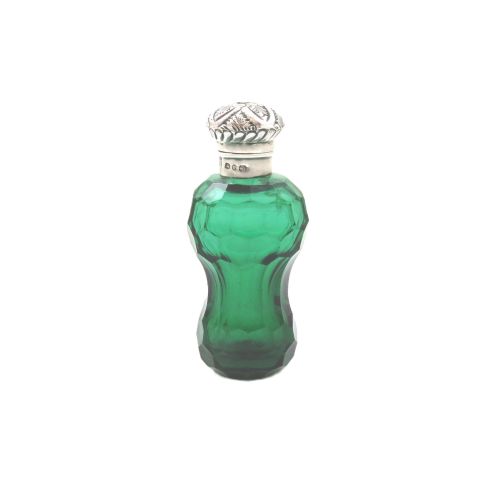
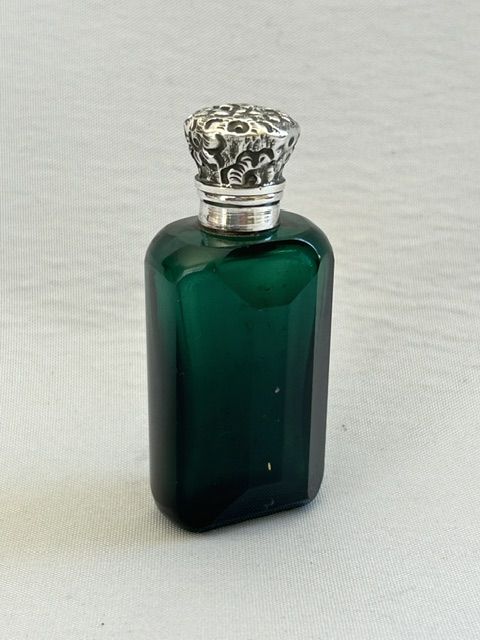
These antique green glass flask pieces are historic bottles and vessels fashioned from emerald, vaseline, and Bristol green glass, valued for their decorative silver mounts and overlay work.
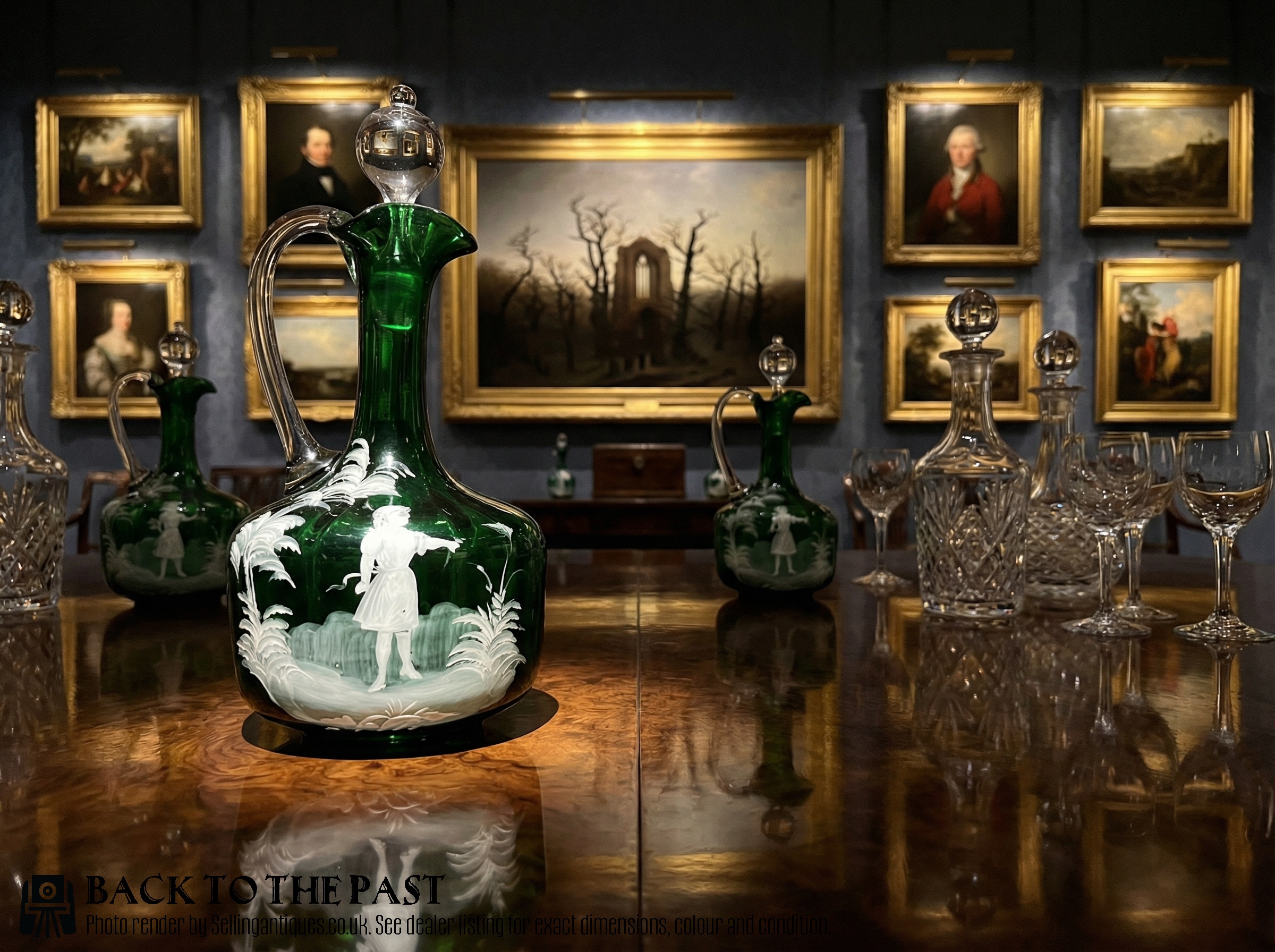
Antique Green Glass Flask
When you search for an antique green glass flask, you find a collection spanning scent bottles, perfume bottles, decanters, ewers, and snuff bottles. These vessels range from small pocket items meant for fragrance to larger table decanters and jugs.
The pieces on this page appear most frequently in Victorian styles, alongside Edwardian, Art Nouveau, Art Deco, and eighteenth-century examples. You will encounter Bristol green glass, vaseline glass, and overlay glass among the forms.
Origins stretch from English and Scottish workshops to continental Europe, including Bohemian and Austrian makers, as well as Chinese Peking glass traditions. Each vessel carries the characteristic green hue of its period of manufacture.
Materials and construction
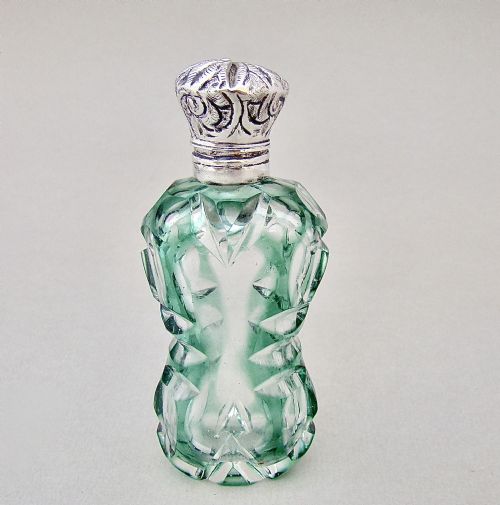
Makers utilised blown green glass, often shaped into cut glass or layered overlay configurations where a contrasting colour is cut away to reveal the green beneath. Some vessels incorporate Peking glass or vaseline glass techniques.
Metalwork is integral to many pieces, with sterling silver, silver mounts, pewter, and enamel applied to necks and bodies. Cork stoppers and silver overlay work complete the construction of the scent bottles and decanters.
Antique Green Glass Flask Retail Price Guide 2026
Typical asking prices for green glass flask among the pieces listed under this phrase on Sellingantiques today, from the lower quarter to the upper quarter. They describe what is for sale here now, not the wider market.
Listings feature pieces spanning the eighteenth, nineteenth, and early twentieth centuries, including Victorian, Edwardian, Art Nouveau, and Art Deco styles.
Assessing quality in green glass vessels
Quality rests in the precision of the glass cutting and the intricacy of the silver overlay or enamel work applied to the surface. Heavier glass bodies and well-fitted silver mounts distinguish finer examples.
The clarity of the green glass and the sophistication of the decorative motifs, whether Art Nouveau floral patterns or Bohemian overlays, define the upper tier of these pieces.
Gorham·Henry Perkins·René Lalique
The Antique Green Glass Flask Glossary
- Vaseline glass
- A type of glass coloured with uranium dioxide, producing a distinctive yellow-green hue that often glows under ultraviolet light. It appears in Victorian scent bottles.
- Overlay glass
- A method where a layer of glass is fused over a different coloured body, then partially cut away to create patterns. Bohemian and English makers utilised this technique.
- Sterling silver mount
- A collar or casing of silver fitted to the neck or body of a glass bottle, often bearing hallmarks for the year and maker.
- Bristol green glass
- A deep, rich shade of dark green traditionally associated with glasshouses in the Bristol area during the eighteenth and nineteenth centuries.
Antique Green Glass Flask: Frequently Asked Questions
What are antique green glass flasks?
These pieces are historic glass containers designed for holding perfumes, scents, spirits, or snuff. They combine blown glass bodies with functional or decorative mounts.
The selection includes pocket-sized scent bottles with silver caps alongside larger decanters and ewers intended for display or service.
How do I date a green glass flask?
Dating relies on stylistic clues such as Art Nouveau organic lines, Art Deco geometric forms, or Victorian floral motifs. Hallmarks on silver mounts provide exact assay years.
Changes in glass colouration techniques, such as the development of vaseline glass or overlay methods, also point to specific nineteenth and early twentieth-century decades.
How were these bottles used?
Smaller vessels held personal fragrances or smelling salts, kept close in pockets or dressing tables during the Victorian and Edwardian eras. Larger forms served as decanters for wine or spirits.
Snuff bottles were carried for powdered tobacco, while ewers formed part of larger tabletop or washstand sets.
How do I care for antique glass?
Clean glass surfaces gently with lukewarm water and a soft cloth, avoiding harsh chemicals that might damage silver mounts, enamel, or cork stoppers. Handle pieces by the body rather than the delicate silver necks.
Display vessels away from direct sunlight and extreme temperature shifts to protect the glass and any applied metal overlay.