


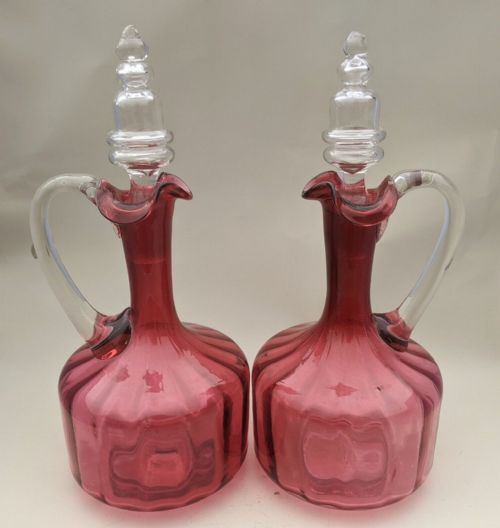
Hand Blown Ruby Glass
Hand blown ruby glass brings deep crimson colour and Victorian character to a room.
Hand Blown Ruby Glass
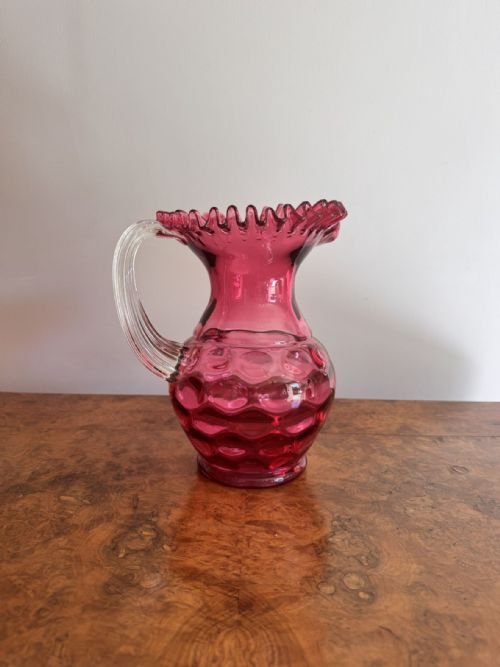
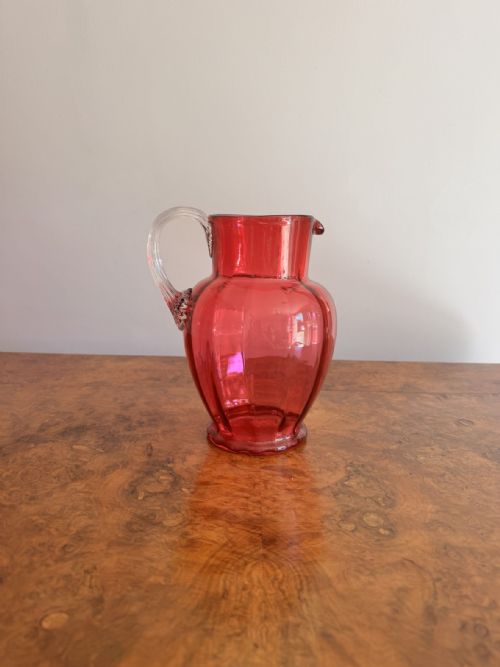
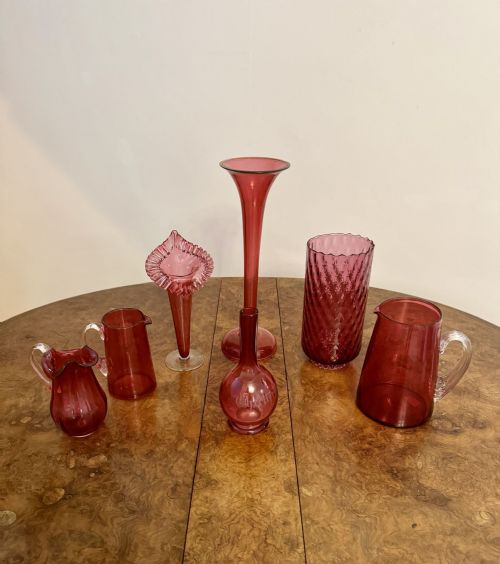
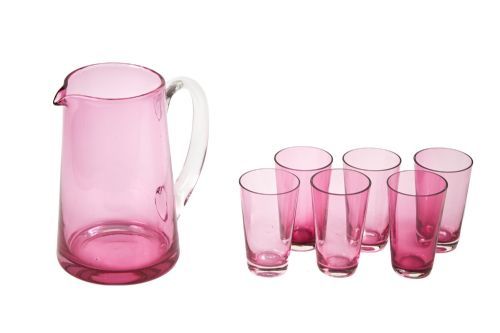
When you search for hand blown ruby glass, you are looking at rich crimson pieces shaped by hand during the nineteenth century. These objects include wine glasses, decanters, epergnes, jugs, and vases from the Victorian and Edwardian eras.
The pieces on this page are most commonly Victorian cranberry glass items, spanning decades such as the eighteen eighties and nineties. Collectors encounter everything from single serving bottles and bon bon dishes to large sets of stemware and table centerpieces.
How these pieces were made
Makers achieved the distinct red hue by adding gold salts to the molten mixture during the glassblowing process. Workers then shaped the glowing material by hand, occasionally combining ruby glass with clear glass or mounting pieces in brass and silver plate.
Vessels and tableware emerged from workshops through traditional free-blowing and mould-blowing techniques. The resulting objects display the subtle irregularities and individual character typical of nineteenth-century hand production.
Victorian diners used multi-horn epergnes to hold flowers and sweetmeats simultaneously, turning the dining table into a glowing crimson garden.
What varies in quality
Depth and consistency of the red colour distinguish finer examples from standard items. Richness in the gold salt additive creates a more vibrant and saturated crimson tone throughout the material.
Complexity of form also separates simpler vessels from elaborate table centrepieces like epergnes and lidded jars. Superior pieces show greater finesse in applied details, matching sets, and integrated metal mounts.
The Hand Blown Ruby Glass Glossary
- Cranberry Glass
- A type of transparent glass coloured with gold chloride, producing shades from pink to deep red. It gained immense popularity during the Victorian period for tableware and decorative items.
- Epergne
- A large table centrepiece featuring a central bowl with multiple hanging baskets or trumpets. These complex pieces were used for fruit, flowers, or sweets at formal nineteenth-century dining tables.
- Hand-Blown Glass
- Glassware shaped by inflating molten metal on the end of a blowpipe rather than pouring into a machine mould. This traditional method leaves pontil marks and slight variations in thickness.
- Silver Plate
- A thin layer of silver fused to a base metal like copper or brass. It often appears on the mounts, rims, or hardware of Victorian glassware collections.
Hand Blown Ruby Glass: Frequently Asked Questions
What is the difference between ruby and cranberry glass?
The terms are often used interchangeably by dealers to describe red nineteenth-century glassware. Cranberry glass specifically refers to pieces coloured using gold salt additives.
Ruby glass can sometimes encompass hues achieved through different mineral additions. Both categories appear frequently across Victorian decorative objects and tableware.
Were these wine glasses meant for daily use?
Victorian wine glasses and stemware were produced for formal dining and entertaining. Their delicate hand-blown construction suited polite drawing rooms and dining tables rather than rough daily handling.
Today, owners often display matching sets in cabinets or use them carefully for special occasions. The thin walls reflect candlelight beautifully during evening meals.
How can I tell a Victorian epergne from a modern reproduction?
Examine the base of the central bowl for a rough pontil mark where the piece was snapped off the blowpipe. Nineteenth-century examples also show minor bubbles and flow lines within the glass.
Mounts and brass fittings should display the wear and patination expected from over a century of age. Modern reproductions typically lack these subtle irregularities.