

Hand Blown Glassware
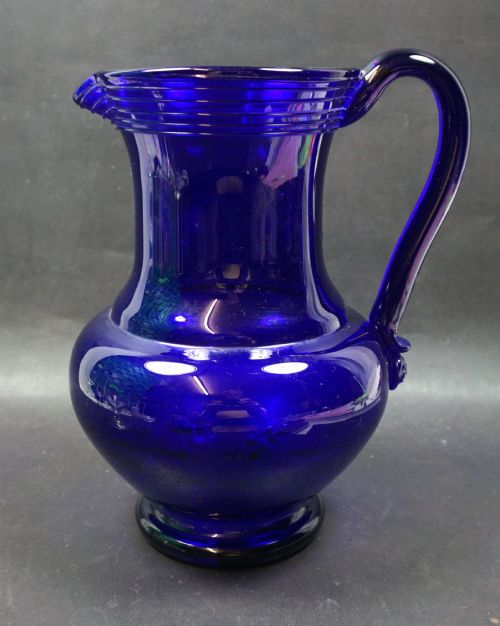
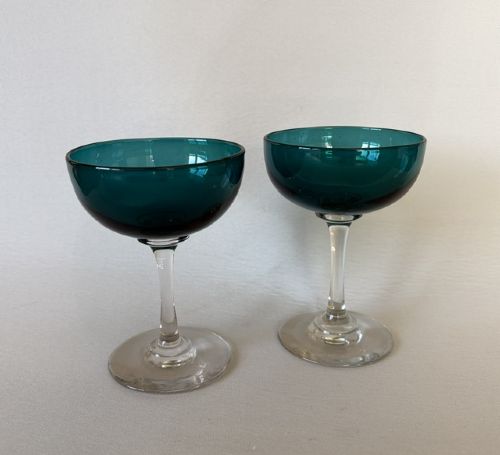
Hand blown glassware brings centuries of furnace-worked character to the table through Georgian wine glasses, Victorian jugs and coloured vessels.
Hand Blown Glassware
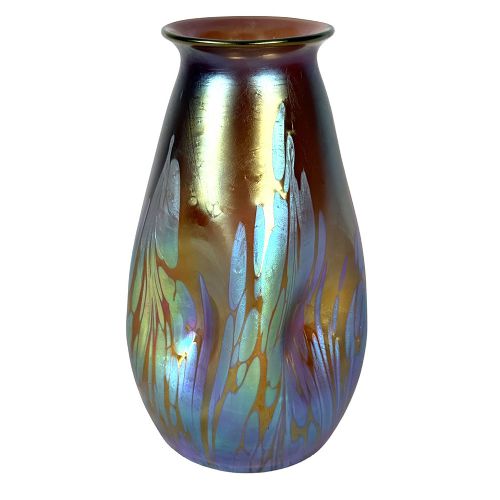
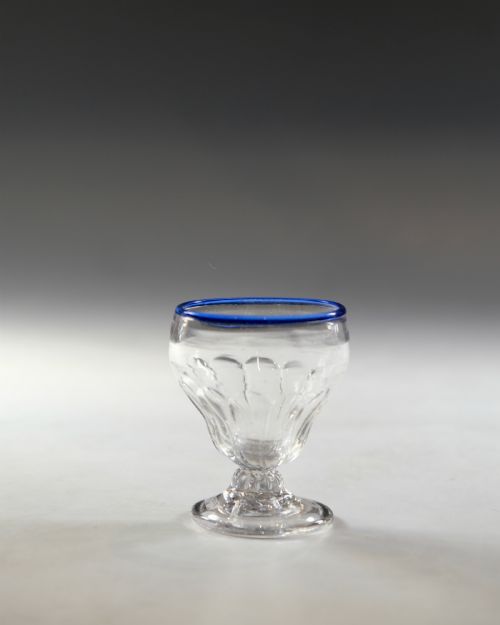
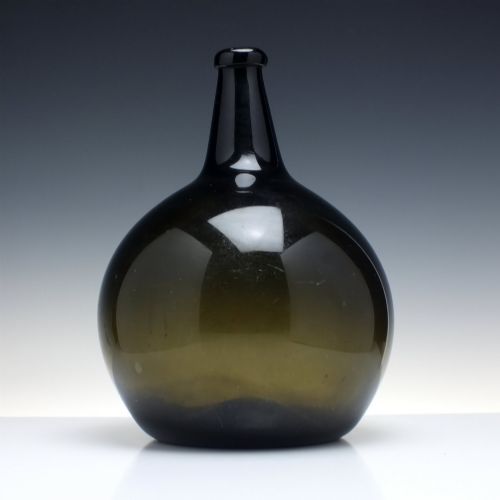
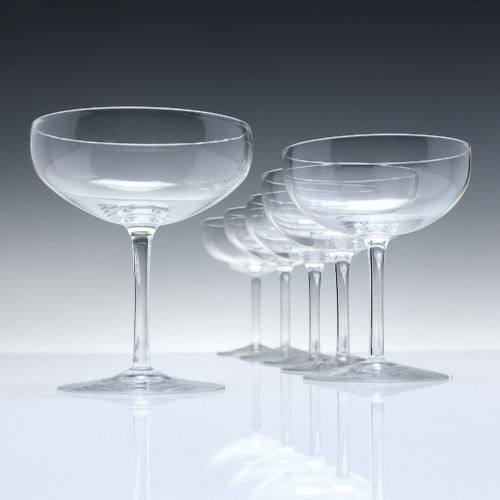
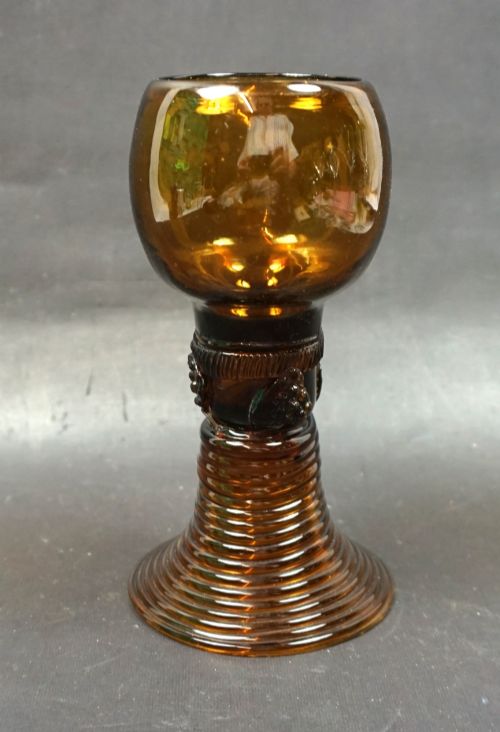
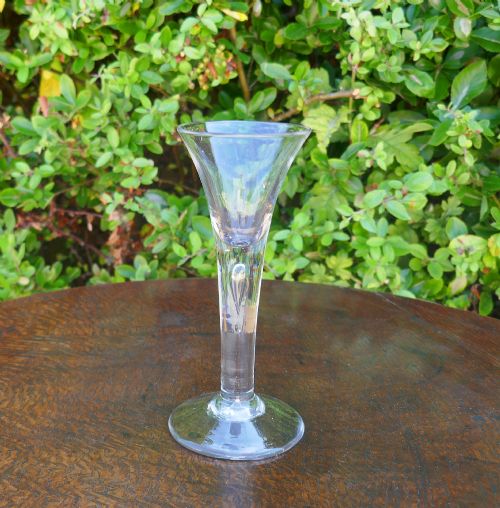
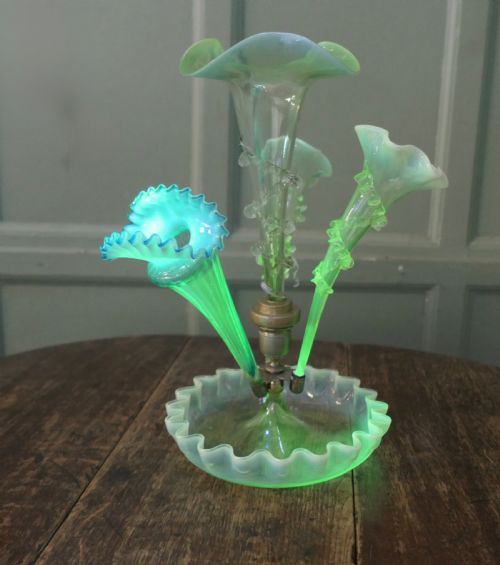
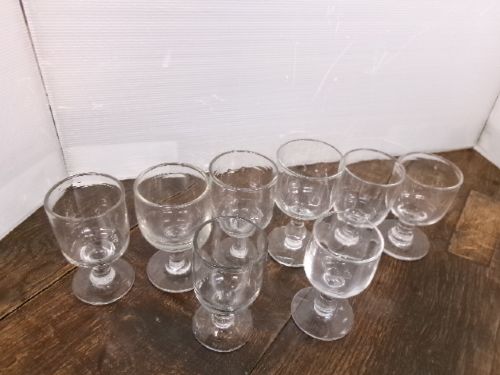
Hand blown glassware comprises items shaped at the end of a blowpipe, ranging from Georgian wine glasses and rummers to Victorian cranberry epergnes and Edwardian decanters. Buyers looking for hand blown glassware encounter functional tableware and decorative items spanning the eighteenth century through the Edwardian period, alongside Arts and Crafts and Bohemian pieces.
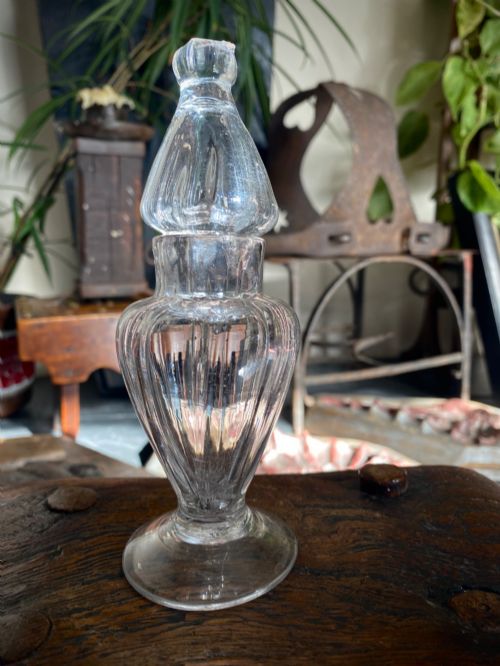
The selection on this page centres on historic drinkware, vases, decanters and bowls made across British, European and Venetian workshops. Pieces appear in clear lead glass, coloured variants like cranberry and green, and enamelled or engraved finishes.
Materials and technique
Makers shaped molten metal using a blowpipe and pontil rod, creating vessels with applied handles, folded feet and trailing rims. Lead glass, clear glass and coloured metal such as cranberry and uranium glass receive their forms through free-blowing or optical blowing into moulds.
Decoration involves hand painting with enamel, wheel engraving, or incorporating aventurine inclusions within the glass body during shaping.
Hand Blown Glassware Retail Price Guide 2026
Typical asking prices for hand blown glassware among the pieces listed under this phrase on Sellingantiques today, from the lower quarter to the upper quarter. They describe what is for sale here now, not the wider market.
Listings feature hand blown glassware spanning the 18th Century, Georgian, Victorian, Edwardian, and Arts and Crafts periods.
What distinguishes finer examples
Quality rests in the balance of the vessel, the clarity or rich saturation of the metal, and the precision of the pontil mark and stem formation. Finer pieces display controlled thickness, crisp wheel engraving, or neatly applied trails and handles.
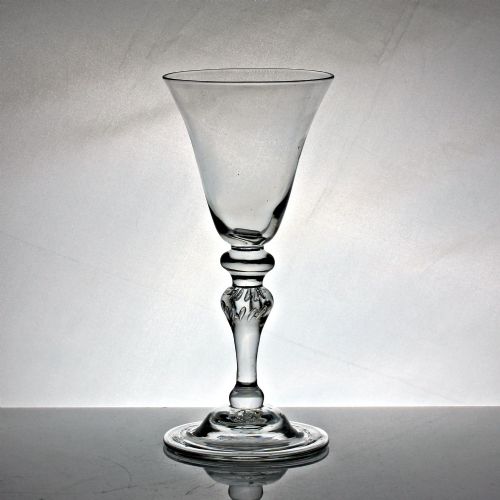
The distinction between standard utility items and superior examples lies in the dexterity required to draw a slender stem, shape a baluster knob, or apply delicate enamelling without distorting the vessel body.
James Powell·Harry Powell·Salviati·Vasart Glass
The Hand Blown Glassware Glossary
- Pontil mark
- The rough scar left on the base of a vessel where the punty rod was snapped off after blowing. Ground or polished pontils often indicate finer finishing.
- Cranberry glass
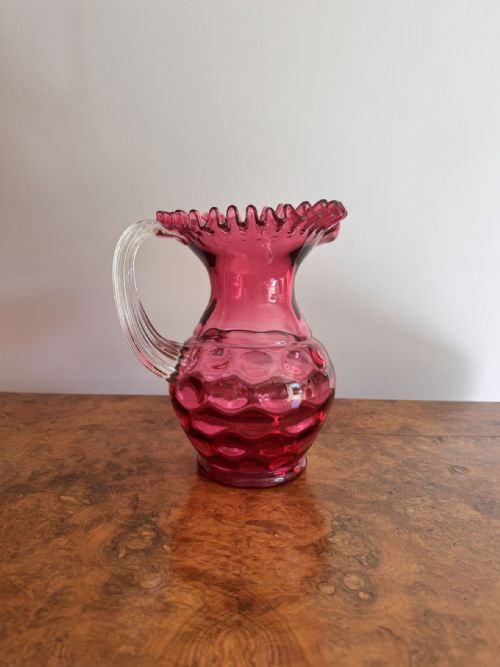
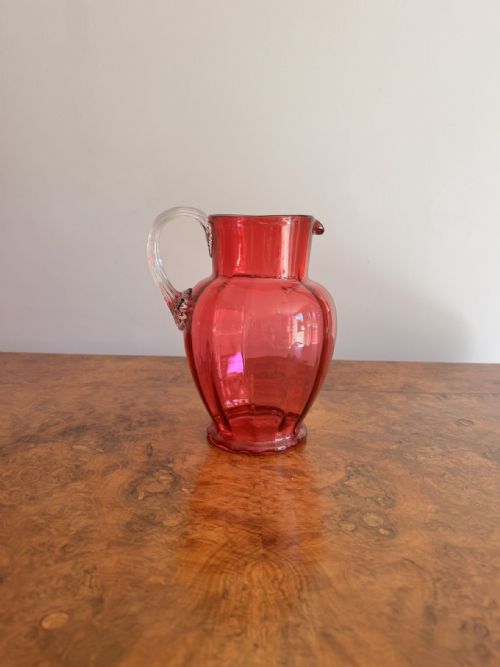
- A rich red-pink glass coloured with gold chloride, popular in Victorian tableware and epergnes. It appears frequently in sets of wine glasses and jugs.
- Rummer
- A heavy drinking glass with a short stem and capacious bowl, common during the Georgian and Victorian periods. These pieces were utilised for ale, wine or punch.
- Aventurine
- Metallic mineral flakes suspended within the glass matrix to produce a sparkling effect. This technique appears in early twentieth century studio work.
- Wrythen
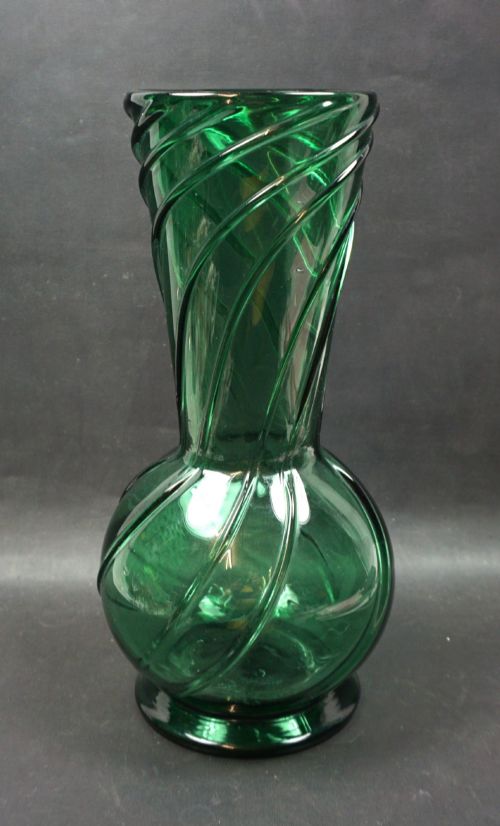
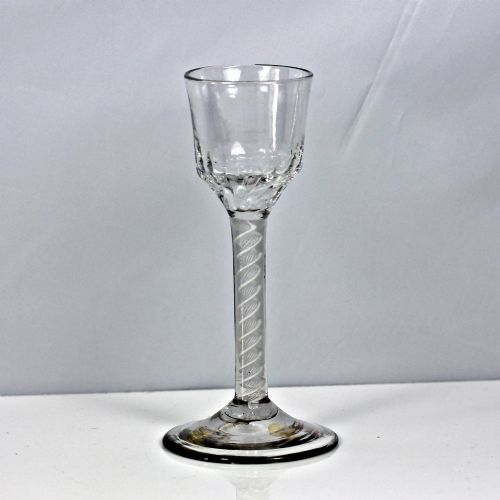
- A spiral pattern moulded or twisted into the body of a glass vessel. It creates an optical texture that catches the light.
Hand Blown Glassware: Frequently Asked Questions
What is cranberry glass?
Cranberry glass is a pinkish-red decorative material created by adding gold chloride to the molten batch. It gained popularity during the Victorian era.
Workshops shaped this material into wine glasses, jugs, and elaborate centrepiece epergnes.
How can I date old wine glasses?
Dating relies on the form of the bowl, the presence of air bubbles in the metal, and the construction of the stem. Georgian examples often feature baluster or knop stems with pontil marks.
Edwardian and later pieces display more uniform walls and machine-finished characteristics, though still mouth-blown.
Can I use antique glassware daily?
Historic drinking vessels can be used for dining and entertaining with careful handling. Hand washing is essential to preserve fragile rims and enamel decoration.
Due to the delicate nature of eighteenth and nineteenth century metal, avoid dishwashers and stacking items too tightly.