



Hand Blown Glass Carafe
A hand blown glass carafe brings tactile weight and rich colour to a table, shaped by centuries of studio craft.
Hand Blown Glass Carafe
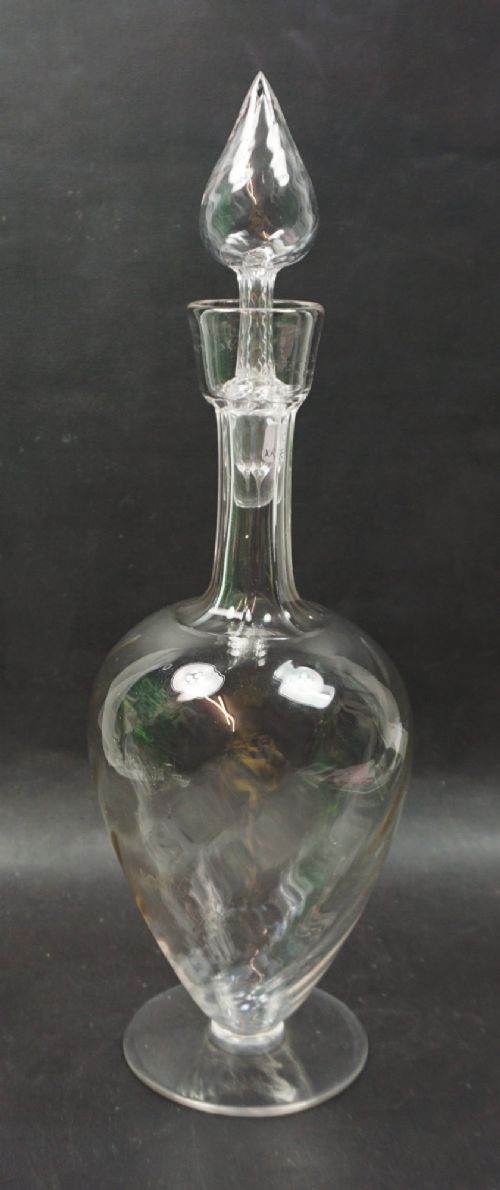
The versions most commonly met on this page span Victorian and Edwardian periods, featuring rich cranberry hues, deep greens, bright blues, and clear glass formations. Makers utilised traditional glassblowing techniques to create both simple domestic vessels and ornate decorative jugs.
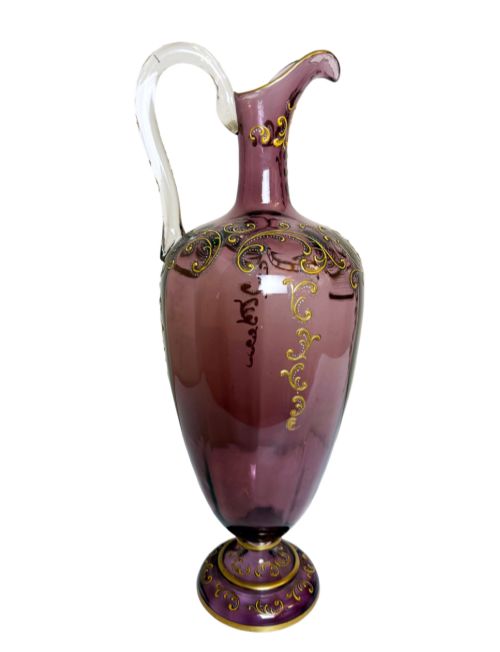
Geographic origins vary widely across the selection, encompassing English, French, Scottish, and Bohemian workshops. Forms range from straightforward shaft and globe bottles to whimsical animal shapes and gilt-appliqued pitchers.
Materials and production methods
Makers shaped molten material by hand, employing free-blowing and optical blowing techniques that left subtle ripples and air bubbles within the metal. Lead crystal and standard glass formed the primary body of these vessels, sometimes enriched with applied handles, collars, and poured rims.
Decoration relied on surface interventions such as enamel painting, hand-painted gilt applique, and contrasting flash overlays. Cranberry and Bristol blue pieces achieved their striking pigmentation through the addition of metallic oxides during the melting process.
Hand Blown Glass Carafe Retail Price Guide 2026
Typical asking prices for hand blown glass carafe among the pieces listed under this phrase on Sellingantiques today, from the lower quarter to the upper quarter. They describe what is for sale here now, not the wider market.
One exceptional nineteenth-century vessel takes the charming form of a dog, bridging practical drink service with whimsical animal sculpture.
Distinguishing quality in antique glass
The distinction between ordinary utility items and exceptional pieces rests upon the crispness of the hand-formed details and the brilliance of the glass. Superior examples display balanced proportions, clean pontil marks, and precise execution in painted or gilded decoration.
Artistic collaboration elevates certain works, such as pieces designed by Archibald Knox and produced by Liberty, or documented productions from James Powell. The weight of the metal and the clarity of the colour further separate standard production items from masterworks.
James Powell·Archibald Knox·Liberty
The Hand Blown Glass Carafe Glossary
- Pontil mark
- The rough scar left on the base of a vessel where the punty rod was snapped away after blowing. This physical trace confirms the piece was shaped by hand rather than moulded.
- Cranberry glass
- A rich red-pink transparent glass created by adding gold chloride to the molten batch. It gained immense popularity during the Victorian era for tableware and decorative jugs.
- Enamel painting
- A technique involving the application of powdered glass suspended in a medium, which is subsequently fired to fuse permanently with the vessel surface. It provides raised, opaque decoration.
- Gilt applique
- Applied surface ornamentation executed in metallic gold leaf or paint. This treatment frequently highlights rims, handles, and pictorial motifs on nineteenth-century pitchers.
- Shaft and globe
- A traditional bottle silhouette characterised by a long, slender neck above a bulbous spherical body. This form dates back to earlier centuries of English glass production.
Hand Blown Glass Carafe: Frequently Asked Questions
Were these vessels meant for wine?
Many of these pieces served as wine decanters, cider decanters, or water jugs depending on their size and stopper configuration. Specific forms like ewers and pitchers functioned primarily at the dining table for general liquid service.
Stoppers were paired with bottles to prevent oxidation, though many surviving examples now lack their original matching closures.
How do I date a glass carafe?
Examine the pontil scar on the base, the weight of the metal, and stylistic indicators such as colour palettes and decorative motifs. Georgian pieces often display different wear patterns and pontil formations compared to late Victorian or Edwardian productions.
Compare the silhouette and manufacturing quirks against documented examples from specific periods like the Arts and Crafts movement.
Can I use them for daily dining?
These historical items function adequately for serving beverages, provided you handle them with care during washing and pouring. Their thin hand-blown walls require gentle treatment compared to modern heavy glassware.
Displaying them away from direct sunlight protects coloured glass like cranberry and blue from potential fading or chemical shifts over time.