




Hammered Metal Tray
A hammered metal tray brings immediate texture and hand-wrought character to a room, turning a simple surface into a focal point.
Hammered Metal Tray
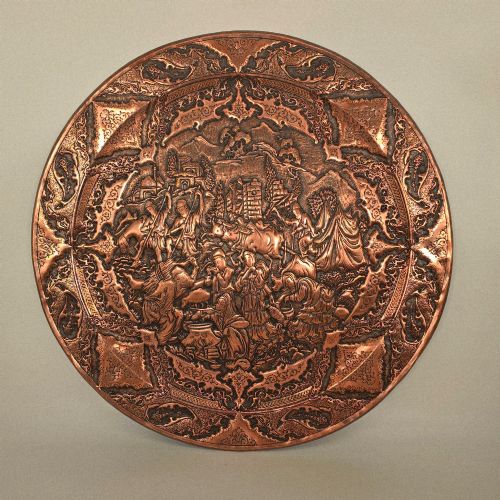
A hammered metal tray encompasses domestic serving pieces and decorative chargers produced across the late nineteenth and early twentieth centuries. These items reflect distinct design movements from the period, including Arts and Crafts, Art Nouveau, Art Deco, and regional styles such as Persian and Anglo-Indian.
The pieces listed on this page appear predominantly in copper and pewter, alongside occasional examples in brass and wrought iron. Forms range from large wall plates and serving trays to tea sets and stick stands.
Originating largely from the decades between eighteen eighty and nineteen thirty, these items showcase the heavy influence of hand-hammered and repousse techniques on household metalwork.
How they were made
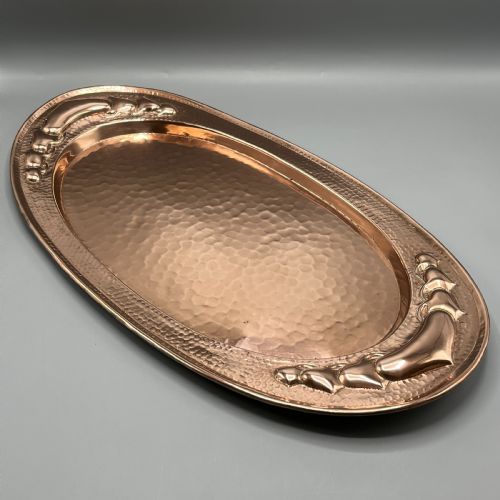
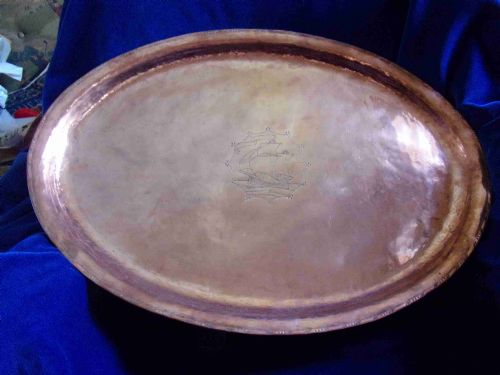
Makers shaped these items by hand using sheet metals such as copper and pewter, employing hammers to raise the metal from the reverse or sink it into wooden forms. This process leaves visible tool marks across the surface that record the physical labour of the artisan.
Decoration often involved repousse work and engraving, where designs of foliage, animals, or geometric motifs were pushed and chased from the back to create relief on the front. Workshops sometimes applied patination or enamel highlights to accentuate the hammered textures and decorative details.
A clover flower hides in the pewter edge of one tray, quietly wishing good fortune to whoever sets down a teacup.
What varies in quality
The distinction between standard production and finer pieces rests in the confidence and crispness of the hand-hammered surface. Skilled artisans achieved a balanced rhythm of blows that gave the metal a lively texture, whereas lesser examples can appear mechanical or flat.
Depth and complexity of the repousse relief also divide the range, with well-executed floral or animal motifs showing sharp detail and careful integration into the overall form. The integrity of the original metal finish, whether patinated copper or polished pewter, further distinguishes superior output.
Hugh Wallis·Armada Pewter·Liberty and Co·Faulkner Bronze Company
The Hammered Metal Tray Glossary
- Repousse
- A metalworking technique where the artisan hammers a design from the reverse side to create a raised relief on the front. This method was central to decorative metalware of the Arts and Crafts period.
- Charger
- A large decorative plate or tray intended primarily for display rather than everyday service. These pieces frequently hang on walls or sit centrally on furniture.
- Patination
- The surface coloration and ageing acquired by metal over time through oxidation and handling. Makers sometimes induced this chemical darkening deliberately to highlight texture.
- Beaten metal
- A descriptive term for surfaces shaped and textured by direct hammer blows. It highlights the manual skill involved in forming sheet metal into domestic objects.
Hammered Metal Tray: Frequently Asked Questions
How do I clean a hammered copper tray?
Copper surfaces respond best to gentle dusting and minimal intervention to preserve their historic patination. Avoid harsh chemical polishes that strip away the authentic character of the metal.
If cleaning is necessary, use a mild, non-abrasive metal cleaner specifically formulated for antique copper, applying it softly with a cloth and rinsing thoroughly.
Can I use these trays for serving food?
While many of these items originated as serving trays or tea and coffee pieces, their age and composition require careful consideration. Pewter and unlined copper can react with acidic foods and beverages.
For practical modern use, it is often wiser to employ them for display, desk organisation, or serving dry items rather than wet provisions.
How can I tell Arts and Crafts metalwork apart from Art Deco?
Arts and Crafts pieces from the earlier decades rely on organic motifs such as pomegranates, foliage, and clover flowers, executed with visible hand-beaten textures. They emphasise traditional craftsmanship and natural materials.
Art Deco items from the nineteen thirties lean towards geometric lines, stylised symmetry, and sleeker finishes that reflect industrial progress rather than medieval revival.
Were all hammered trays made by hand?
The degree of manual labour varied widely across the period, from entirely hand-raised studio pieces to factory-produced wares that utilised machine assistance for the basic form. Even on commercial items, finishing touches and decorative hammering were frequently applied by hand.
Examining the regularity of the marks on the reverse usually reveals whether a craftsman worked the entire piece independently.