


Decorative Metal Charger
Decorative metal charger pieces bring weight and intricate surface detail to an interior, drawing the eye through patterns of enamel, inlay and repoussé work.
Decorative Metal Charger
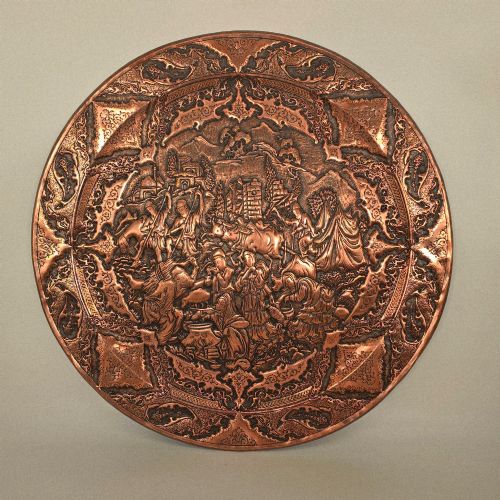
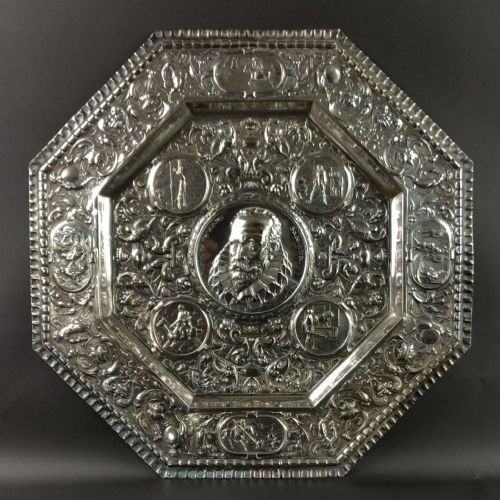
A decorative metal charger typically takes the form of a large circular plate, dish or tray designed primarily for display rather than domestic service. These objects range from heavy brass and copper platters to complex inlaid surfaces originating from diverse global traditions.
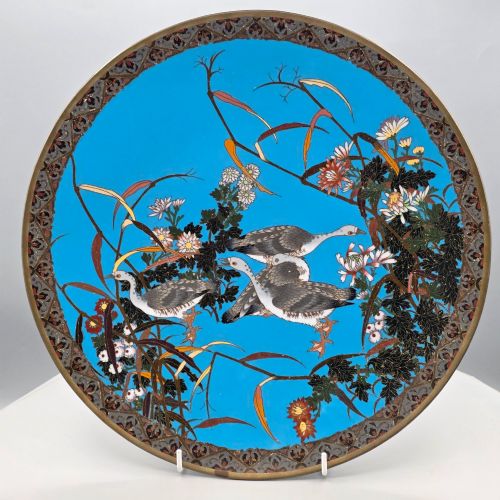
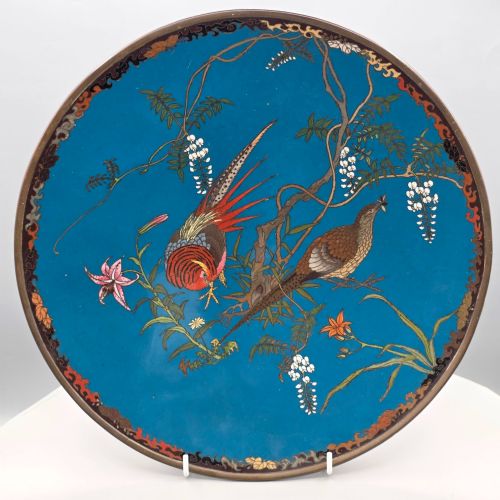
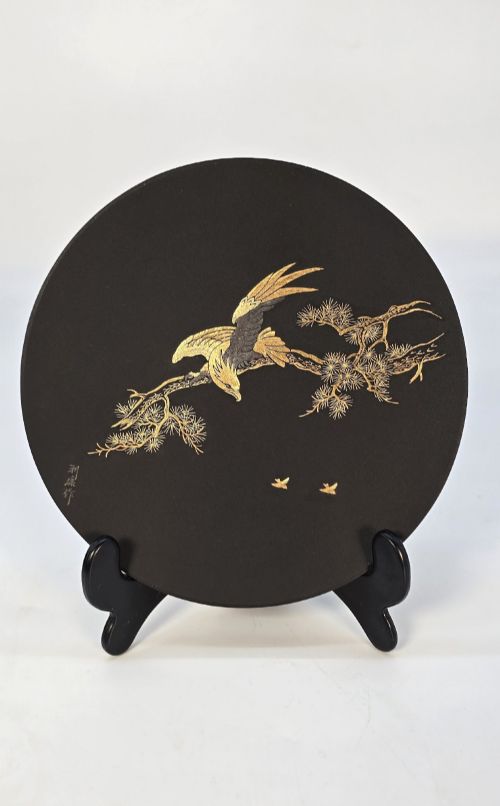
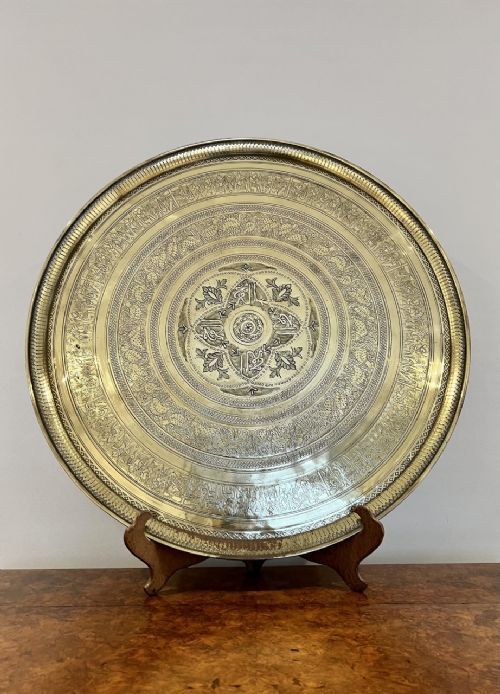
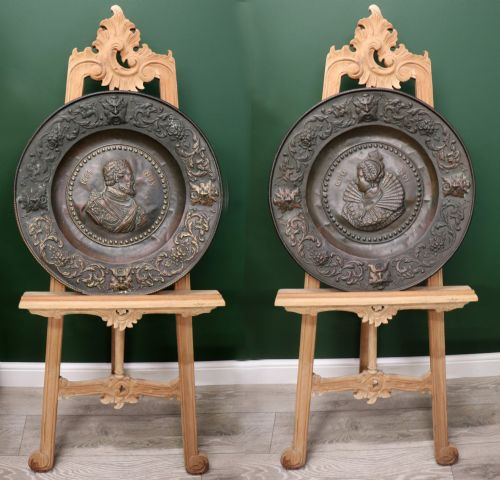
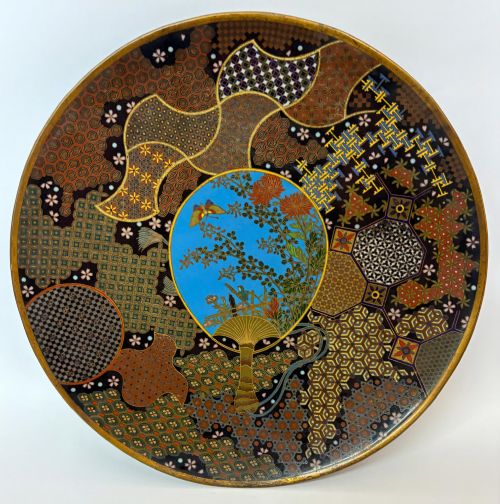
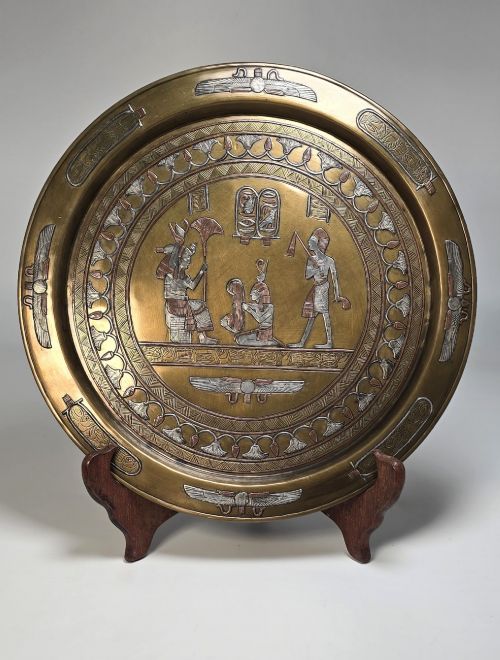
On this page, a buyer most frequently meets Japanese cloisonné enamel pieces from the Meiji period, alongside Middle Eastern Cairo Ware and European brass or copper wall chargers. These items span the late nineteenth century into the early twentieth century, reflecting varied regional aesthetics.
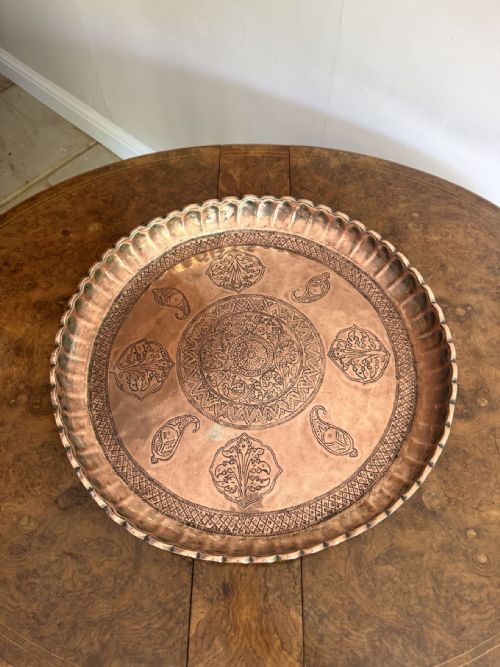
The category encompasses both deeply embossed repoussé work and flat metal surfaces decorated with gold, silver and bronze inlays. Such pieces functioned historically as decorative wall hangings or centrepiece table platters.
How they were made
Metals such as copper, brass and bronze form the physical base of these objects, shaped through hammering, casting or spinning. Artisans then applied surface decoration using techniques like repoussé, engraving and metal inlay.
Enamelling techniques, particularly cloisonné, involve soldering thin metal wires to form cells which are filled with coloured enamel pastes and fired. Mixed metal applications combine contrasting hues of gold, silver and iron on patinated backgrounds to create pictorial depth.
Listings feature items spanning the eighteenth century to the early twentieth century, utilising copper, brass, bronze, silver and cloisonné enamel.
What varies in quality
Quality separates through the precision and complexity of the surface ornamentation, such as the fineness of cloisonné wirework or the depth and clarity of hand-engraved foliate motifs. Pieces with disciplined pictorial composition and balanced symmetry stand apart from simpler commercial productions.
The choice of materials and the subtlety of mixed metal patination also dictate distinction. Superior examples demonstrate rigorous control over inlay techniques and retain the crispness of their original artisan tooling.
The Decorative Metal Charger Glossary
- Repoussé
- A metalworking technique where the artisan hammers the material from the reverse side to form a raised design in relief. This method creates tactile depth across copper and brass surfaces.
- Cloisonné
- An enamelling method utilising thin metal wires soldered to a metal body to create compartmentalised cells for coloured glass pastes. The piece is subsequently fired and polished to a smooth finish.
- Cairo Ware
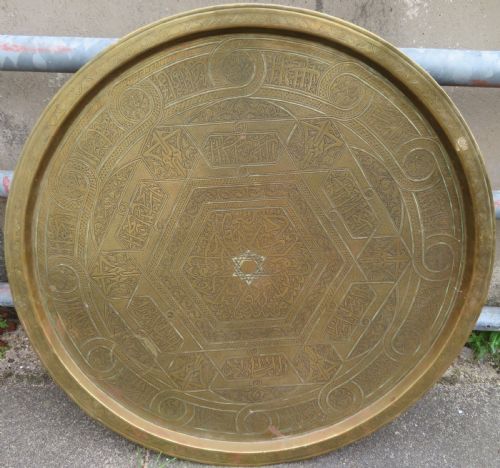
- Metalwork originating from late nineteenth-century Egypt, typically comprising brass or bronze bases inlaid with intricate patterns of silver and copper wire. These objects often display Islamic geometric or calligraphic motifs.
- Patination
- The natural or induced chemical altering of a metal surface over time, creating varied colour tones and depth. It protects the base metal while adding visual character to antique platters.
Decorative Metal Charger: Frequently Asked Questions
How were decorative metal chargers displayed?
These items were frequently hung on walls as decorative art pieces or placed flat on tables and sideboards as centrepieces. Their large diameters and reflective surfaces allowed them to catch and distribute light within period interiors.
Heavier examples often incorporated integrated loops or mounting brackets on the reverse to facilitate secure wall hanging without damaging the rim.
What is Cairo Ware?
Cairo Ware refers to nineteenth-century metalwork produced in Egypt, characterised by dark patinated bronze or brass bodies inlaid with contrasting silver and copper wires. These pieces drew heavily on traditional Islamic design motifs and appealed directly to European travellers.
The style combined local craftsmanship with Western demand, resulting in elaborate trays and chargers featuring dense geometric and calligraphic scrollwork.
How do I distinguish Japanese Meiji period enamel?
Japanese Meiji period enamel is defined by extraordinary technical precision, featuring microscopic wire cells and naturalistic depictions of birds, flowers and dragons. The colour palettes range from muted earthy tones to vibrant multi-coloured compositions.
Signatures or maker marks are occasionally concealed near the foot ring or within the design, pointing to specialised workshops and master artisans of the era.
Are these metal chargers suitable for daily use?
Most antique chargers are intended primarily for display rather than active service, especially those featuring delicate cloisonné enamel or raised wire inlay. Regular handling or moisture exposure can compromise vulnerable surface treatments.
Cleaning should remain minimal, relying on soft dry cloths to preserve the historic patination and prevent damage to inlaid silver and gold elements.