




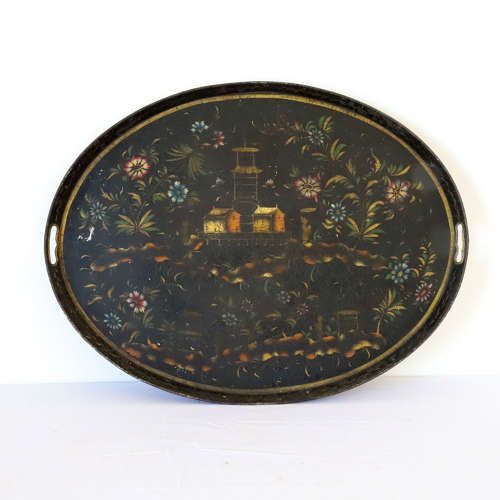


Oval Metal Serving Tray
An oval metal serving tray brings historic craftsmanship and utility to your table, spanning from the Regency period through the Arts and Crafts era.
Oval Metal Serving Tray
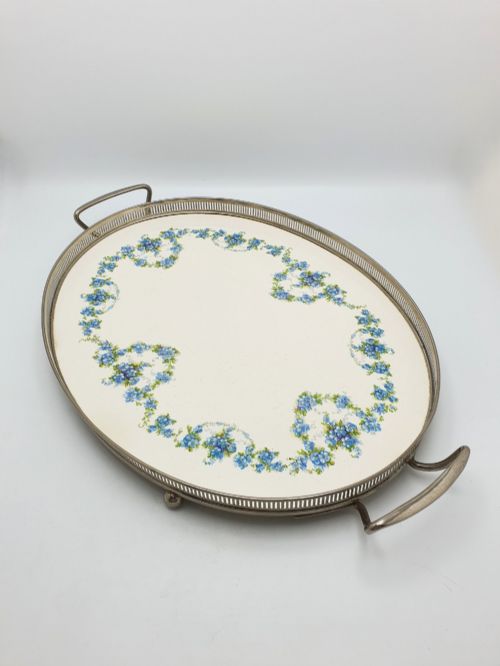
When you search for an oval metal serving tray, you encounter a diverse selection of historic serving pieces fashioned from copper, silver plate, pewter, and tôle ware. These items range from mid-nineteenth century French examples to early twentieth century Edwardian designs, reflecting functional and decorative domestic use.
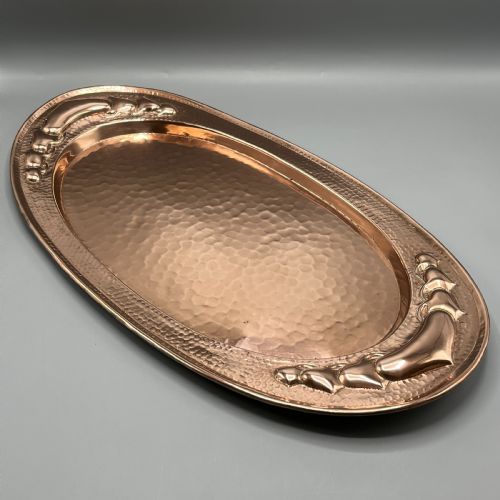
The versions you are most likely to meet on this page include Arts and Crafts repoussé copper trays, Victorian silver-plated platters, and lacquered papier-mâché or metal wares. They span styles from Art Nouveau and Chinoiserie to Continental decorative and French Second Empire.
Makers and origins vary widely across the inventory, taking in English workshops, German manufacturers such as Peters Hamburg, and Swedish decorated pieces. Each piece offers a distinct handling of the oval form, whether intended for formal display or practical service.
How they were made
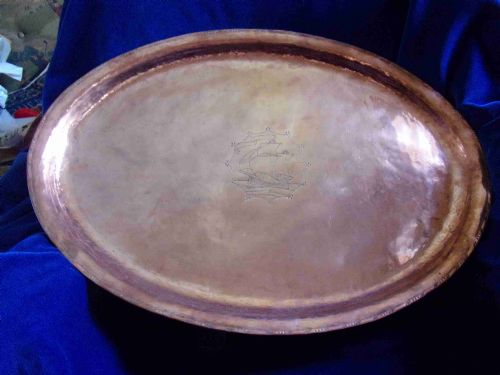
Metals such as copper and sheet iron form the structural foundation of these pieces, often shaped into generous oval proportions through hand-beating or pressing. Artisans utilised techniques like repoussé work to raise decorative motifs directly from the metal sheet, creating tactile surfaces.
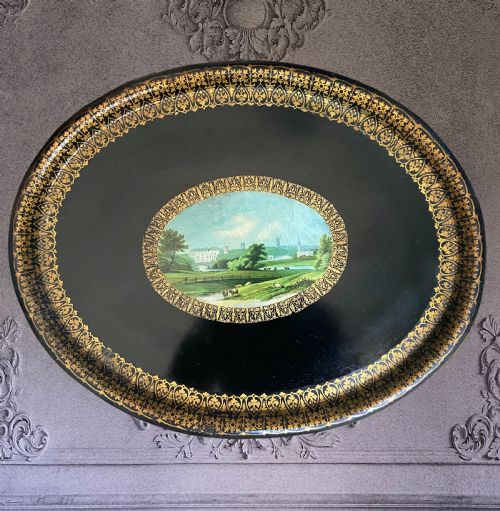
Surface decoration frequently involves silver plating, EPNS, gilding, or applied lacquer and ceramic elements. Tôle ware trays receive painted and lacquered finishes, while pewter and copper items rely on patination and hand-worked detailing to achieve their distinct visual character.
Period representation includes the Regency era, the nineteenth century, and early twentieth-century Edwardian designs.
What varies in quality
The distinction between standard production and exceptional work lies in the depth and crispness of the hand-worked detail, particularly in repoussé copper and chased silver plate. Superior examples exhibit precise hammering and harmonious proportions that retain their integrity across the entire surface.
Material thickness and the preservation of original finishes, such as gilding, lacquer, or plating, dictate the overall calibre of a piece. Trays bearing identifiable maker marks or originating from renowned workshops demonstrate greater artistic ambition in their execution.
Hugh Wallis·Liberty and Co·Peters Hamburg·Clay
The Oval Metal Serving Tray Glossary
- Repoussé
- A metalworking technique where the artisan hammers the metal from the reverse side to form a raised design on the front. This method creates pronounced relief ornamentation on copper and pewter trays.
- Tôle Ware
- Enamelled or lacquered sheet metal items produced in imitation of Asian lacquerware during the eighteenth and nineteenth centuries. These painted wares often feature floral or Chinoiserie motifs.
- EPNS
- Electroplated nickel silver, a common base material for metal tableware created by bonding a thin layer of silver to a nickel brass alloy. It became widely utilised in manufacturing durable serving trays from the nineteenth century onwards.
- Salver
- A flat tray, typically made of silver or silver plate, used for presenting food, drinks, or visiting cards. The term often overlaps with larger serving platters of similar form.
- Chinoiserie
- European artistic styles reflecting Chinese and East Asian aesthetic influences, popular in the decoration of lacquer and painted trays. This style incorporates motifs like landscapes and stylized flora.
Oval Metal Serving Tray: Frequently Asked Questions
How do I clean an antique metal tray?
Maintenance depends entirely on the specific material, requiring gentle dusting for lacquered tôle ware and careful cleaning for silver plate. Harsh polishes must be avoided to preserve historic patination and surface finishes.
Copper and pewter pieces benefit from minimal intervention, retaining their age character without aggressive rubbing that might thin the metal or remove hand-worked details.
Were these trays used for food service?
Many historic trays were designed for serving beverages, tea services, or food items in domestic dining rooms and drawing rooms. Silver-plated and metal examples provided a durable surface for daily household hospitality.
Some decorative or painted tôle and lacquered pieces served primarily as display items or receptacles for visiting cards, depending on their size and fragility.
How do I date an Arts and Crafts tray?
Dating relies on identifying specific stylistic markers, manufacturing techniques, and maker associations typical of the late nineteenth and early twentieth centuries. Hand-beaten surfaces and organic Art Nouveau motifs point toward this period of craft revival.
Examining the construction of handles, rivets, and the composition of the metal base helps distinguish original Arts and Crafts work from later reproductions.
What is tôle ware?
Tôle ware refers to painted or lacquered sheet metal objects, predominantly produced in France and Britain during the eighteenth and nineteenth centuries. The metal base receives a durable enamel or lacquer coating before being decorated by hand.
Floral scenes, Chinoiserie vignettes, and dark backgrounds characterise these functional decorative items, which include oval serving platters and canisters.