





Hammered Iron Stand
These hammered iron stand pieces bring robust utility and distinct period character to any interior.
Hammered Iron Stand
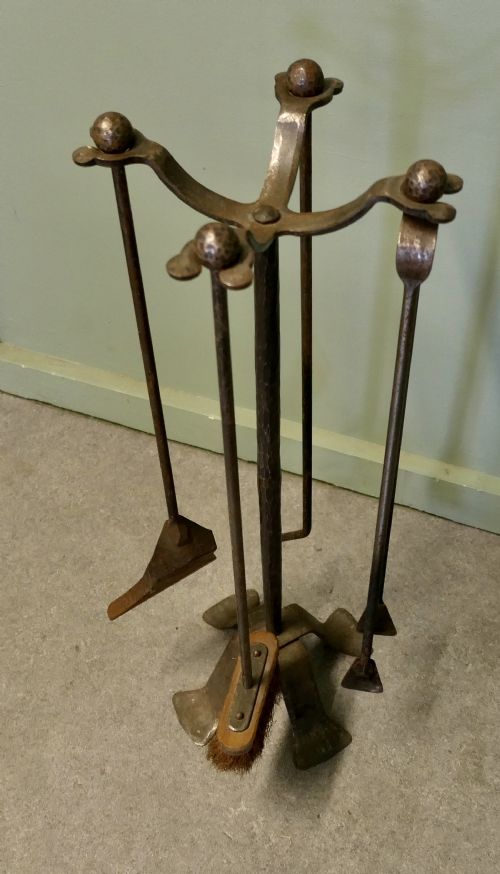
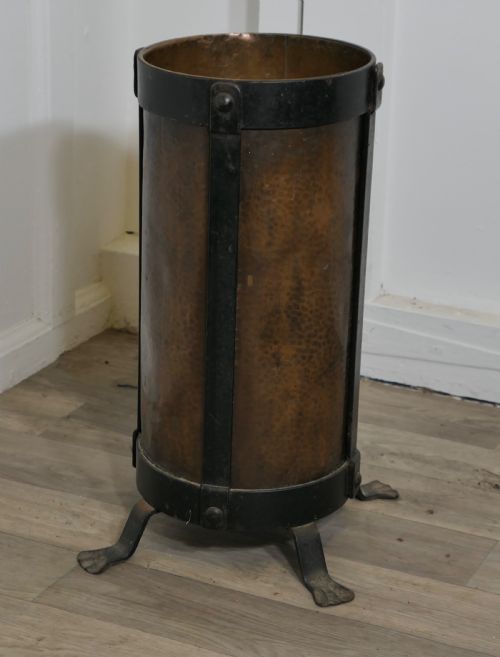
A hammered iron stand combines functional metalwork with decorative presence, often incorporating mixed metals like copper and brass. Buyers searching for a hammered iron stand encounter domestic accessories ranging from umbrella stands and stick stands to fireplace andirons and jardinières.
The examples seen here span the Victorian era, the nineteenth century, and the early decades of the twentieth century. Forms emerge across several distinct design movements, most notably Arts and Crafts, Art Nouveau, Art Deco, and Amsterdam School styles.
Domestic utilitarian objects dominate the selection, including heavy umbrella holders, companion sets, and plant basins. These items reflect an era when practical household goods received careful artisanal attention.
How they were made
Makers utilised wrought iron, steel, and plain iron for the primary structural elements and frames. Hammered surfaces reveal the manual shaping of the metal, often combined with riveting.
Copper and brass components frequently appear alongside the ironwork, adding tonal warmth and contrasting metallic finishes. Wood and tin also serve auxiliary roles in specific stands and holders.
Hammered Iron Stand Retail Price Guide 2026
Typical asking prices for hammered iron stand among the pieces listed under this phrase on Sellingantiques today, from the lower quarter to the upper quarter. They describe what is for sale here now, not the wider market.
Materials recur across wrought iron, copper, and brass, frequently uniting heavy structural iron with warm hammered metal bowls.
What varies in quality
The calibre of a piece depends heavily on the dexterity of the metalwork and the integration of mixed materials. Heavier gauges of iron and substantial copper bowls denote superior construction.
Stylistic coherence marks the upper tier of objects, where period aesthetics such as Amsterdam School or Arts and Crafts design principles guide every rivet and hammered curve.
Hugo Berger Goberg
The Hammered Iron Stand Glossary
- Arts and Crafts
- A design movement valuing handcraftsmanship and traditional materials over mass production. This style heavily influences many nineteenth and early twentieth century metal objects.
- Amsterdam School
- An architectural and design style from the early twentieth century characterised by expressionist forms and expressive brick or metal work. Pieces from this tradition display bold geometric integration.
- Pricket candlestick
- A candleholder featuring a sharp spike upon which a candle is stuck. These frequently appear in brass and iron combinations.
- Jardiniere
- An ornamental pot or stand designed to hold plants or flowers. In metalwork, these often feature hammered copper bowls mounted on iron frames.
- Andirons
- Horizontal metal bars raised on legs used to support logs in an open fireplace. They often incorporate decorative iron standards and brass finials.
Hammered Iron Stand: Frequently Asked Questions
How were these stands used originally?
In period interiors, these stands served practical daily roles in hallways, hearths, and reception rooms. Umbrella and stick stands kept wet walking gear organised near the entrance, while companion sets and andirons managed hearth fires.
Jardinières and pots on stands provided elevated spaces for indoor plants, integrating natural greenery into domestic living spaces through durable metal vessels.
How do I date a hammered iron stand?
Dating relies upon stylistic markers and material combinations associated with specific eras and design movements. Victorian and nineteenth-century pieces often display Gothic Revival or heavier utility forms, while pieces from nineteen hundred reflect Art Nouveau or Amsterdam School geometries.
Construction methods such as riveting and the specific texture of the hammered surface also offer strong chronological clues regarding the workshop origin.
How do I care for iron and copper?
Maintenance involves keeping the metal dry and free from moisture to prevent oxidation and rust accumulation on the iron surfaces. Gentle dusting preserves the original patina without stripping the historic finish.
Polishing should be approached with caution, as harsh chemical cleaners can remove the aged character and subtle coloration acquired over more than a century of existence.