
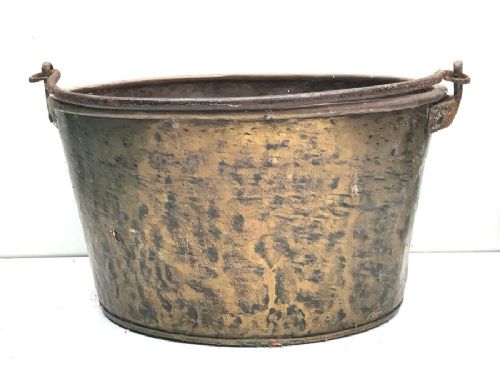
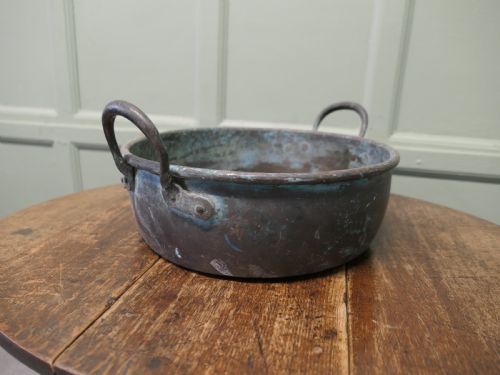
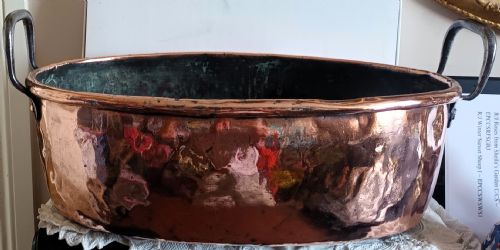


Hammered Copper Pan
These hammered copper pan examples bring warmth and robust utility to any kitchen workspace, offering genuine historical character for daily culinary use.
Hammered Copper Pan
A hammered copper pan represents centuries of functional British and European kitchenware, built for serious food preparation rather than mere display. When browsing these items, buyers encounter heavy vessels designed for preserving, boiling, and dairy work across the Georgian, Victorian, and Arts and Crafts periods.
The most common forms on this page include large preserving pans, cream setting vessels, and cooking bowls originating from the eighteenth and nineteenth centuries. These utilitarian items bridge the gap between historic craftsmanship and practical home integration.
How they were made
Makers shaped these vessels primarily from heavy sheet copper, hammering the metal manually to achieve rigidity and depth. Iron, brass, and wrought iron provided structural support for handles and rims, ensuring the cookware could endure high heat.
Internal surfaces typically received a protective lining of tin to prevent direct contact between food and copper. Rivets secured handles firmly to the body, reflecting the straightforward manufacturing methods of rustic farmhouse and Victorian workshops.
Listings span the Georgian, Victorian, and Arts and Crafts styles, incorporating materials such as copper, iron, wrought iron, brass, and tin.
What varies in quality
Quality rests upon the thickness of the metal plate and the integrity of the hand-hammered surface texture. Heavier gauge copper indicates a vessel built for demanding kitchen tasks rather than lighter decorative pieces.
The skill evident in the hand-formed contours and the durability of the riveted joints distinguish finer examples. Pieces retaining well-fitted iron handles or balanced proportions demonstrate superior craftsmanship within their period.
The Hammered Copper Pan Glossary
- Cream setting pan
- A wide, shallow vessel used in dairies to allow cream to rise to the surface of milk. These items feature prominently in Georgian and Victorian agricultural contexts.
- Preserving pan
- A deep bowl designed for boiling fruit and sugar, typically equipped with a sturdy handle for lifting heavy loads. The heavy copper construction ensures even heat distribution during long cooking processes.
- Riveted handle
- A grip attached to the body of a vessel using metal pins hammered flat on both sides. This technique provides immense strength necessary for lifting heavy culinary metalware.
- Tin lining
- A protective metallic coating applied to the interior of copper cookware. This layer prevents copper toxicity when cooking acidic foods.
Hammered Copper Pan: Frequently Asked Questions
Are these antique pans safe for modern cooking?
Many historic copper vessels require a fresh tin lining before they can safely come into contact with food again. Buyers intending to cook should check the condition of the interior surface.
Unlined vessels make striking decorative accents or storage containers in a rustic kitchen setting. Professional re-tinning services can restore the cooking functionality of solid copper pieces.
How do I clean and polish copper pans?
Traditional cleaning involves gentle mixtures of salt and acid, such as lemon juice, applied with a soft cloth to remove tarnish without scratching the metal. Avoid harsh abrasive pads that wear away the historic surface texture.
Allowing copper to develop a natural dark patina is an acceptable alternative to frequent polishing. Many collectors prefer the honest signs of age rather than a bright mirror finish.
How do I distinguish Georgian from Victorian pieces?
Georgian metalware generally displays simpler hand-beaten lines and earlier handle attachments associated with eighteenth-century domestic practices. The weight tends to be substantial, reflecting the manual rolling methods of the era.
Victorian items often incorporate standardised rolling techniques alongside heavier cast iron or brass fittings. Stylistic cues such as Arts and Crafts influences appear in later nineteenth and early twentieth-century examples.
What is a cream setting pan used for?
Dairy maids utilised wide, shallow pans to rest fresh milk so that the cream naturally separated and floated to the top. The broad surface area facilitated efficient skimming.
These vessels transitioned from agricultural utility into decorative home items due to their pleasing proportions and warm metallic tone.