

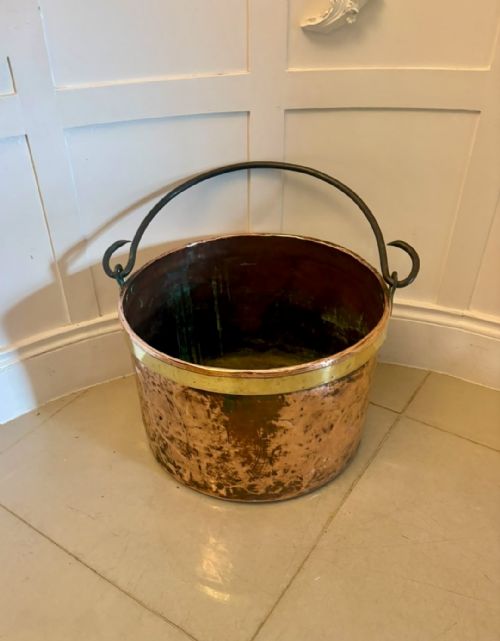


Hammered Brass Fireside Bucket
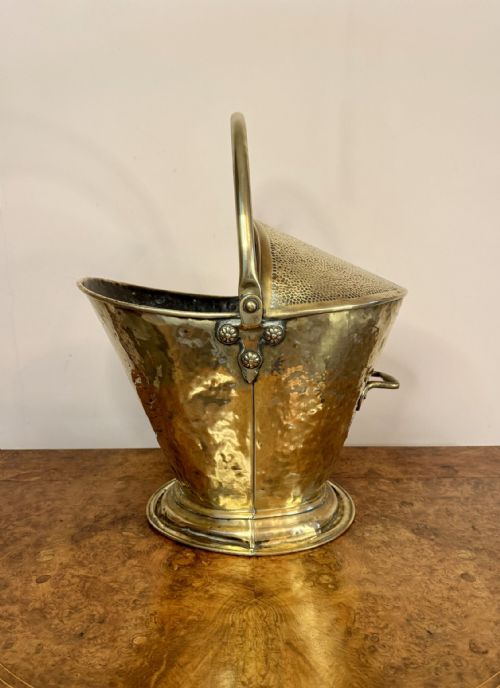
These hammered brass fireside bucket pieces are solid metal hearth containers used to hold coal or logs, prized for their practical utility and period character.
Hammered Brass Fireside Bucket
A hammered brass fireside bucket serves as a hearth container designed to store coal, logs, or kindling near the fireplace. When searching this phrase, a buyer encounters vessels spanning the Victorian and Edwardian eras, alongside Regency and Georgian pieces.
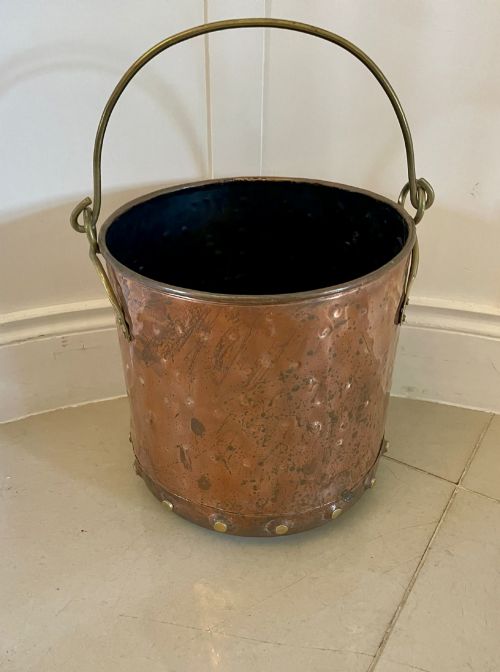
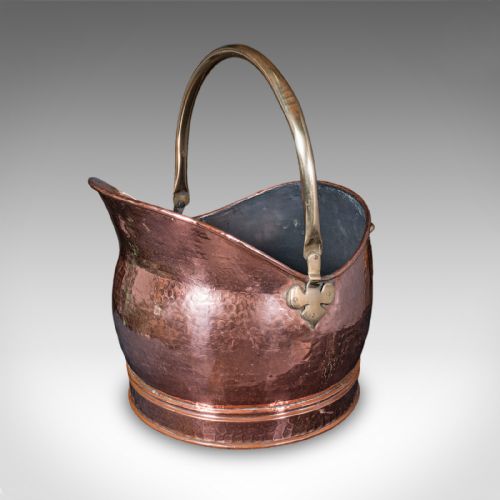
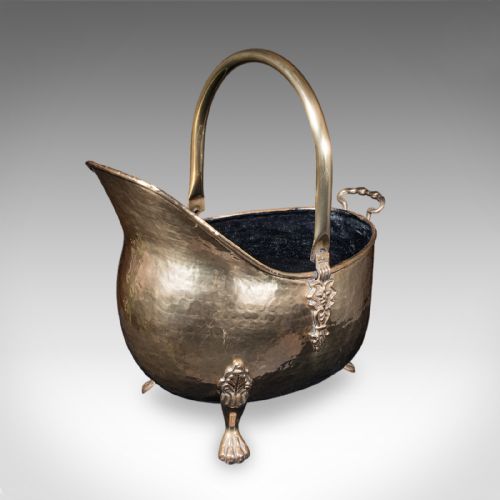
The common form on this page is the helmet-shaped coal scuttle, often rendered in brass or copper with handbeaten finishes and matching shovels. Pieces also appear as plain bins, receivers, and planters.
Origins stretch across the nineteenth century into the early twentieth century, taking shape through Victorian, Arts and Crafts, and Art Nouveau styles. These objects bridge utilitarian function with decorative metalwork.
Distinctions in quality
Quality rests in the weight and gauge of the metal sheet, separating substantial vessels from lighter alternatives. Heavier brass and thick copper display superior resilience against daily hearth wear.
Execution of the handbeaten surface texture and the neatness of the riveting define the finer examples. Well-formed handles and intact original shovels further elevate the standing of a piece.
Hammered Brass Fireside Bucket Retail Price Guide 2026
Typical asking prices for hammered brass fireside bucket among the pieces listed under this phrase on Sellingantiques today, from the lower quarter to the upper quarter. They describe what is for sale here now, not the wider market.
Several buckets arrive complete with their original brass shovels, ready for a century-old coal run.
Henry Loveridge
The Hammered Brass Fireside Bucket Glossary
- Scuttle
- A metal container with a hinged handle and a sloping lip designed for carrying and pouring coal onto a fire. This form dominates nineteenth-century hearth accessories.
- Helmet coal scuttle
- A specific bucket shape featuring a flared rim resembling a traditional helmet, aiding the clean transfer of fuel.
- Arts and Crafts
- A design movement emphasising hand craftsmanship and visible working marks on metals like brass and copper. Pieces from this style often feature simple, honest construction.
- Art Nouveau
- A decorative style characterised by flowing, organic lines and natural motifs popular around the turn of the twentieth century. It influences the contours of several fireside containers here.
- Regency
- An architectural and decorative period dating from the early nineteenth century known for classical restraint and elegance. Items from this era bring formal lines to the hearth.
Hammered Brass Fireside Bucket: Frequently Asked Questions
What is a hammered brass fireside bucket?
It is a metal container used beside the hearth to hold coal, logs, or kindling for an open fire. These vessels combine heavy metal construction with decorative surface work.
Most examples date from the Victorian and Edwardian periods, appearing in brass or copper with distinct helmet or bucket shapes.
How do I date a brass fireside bucket?
Dating relies on stylistic markers such as Victorian helmet silhouettes, Arts and Crafts handbeaten surfaces, or Regency proportions. Materials like solid brass and riveted copper also align with specific nineteenth-century manufacturing methods.
Examining the construction details and handle attachments helps connect a piece to its particular era.
Were these buckets only used for coal?
While primarily made as coal scuttles or receivers, many served to store logs and kindling near the fireplace. Some versatile examples also double as planters.
Their robust metal construction handled the heavy weight of solid fuel without sustaining damage.
How do I care for antique brass?
Maintenance involves dusting with a soft cloth and preserving the natural patina developed over the decades. Harsh chemical polishes should be avoided to protect the historic metal surface.
Allowing the brass to age naturally maintains the character acquired since the nineteenth century.