



Coal Urn
A coal urn combines domestic utility with decorative presence beside the fireplace, holding fuel within a finished metal or wood vessel.
Coal Urn
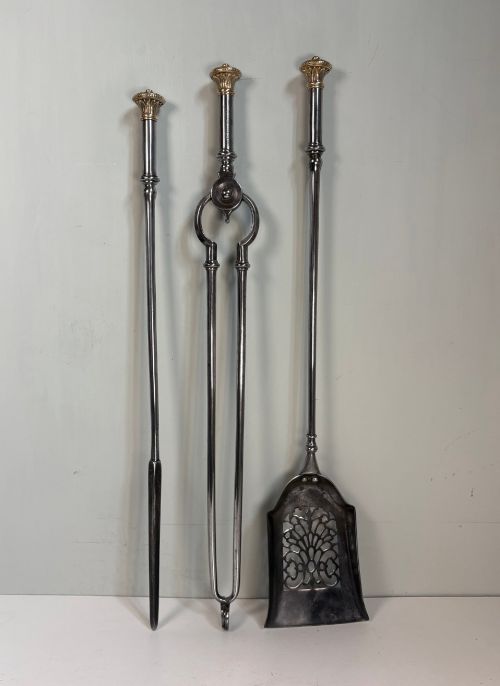
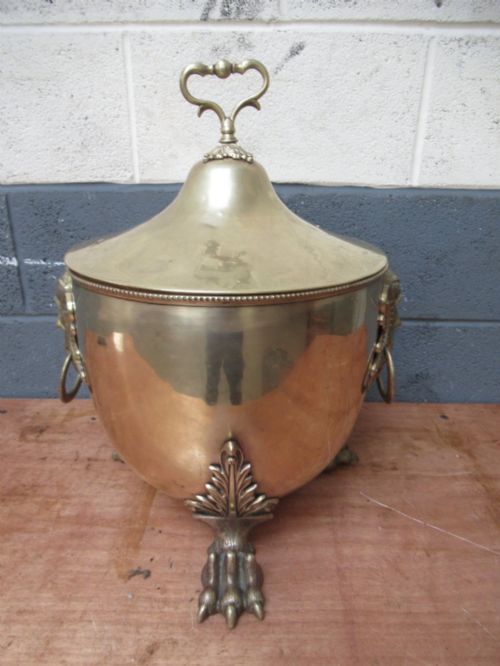
The pieces appearing on this page span the eighteenth, nineteenth, and early twentieth centuries, drawing on Georgian, Regency, Victorian, Edwardian, Arts and Crafts, and Art Nouveau design movements. Metal vessels often take rounded, bucket, or helmet shapes, sometimes accompanied by matching fire tools, liners, or iron frames.
Alongside dedicated metal bins, the selection includes related fireside and container items such as peat buckets, log bins, planter jardinières, and fire baskets. These objects reflect both formal period aesthetics and the practical demands of nineteenth and early twentieth-century domestic heating.
Materials and construction methods
Makers utilised durable metals such as brass, copper, steel, iron, and wrought iron, frequently hammering, spinning, or casting the bodies to create robust vessels. Copper and brass pieces often feature applied handles, rims, and liners, whilst iron frames provide structural support for larger log bins and cauldrons.
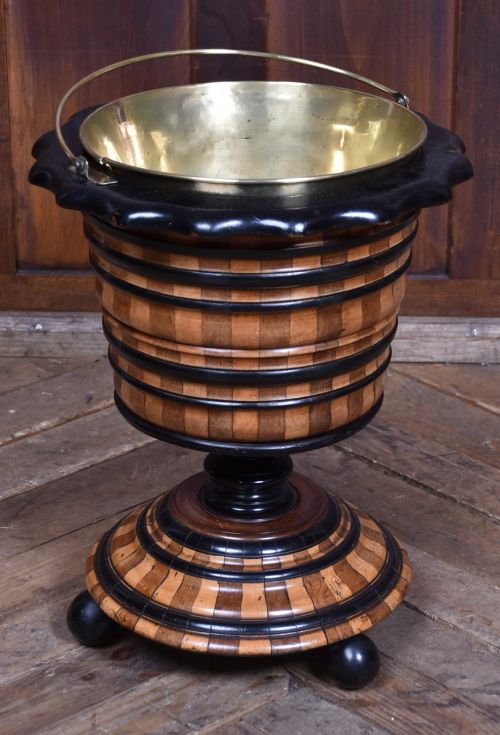
Wood also plays a significant role in construction, appearing as ebonised wood, rosewood, and mixed hardwoods. Cabinetmakers incorporated inlaid details and metamorphic mechanisms into wooden scuttles, combining fine joinery with functional metal interiors.
Coal Urn Retail Price Guide 2026
Typical asking prices for coal urn among the pieces listed under this phrase on Sellingantiques today, from the lower quarter to the upper quarter. They describe what is for sale here now, not the wider market.
Listings span the eighteenth century to the 1930s, featuring materials from humble iron and steel to polished brass, copper, rosewood, and mixed hardwoods.
Distinctions in craftsmanship and finish
Quality rests upon the weight of the metal, the integrity of the joins, and the crispness of any applied decoration, such as hand-hammered dinanderie work or cast brass mounts. Finer examples maintain original liners, sturdy handles, and well-fitted lids that demonstrate purposeful construction rather than purely decorative intent.
In wooden and inlaid pieces, the standard of timber selection, the precision of the marquetry or stringing, and the smoothness of any mechanical action separate standard production from superior cabinetwork. The presence of original surface patination and authentic framing further distinguishes better-preserved examples.
William Soutter & Sons·Coalbrookdale·Coalport
The Coal Urn Glossary
- Dinanderie
- An ancient term for decorative brass and copper wares produced in northern Europe, often featuring beaten surface textures. This technique is frequently seen on Arts and Crafts and Art Nouveau bins.
- Helmet scuttle
- A coal container featuring a flared, sloping rim resembling a medieval helmet, designed for pouring fuel cleanly onto a fire. These typically include a fixed arched handle and a smaller steadying handle underneath.
- Metamorphic
- A descriptive term for furniture or vessels designed to transform or serve multiple functions, such as a coal scuttle that conceals its internal compartment behind a drop-front or tilting mechanism.
- Jardiniere
- An ornamental pot or stand designed to hold plants or flowers, though many large metal examples from the period double as log or coal bins.
- Fire basket
- A metal grate designed to hold burning fuel within an open fireplace, frequently produced in matching period styles alongside coal containers and tool sets.
Coal Urn: Frequently Asked Questions
How were coal urns used?
Coal urns sat beside the domestic fireplace to hold a supply of fuel close at hand without cluttering the hearth. Servants filled them from larger coal cellars so that coal was readily available for stoking the fire throughout the day.
Many designs included removable metal liners to catch dust and make emptying debris straightforward. Lidded versions kept coal dust contained and maintained a tidy appearance in formal reception rooms.
Where should I place a coal urn?
These vessels suit traditional fireplace settings where their metal or wood surfaces complement period fenders and fire irons. They fill empty hearth corners with functional history.
Beyond fireside use, larger copper and brass containers easily adapt to holding logs, kindling, umbrellas, or potted plants in hallways and living spaces.
What is the difference between a coal scuttle and a log bin?
Coal scuttles generally feature pouring spouts or helmet shapes designed to transfer small pieces of coal directly into a grate. They often include lids and handles tailored for controlled tipping.
Log bins and cauldrons offer wider, open tops intended for stacking larger pieces of firewood or peat rather than granular fuel. Their construction prioritises capacity and sturdy framing over pouring mechanics.