
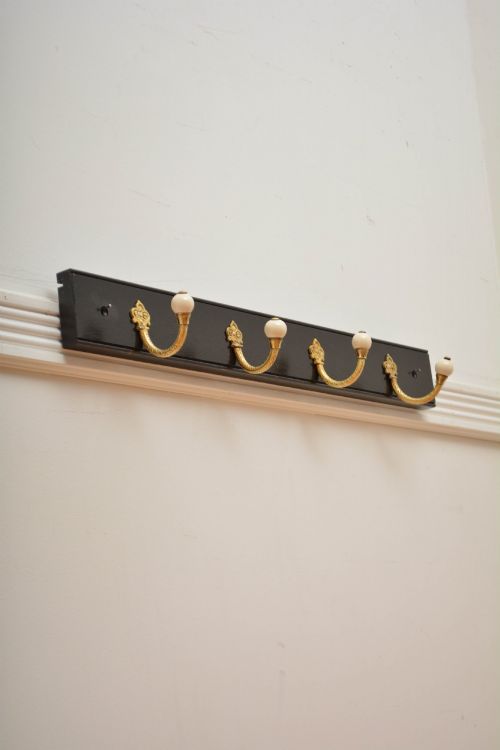


Hallway Peg Rail
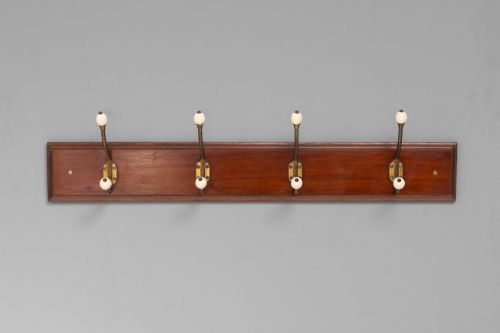
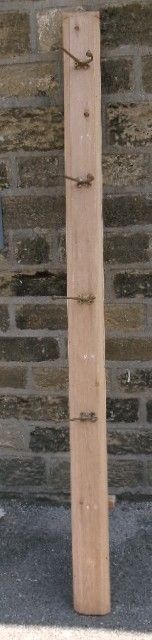
These hallway peg rail pieces are practical wall-mounted items designed for hanging coats and hats, built in timber with brass, ceramic, or iron hooks.
Hallway Peg Rail
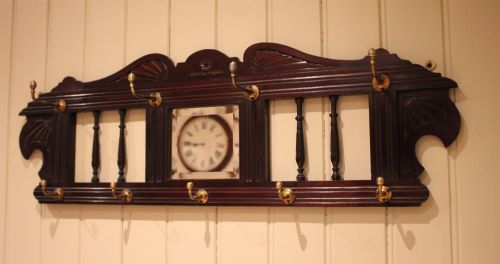
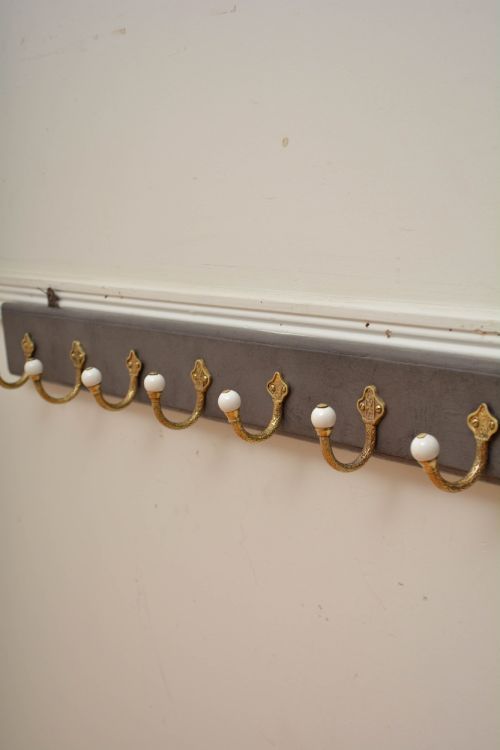
When you search for hallway peg rail, you encounter wall-mounted wooden boards fitted with rows of hooks for hanging garments and hats in entrances, cloakrooms, and reception halls. The most common examples on this page date from the Victorian and Edwardian periods, constructed as straightforward pine or mahogany boards with attached metal and ceramic hooks.
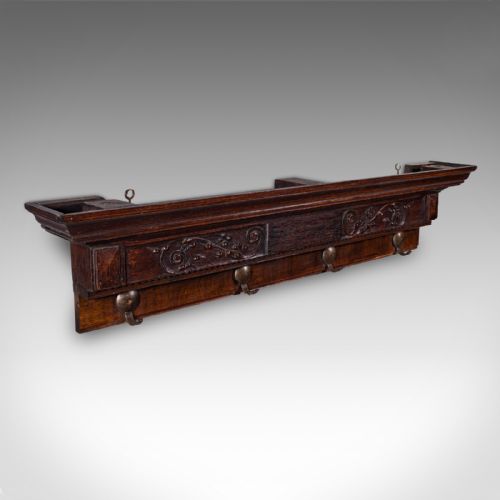
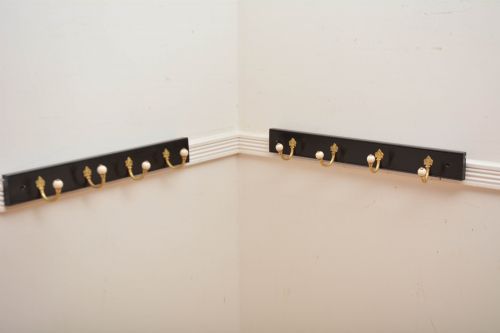
The selection ranges from early oak hook racks of the eighteenth century up to Edwardian reception valets and bentwood hat and coat hooks. Pieces vary in length and hook configuration, from pairs of double brass hooks on small backboards to longer rows suited to larger hallways.
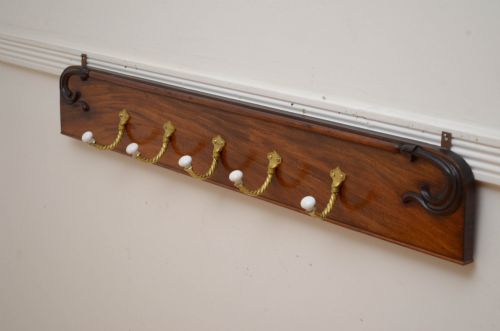
Makers utilised various timber types, mounting sturdy brass, cast iron, and ceramic hooks onto wooden backboards designed to be fixed directly to walls. Styles span William IV, Jacobean influences, and standard Victorian workshop designs, reflecting practical domestic utility across different decades.
How they were made
Makers fashioned the backboards from solid timbers such as mahogany, oak, pine, and ebonised wood, shaping the edges and mounting holes to secure the assembly to walls. These wooden supports were planed and finished to hold the weight of heavy garments placed upon them in busy hallways.
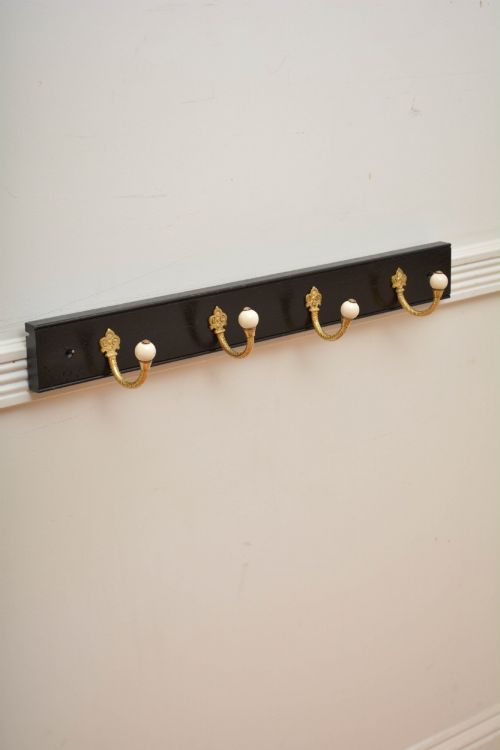
Hooks were cast from brass, iron, or finished with ceramic elements, often attached to the wooden backboards using screws or integrated mounting plates. Some variants incorporate twisted rope details or ebonised surfaces to achieve distinct aesthetic effects alongside the primary hanging function.
Listings span the eighteenth, nineteenth, and early twentieth centuries, featuring oak, mahogany, pine, and ebonised wood with brass and ceramic fittings.
What varies in quality
Quality in a hallway peg rail rests on the selection of timber and the casting of the hooks rather than ornamental flourishes. Heavy cast brass plates and substantial hardwood backboards indicate sturdier construction than lighter pine and thin stamped metal alternatives.
The method of securing the hooks to the timber and the retention of original ceramic or brass components distinguish standard utility pieces from more substantial examples. Finishes such as ebonised wood or carefully turned mahogany elements demonstrate greater attention to domestic presentation.
The Hallway Peg Rail Glossary
- Backboard
- The horizontal wooden strip that supports the mounted hooks and fixes to the wall. This timber forms the main structural spine of the rack.
- Ebonised wood
- Timber stained or painted to resemble ebony, providing a dark, polished surface. This finish appears frequently on nineteenth-century pieces.
- Cloakroom
- A small room or hallway area designated for hanging outdoor coats and hats. Pieces described for this location are built for frequent daily use.
- Bentwood
- Wood softened by steam and bent into curved shapes, often utilised for hat and coat hooks. This technique creates graceful, rounded profiles.
- Cast brass
- Molten brass poured into a mould to form solid hooks and mounting plates. This process produces durable fittings with distinct surface textures.
Hallway Peg Rail: Frequently Asked Questions
What is a hallway peg rail?
A hallway peg rail is a wall-mounted wooden board fitted with multiple hooks designed for hanging coats, hats, and everyday garments in an entryway.
These pieces provide functional storage while keeping hallways tidy and garments accessible near the entrance of a home.
How do I date a peg rail?
Dating relies on observing the timber types, screw fixings, hook materials, and overall cabinet-making style present in the piece.
Earlier examples from the eighteenth century use solid oak with hand-finished elements, whereas Victorian and Edwardian pieces often feature cast brass, ceramic hook inserts, and standardised mounting plates.
Where should I mount a peg rail?
These rails mount directly onto hallway or cloakroom walls at a height that allows easy access for hanging coats and hats.
Ensure the fixings anchor securely into wall studs or use appropriate wall plugs to support the weight of heavy winter garments.
What woods were used for peg rails?
Makers constructed peg rails from readily available domestic and imported timbers, including mahogany, oak, pine, and ebonised wood.
The choice of wood often corresponds to the period and the room where the rail was intended to be placed.