

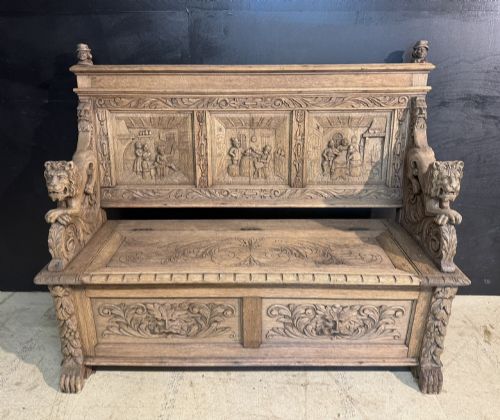
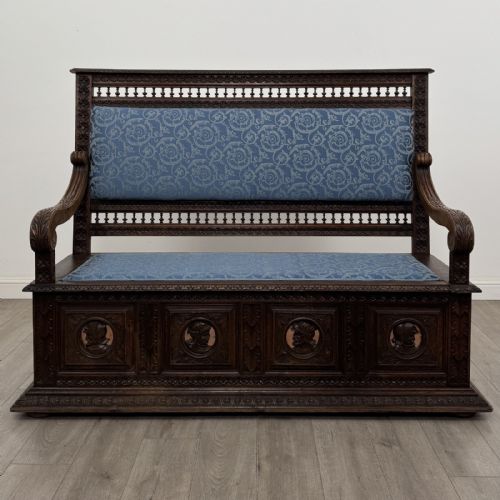
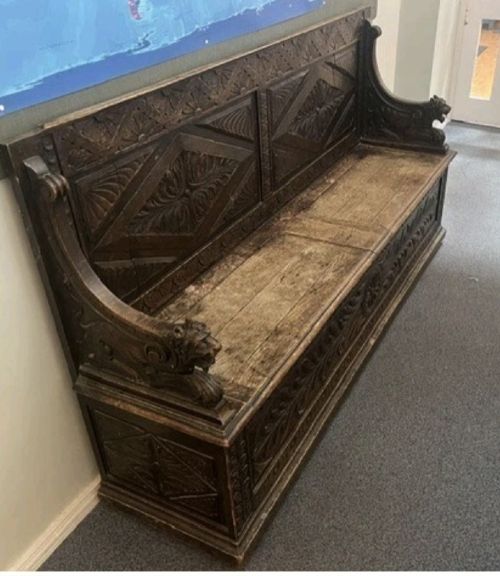
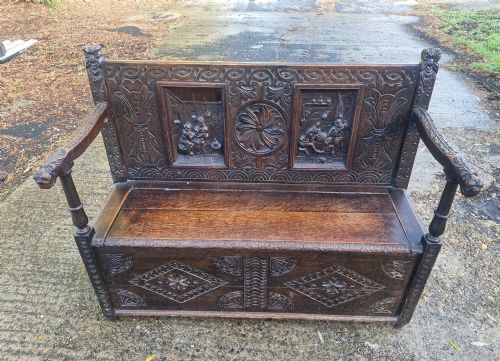
Hall Storage Settle
A hall storage settle combines seating with a concealed chest, offering a practical entrance piece that draws on centuries of domestic design.
Hall Storage Settle
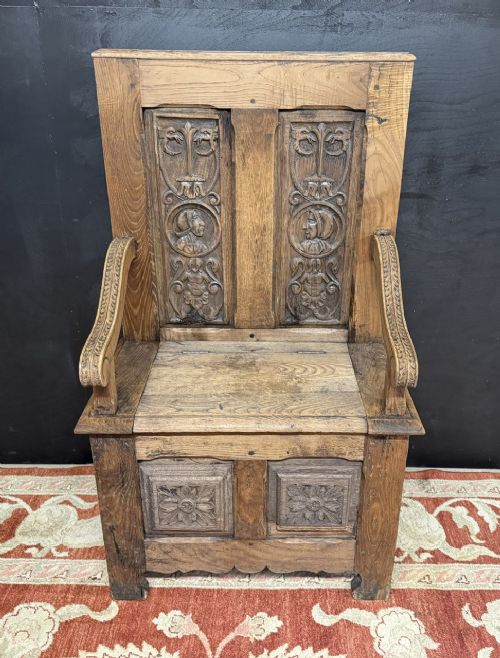
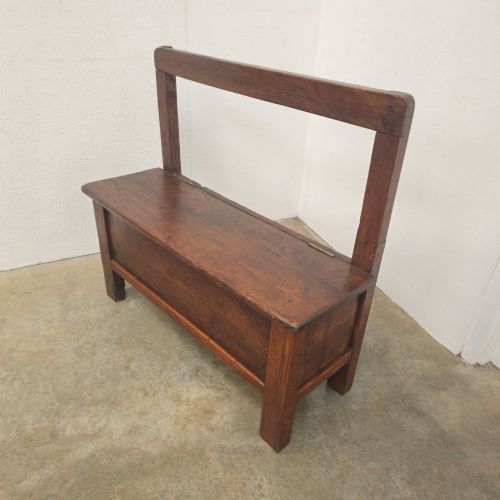
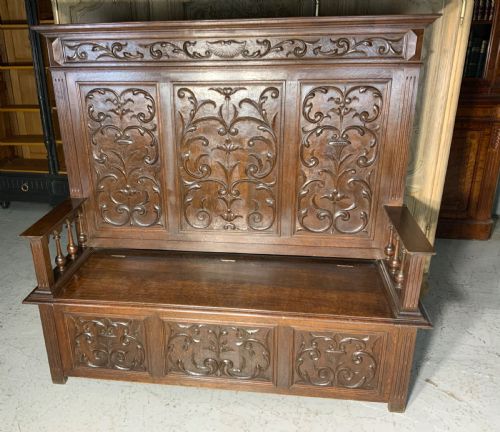
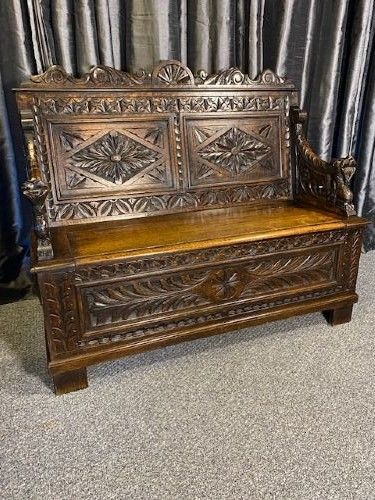
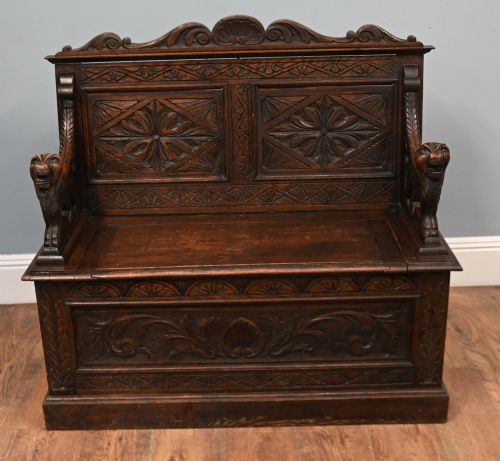
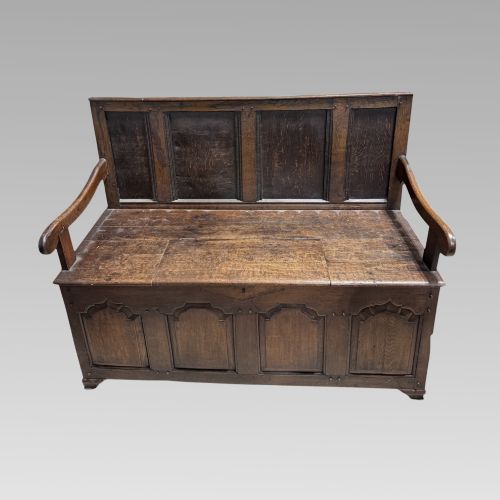
When you search for a hall storage settle, you encounter heavy wooden seating designed to hold footwear, winter wear, and household sundries beneath the seat. These practical benches span the 18th century, the Victorian era, and the early 20th century, emerging in various regional workshops.
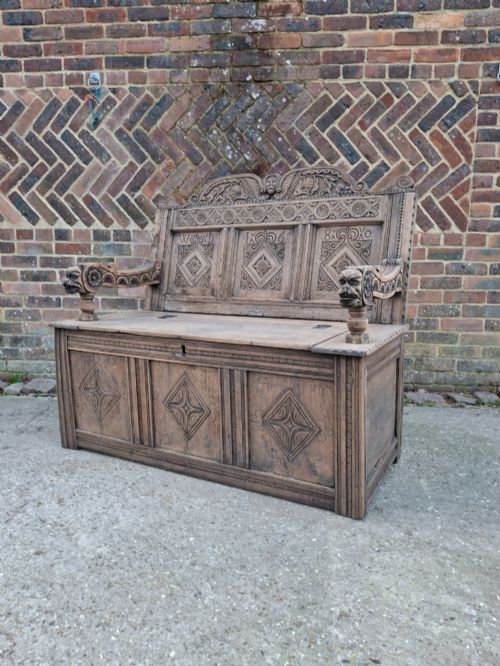
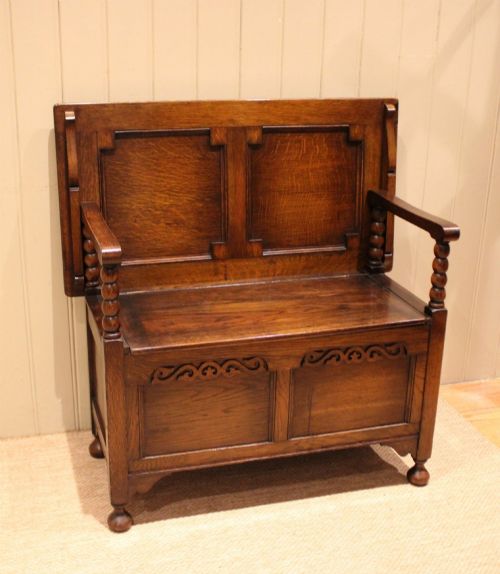
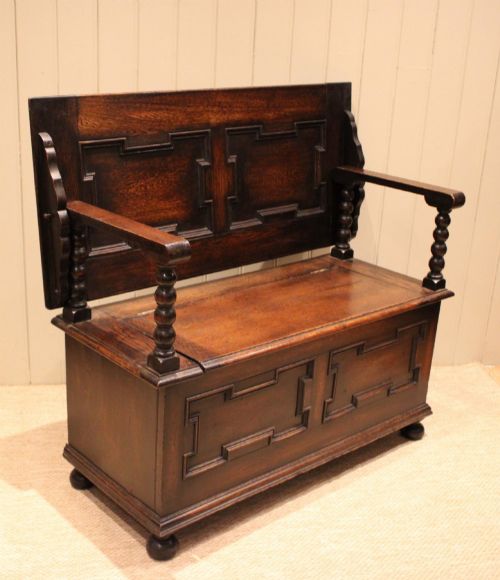
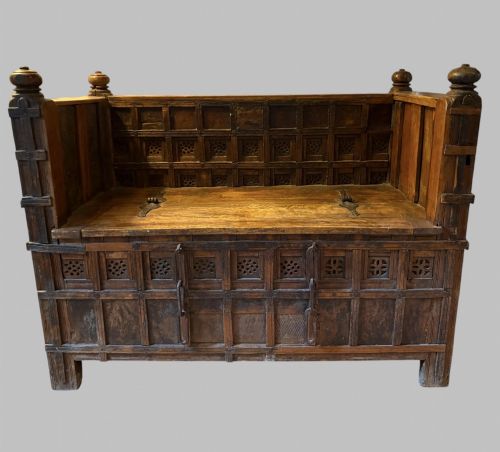
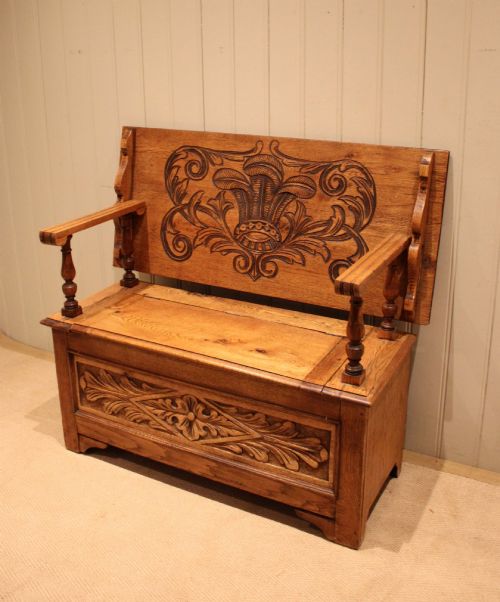
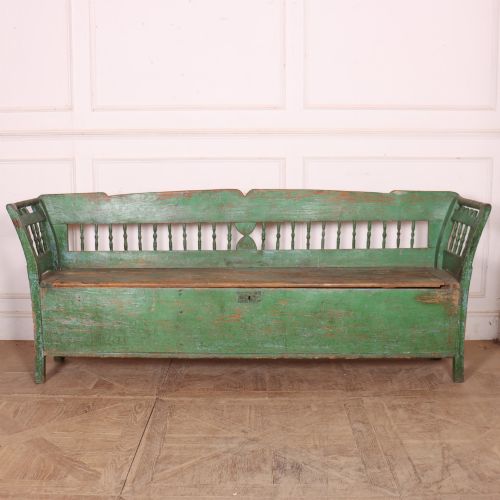
The versions most commonly met on this page include robust oak box settles from earlier periods alongside pine examples, often originating from country workshops or continental traditions like Hungarian farmhouse furniture. Pieces range from high-backed panelled designs to multifunctional monks benches with fold-over table tops.
Makers adapted these seats for entrance halls and corridors, utilising hinged lids, lift-up seats, and central cupboards to maximise internal storage capacity. Regional variations include Welsh, North Country, and continental styles, each employing local timbers and traditional joinery.
Materials and construction methods
Carpenters built these sturdy benches primarily using native hardwoods and softwoods, with oak and pine appearing most frequently across the listings. Iron hinges, brass fittings, and occasional fabric elements support the heavy lids and drop-down mechanisms.
Makers employed traditional joinery techniques such as panelled construction, mortise and tenon joints, and hand-carving to ornament the high backs and armrests. Surfaces were finished with wax, paint, or polish to protect the timber from heavy daily use in busy entranceways.
Hall Storage Settle Retail Price Guide 2026
Typical asking prices for hall storage settle among the pieces listed under this phrase on Sellingantiques today, from the lower quarter to the upper quarter. They describe what is for sale here now, not the wider market.
Listings feature oak, pine, mahogany, and walnut timbers spanning the 18th, 19th, and early 20th centuries.
Factors influencing the distinction of pieces
The distinction between standard utility seating and finer examples lies in the depth and crispness of the hand-carving upon the crests and panels. Earlier 18th-century pieces often display tighter joinery and more substantial proportions than later revival items.
Original surface finishes, such as early waxed patination or untouched period paintwork, separate unaltered survivals from heavily restored examples. The integrity of internal storage compartments and original iron or brass hardware further distinguishes higher quality items.
James Shoolbred & Co.
The Hall Storage Settle Glossary
- Box settle
- A high-backed wooden bench featuring a compartment beneath the seat accessed via a hinged lid. This enclosed base was designed to keep draughts away from the user while providing household storage.
- Monks bench
- A versatile form of seating with a hinged back that folds down over the arms to create a table top. These pieces combine a bench seat with a multi-purpose wooden surface.
- Cassapanca
- An Italian chest-bench combining a decorative seat with a deep storage box below. These carved hardwood pieces often feature elaborate armrests and high panelled backs.
- Jacobean Revival
- A 19th-century stylistic movement emulating the geometric mouldings and dark carved woodwork of the early 17th century. Furniture in this style mimics earlier period joinery methods.
- Panelling
- Framework constructed with fitted thin wooden boards inset into grooved stiles and rails. This technique prevents warping in large wooden components like settle backs.
Hall Storage Settle: Frequently Asked Questions
What is a hall storage settle?
A hall storage settle is a heavy wooden bench with an enclosed compartment beneath the seat, designed for entryways to store boots, blankets, or household goods.
The high back originally served to block cold draughts in unheated hallways, while the lift-up lid provided concealed storage space.
How do I use a hall storage settle at home?
These benches sit comfortably in hallways, boot rooms, or large kitchens, providing both a place to sit and a receptacle for everyday clutter.
The interior chest functions well for tidying away shoes, umbrellas, or seasonal textiles while keeping the entrance area clear.
How can I tell an older settle from a later revival piece?
Examination of the timber patination, tool marks, and joinery methods helps distinguish 18th-century originals from Victorian or Edwardian revival interpretations.
Earlier pieces often display hand-sawn boards and pegged joints, whereas later iterations may incorporate machine-cut elements and distinct revival ornamentation.
Were all settles made of oak?
While oak is the predominant timber seen in early and Victorian examples, many country and continental pieces utilised pine or walnut.
Pine settles were frequently painted or waxed, offering a lighter alternative to the darker, heavily carved hardwood variants.