


Half Tester Bedstead
A half tester bedstead brings commanding vertical presence to a bedroom, offering the intimate canopy shelter of a full tester without dominating the room.
Half Tester Bedstead
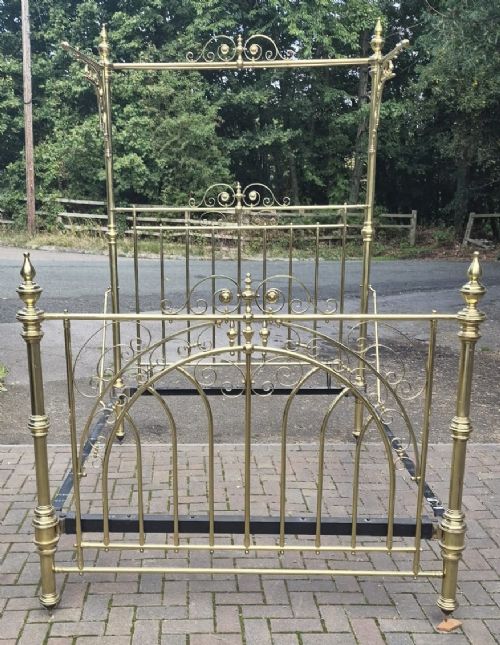
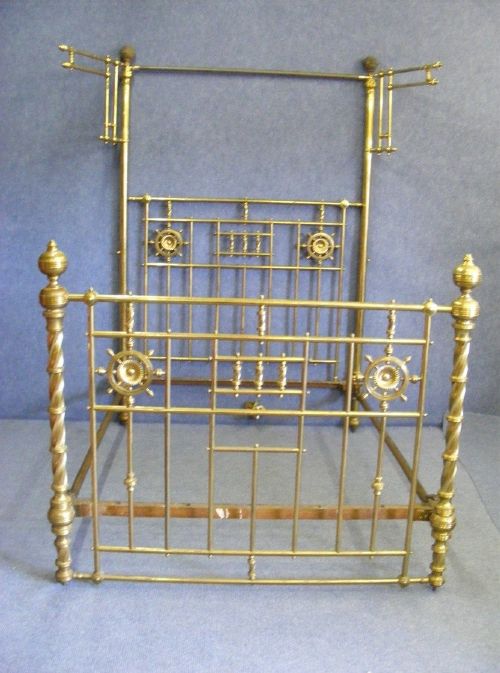
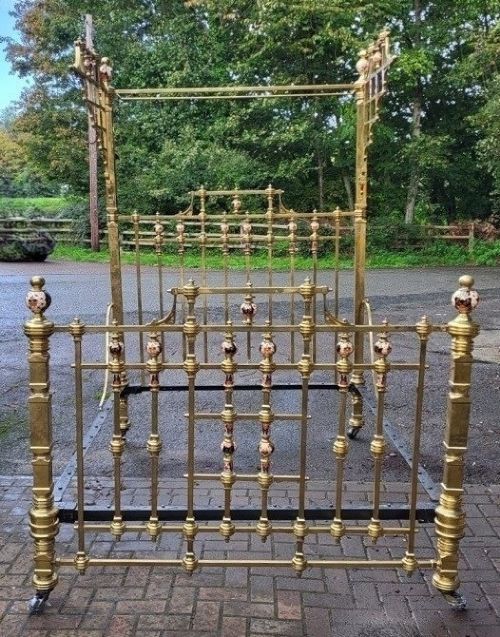
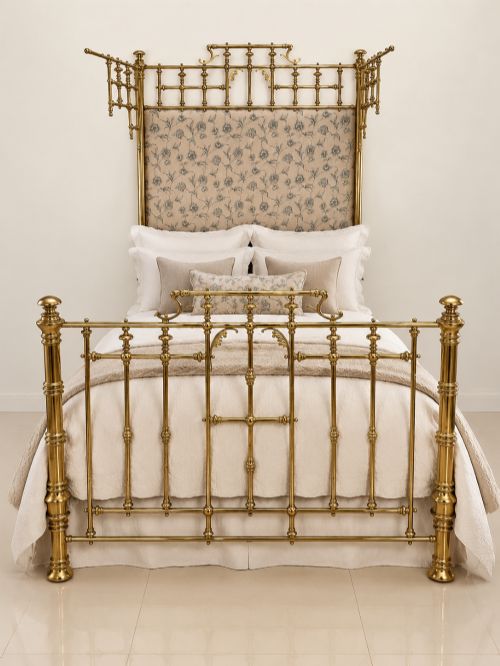
A half tester bedstead combines a full-height headboard with a projecting partial canopy that extends only a short distance over the top of the mattress. Buyers searching for a half tester bedstead encounter examples primarily from the Victorian era, spanning the mid-nineteenth century through to nineteen hundred. These substantial sleeping quarters reflect the period taste for architectural woodwork and robust metal framing.
The forms listed here include both grand king size proportions and standard double sizes. Most versions on this page originate from the Victorian period, appearing in decades such as eighteen sixty, eighteen seventy, eighteen eighty, and nineteen hundred. They bridge the gap between open bedframes and enclosed four-poster beds.
Design variations range from imposing timber constructions to lighter metal frameworks. Buyers find examples described through styles such as Victorian and Victorian and Gothic, indicating diverse aesthetic influences from simple domestic designs to more elaborate ecclesiastical motifs.
How they were made
Makers utilised a combination of resilient metals and dense hardwoods to construct these sizeable frames. Brass, iron, cast iron, and wrought iron appear frequently in the metalwork, providing structural integrity alongside decorative metal casting. Solid brass tubing and fittings give many examples a gleaming, permanent architecture.
Wooden variants employ burr walnut and mahogany, showcasing fine timber veneers and solid framing techniques. Fabric also forms an integral component, traditionally used to dress the projecting canopy tester overhead and soften the rigid lines of the frame.
Current listings demonstrate that Victorian half tester beds utilise brass, cast iron, wrought iron, mahogany, and burr walnut.
What varies in quality
The distinction between ordinary production and exhibition quality rests upon the crispness of the casting work and the selection of timber figures. Superior metal bedsteads display deeply chased brass ornamentation and robust structural joints that withstand decades of assembly. Poorer examples rely on simpler stamped components with less definition in the decorative motifs.
In wooden frames, the choice of burr walnut or rich mahogany veneer dictates the visual depth of the piece. Master craftsmen ensured that timber grain aligned harmoniously across the wide expanse of the headboard and the canopy framework, whereas lesser pieces show hurried construction and plain timber selection.
RW Winfield
The Half Tester Bedstead Glossary
- Half tester
- A bedstead featuring a canopy that extends only partially over the head of the bed rather than spanning the entire length. This design originated to catch drafts and support decorative hangings around the pillow area.
- Cast iron
- An iron-carbon alloy poured into moulds to create intricate structural and decorative components. It allowed nineteenth-century manufacturers to produce ornate scrollwork and sturdy bed posts.
- Burr walnut
- Timber taken from a walnut tree growth featuring swirling, knotted grain patterns. Cabinet makers prized this material for its highly decorative surface appearance on prominent furniture panels.
- Mahogany
- A durable tropical hardwood known for its reddish-brown colour and stable grain. It served as a primary material for high-grade nineteenth-century bed frames and case furniture.
- Exhibition quality
- A designation applied to pieces manufactured to the highest standard for public display or competitive showcase. These items demonstrate superior finishing and meticulous attention to detail.
Half Tester Bedstead: Frequently Asked Questions
What is a half tester bedstead?
A half tester bedstead is a nineteenth-century bed style featuring a partial canopy suspended over the head of the mattress. It provides the architectural grandeur of a traditional four-poster bed while taking up less visual space in a modern room.
These pieces typically date from the Victorian period and combine functional sleeping platforms with decorative headboards and overhead testers designed for fabric drapes.
How do I fit a modern mattress?
Most antique half tester bedsteads were built to nineteenth-century dimensions, which often differ slightly from modern standard sizing. Buyers should carefully check the internal rail measurements against current mattress sizes before purchase.
Many antique beds accommodate modern mattresses with the addition of a supportive modern slatted base custom-fitted to the interior iron or wooden rails.
How do I clean brass and iron frames?
Metal frames require gentle dusting with a soft cloth to remove everyday particles without scratching the surface. Avoid harsh chemical polishes that can strip away aged patination or protective historical lacquers.
Cast iron components benefit from occasional light wiping with a microfibre cloth, while brass elements maintain their character best through minimal, careful intervention.
Are these beds easy to dismantle?
Victorian metal and wooden bed frames were generally designed to be taken apart using standard bolts and tapered wedge joints for transport. This modular construction allows the headboard, footboard, rails, and tester canopy to separate into manageable sections.
Professional assembly is often recommended for heavier solid brass or cast iron models to ensure the frame squares up correctly on the floor.