
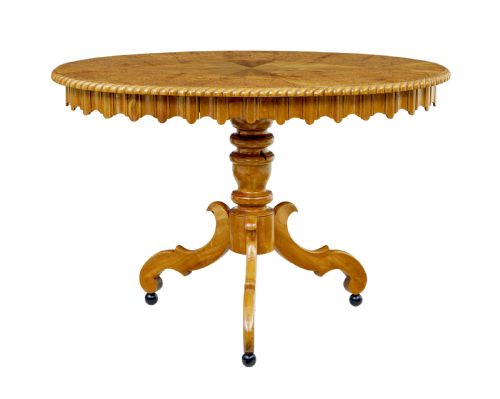
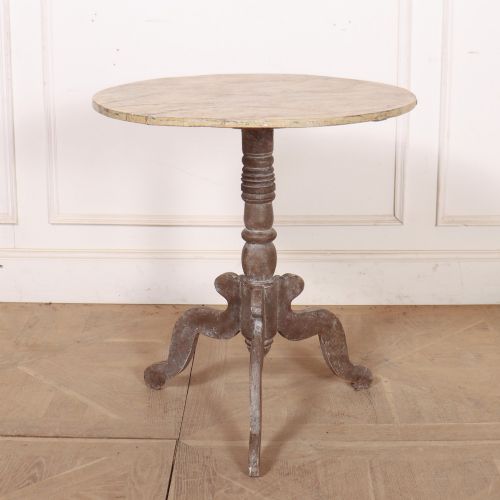
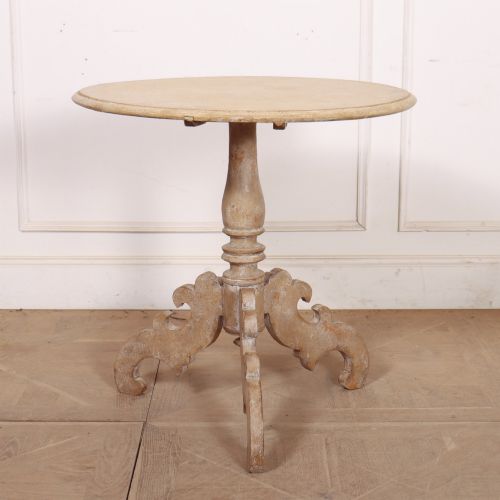
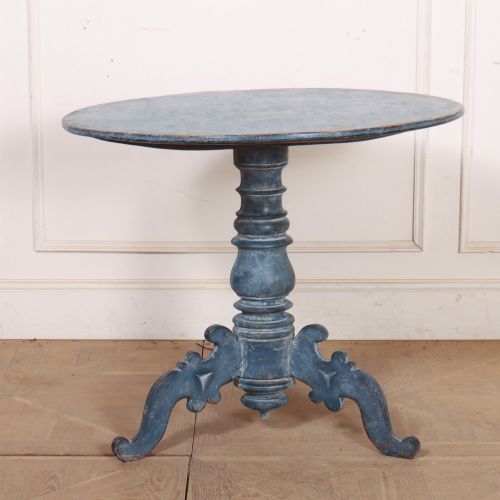
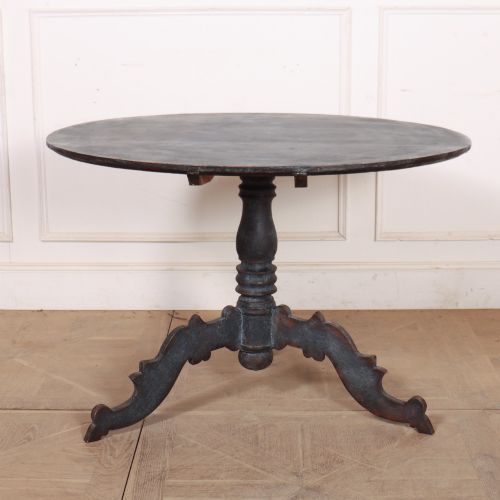
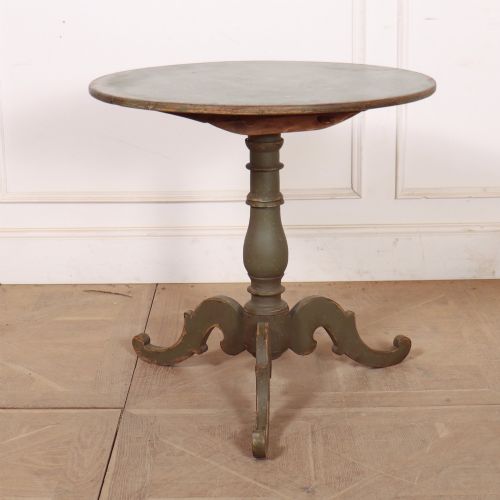


Gustavian Tripod Table
A gustavian tripod table brings quiet northern light and functional elegance into a room through its classic three-legged pedestal form.
Gustavian Tripod Table
These items emerge from regional traditions encompassing Swedish country and Scandinavian country styles, alongside Swedish Biedermeier expressions. The most common forms you will encounter here are painted lamp tables supported by a central pedestal and three feet.
Makers produced these tables in round and oval formats using native timbers to serve everyday needs in domestic interiors. Each example displays the restrained ornamentation characteristic of northern provincial cabinet-making.
How they were made
Carpenters constructed these tables from softwood, pine, birch, and burr birch, often applying paint finishes over the timber surfaces. The use of native birch and softwoods reflects the regional timber resources available to nineteenth-century Swedish workshops.
Turned pedestals connect the circular or oval tops to three supporting feet, creating a stable freestanding structure without complex hardware. Surface paint was layered directly onto the wood, occasionally preserved in its original state through generations of domestic care.
What varies in quality
Quality in these pedestal tables rests on the crispness of the turning on the central shaft and the balanced proportion of the three supporting feet. The choice of timber also dictates distinction, moving from plain softwood up to figured burr birch veneers on the tabletop.
The integrity of the painted surface determines visual success, with original historic paint retaining greater character than later refinishing work. Subtlety of moulding profiles around the edge of the top separates standard utility pieces from more considered workshop output.
The Gustavian Tripod Table Glossary
- Tripod table
- A small freestanding table supported by a central pillar resting on three feet. This construction allows the piece to sit firmly on uneven floors without rocking.
- Occasional table
- A portable small table intended for light, intermittent use in a sitting room or bedroom. These pieces were easily moved to wherever a surface was temporarily required.
- Burr birch
- Timber taken from a tree growth where the grain has swirled into intricate knots and patterns. It provides a highly decorative surface veneer on finer tables.
- Softwood
- Timber from coniferous trees such as pine, used extensively in regional Scandinavian furniture. It offers a lightweight yet durable material for everyday domestic objects.
Gustavian Tripod Table: Frequently Asked Questions
What is a gustavian tripod table?
A gustavian tripod table is a nineteenth-century Scandinavian occasional table featuring a central pedestal base and three supporting feet. These tables were designed for practical use as lamp or supper tables in northern interiors.
They combine provincial craftsmanship with functional forms, utilising regional timbers like pine and birch. Most examples display painted finishes that typify Swedish country furniture of the period.
How were these tables used originally?
Households employed these pedestal tables beside seating for lighting, holding lamps, or serving small suppers. Their lightweight construction allowed occupants to shift them easily about the room.
The three-legged design ensured stability on uneven wooden floorboards commonly found in nineteenth-century homes.
Are these tables made of solid wood?
Makers constructed the structural elements and simpler surfaces from solid regional timbers such as pine and birch. Finer variants occasionally incorporate decorative burr birch veneers across the tabletop.
Paint was frequently applied directly to the softwood substructure, serving both protective and aesthetic functions.
How do you date a painted Swedish table?
Dating relies on structural joinery, timber selection, and the characteristics of the surface paint layers. Nineteenth-century examples often display specific turning patterns on the central pedestal.
Examining the underside and interior construction reveals the hand-working methods typical of the era without relying on strict date markers.