

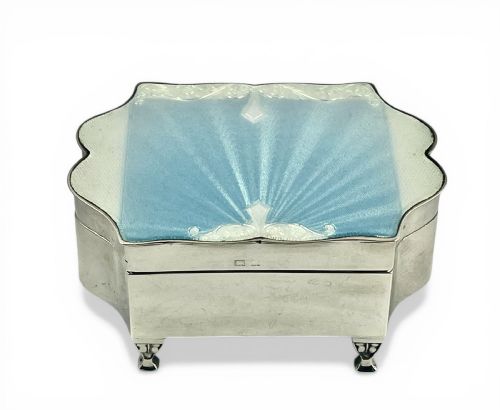


Guilloche Silver Vanity Box
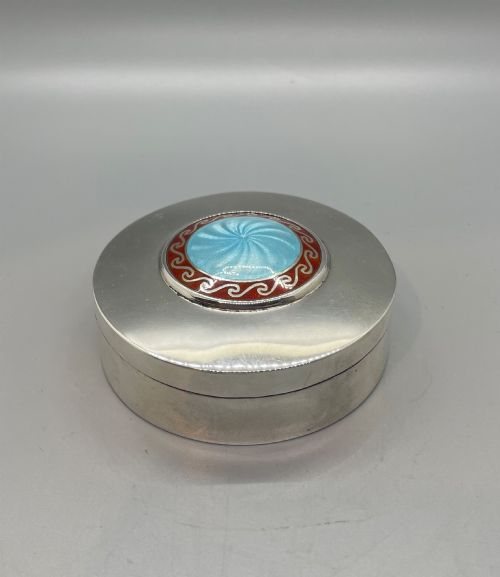
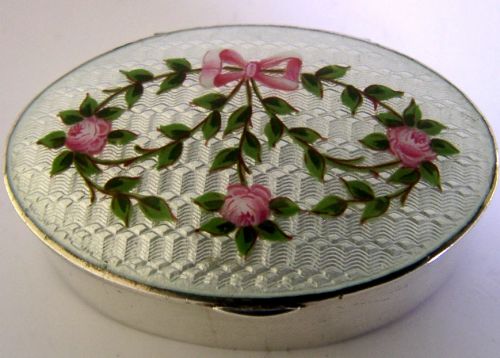
A guilloche silver vanity box brings together engine-turned precision and rich coloured enamel for the dressing table.
Guilloche Silver Vanity Box
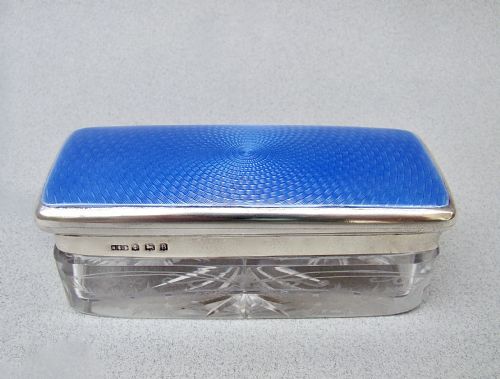
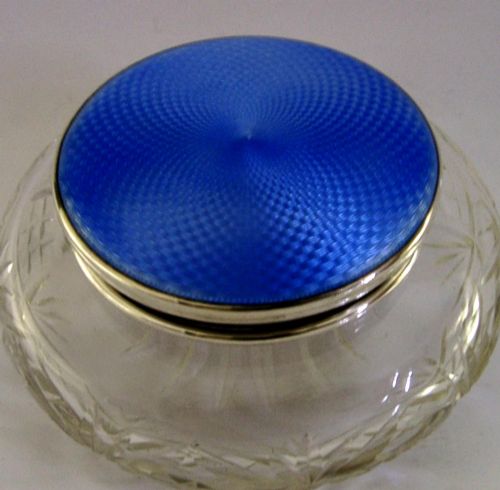
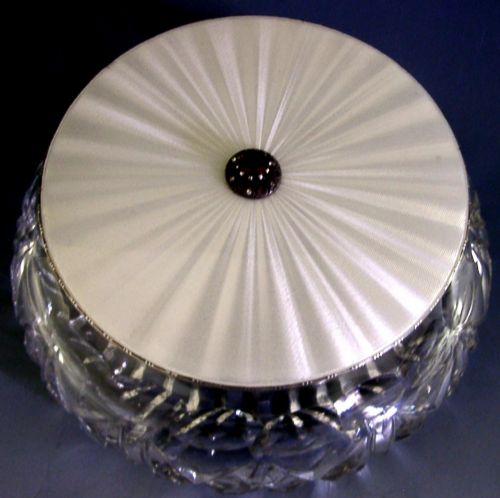
A guilloche silver vanity box serves as a portable container for cosmetics, trinkets, and dressing table accessories. Buyers seeking a guilloche silver vanity box typically find pieces ranging from compacts and rouge pots to large cut glass jars with sterling silver lids.
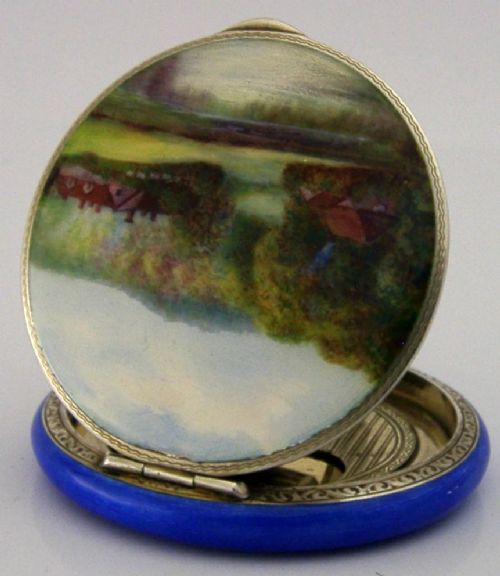
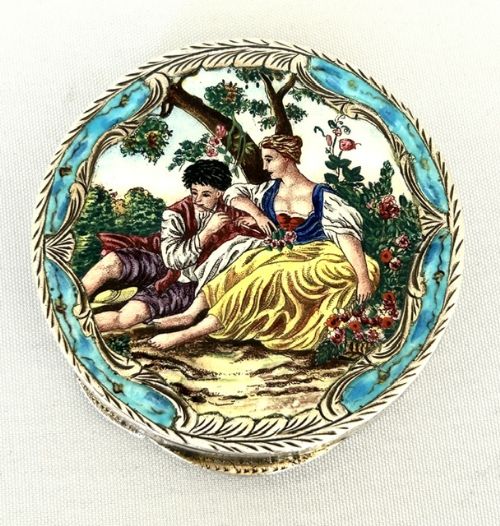
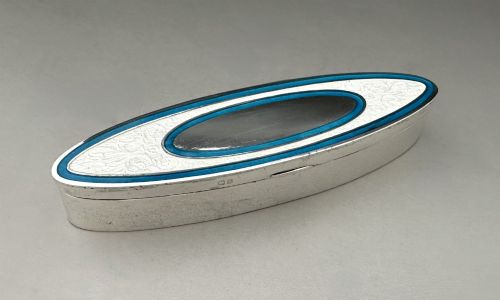
The selection on this page spans the Edwardian era, the 1910s and 1920s, and the geometric lines of Art Deco. Formats vary from small cylindrical pill boxes to heavy Austrian boxes and French scenic compacts.
Makers and assay offices from Birmingham, London, and continental Europe produced these vessels in sterling silver and silver gilt. They reflect the changing habits of personal grooming through the early decades of the twentieth century.
Materials and construction
Silversmiths constructed the primary body from sterling silver, silver gilt, or cut glass, often pairing metal bases with fitted glass jars. Engine-turning machines cut precise, repeating geometric patterns directly into the metal surface.
Translucent vitreous enamel was then applied over the patterned metal, allowing the machined guilloche design to show through in blue, pink, or bi-colour shades. Hand-painted motifs occasionally decorated the enamel surface.
Early twentieth-century owners relied on these tiny boxes to keep rogue rouge hidden in style during afternoon tea.
Evaluating craftsmanship
The depth and crispness of the engine-turned engraving beneath the enamel define the baseline quality of the piece. Sharper geometric cuts create a more vibrant play of light through translucent coloured layers.
The weight of the sterling silver housing and the evenness of the enamel application distinguish standard production items from finer workshop output. Maker marks from established firms like the Goldsmiths and Silversmiths Company also influence the standing of an object.
Henry Clifford Davis·Henry Matthews·Evans·Hermes·Houbigant
The Guilloche Silver Vanity Box Glossary
- Guilloche
- A decorative technique where a mechanical instrument engraves a precise, intricate pattern into metal. This pattern forms the foundation beneath translucent enamel layers.
- Vitreous enamel
- Glass fused to metal through high-temperature firing. It provides a durable, glossy surface coloured with pigments.
- Silver gilt
- Sterling silver coated with a thin layer of gold. This treatment adds a warm tone to the interior or exterior of boxes and jars.
- Engine turned
- A method of mechanical decoration utilising a lathe to produce geometric surface patterns. It ensures exact symmetry on metal lids and compacts.
- Sterling silver
- An alloy containing 92.5 percent silver and 7.5 percent other metals, usually copper. It serves as the standard material for British and international vanity boxes.
Guilloche Silver Vanity Box: Frequently Asked Questions
What is a guilloche silver vanity box?
A guilloche silver vanity box is a container featuring machine-engraved metal beneath translucent enamel, used historically for grooming items like powder, rouge, and pills.
These pieces include compacts, pill boxes, and dressing table jars produced primarily during the Edwardian and Art Deco periods.
How do I date an enamel vanity box?
Dating relies heavily on hallmarks stamped onto the silver components, which indicate the assay office and year of production. Stylistic markers such as Art Deco geometry or Edwardian motifs also help narrow the timeframe.
Makers' marks and registration numbers provide further clues to the exact decade of manufacture.
What is the difference between a compact and a pill box?
Compact boxes were designed for face powder and usually include internal mirrors or spaces for puffs. Pill boxes and rouge pots are significantly smaller, intended for medicines or cosmetics.
Both forms utilise the same combination of silver and guilloche enamel decoration.
How should I care for vintage enamel and silver?
Silver requires gentle cleaning with a soft cloth to preserve hallmarks and surface engraving. Enamel must be kept away from harsh chemicals and moisture to prevent chipping or discolouration.
Storing pieces individually prevents scratching between items.