

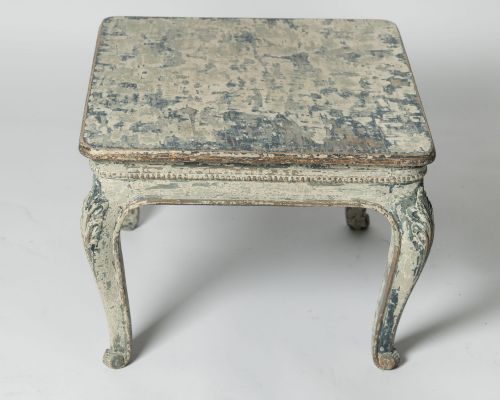
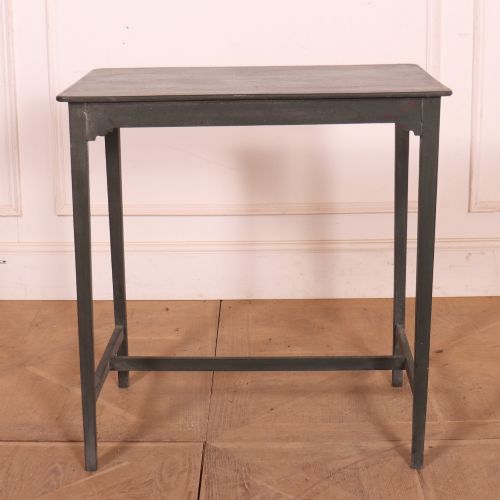


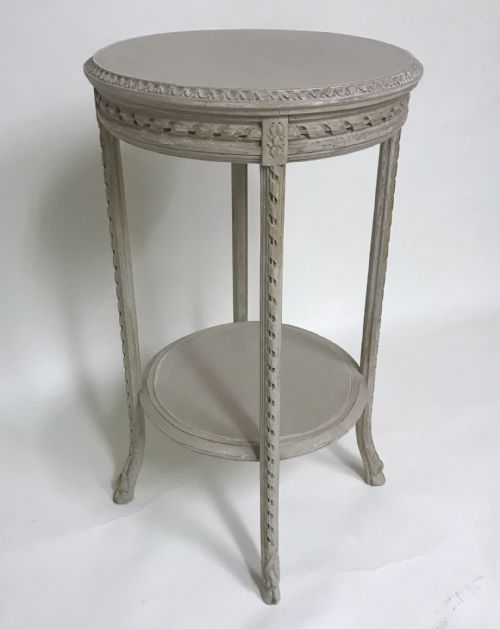
Grey Wooden Occasional Table
These grey wooden occasional table examples bring painted timber character into a room, offering practical surface space with understated period charm.
Grey Wooden Occasional Table
A grey wooden occasional table combines utility with decorative painted surfaces, appearing across periods from the eighteenth century through the early twentieth century. Buyers seeking a grey wooden occasional table generally find side tables, lamp tables, and centre tables designed for flexible placement.
The selections span French provincial models, English country pieces, and revival styles including Louis XVI and the Aesthetic Movement. Most examples rely on painted finishes over timber substrates such as oak.
Makers ranged from provincial workshops to notable makers like Gillows, producing forms intended for country houses and formal drawing rooms alike. These tables function reliably for display while retaining their historical surface patination.
Materials and construction
Construction relies primarily on traditional timber joinery paired with hand-applied paint finishes. Workshops utilised solid woods such as oak, shaping timber frames to support occasional use.
Surface treatments involve historical paint layers that have aged organically over decades. Select pieces incorporate specialist inserts, notably original Derbyshire fossil marble tops secured within wooden framing.
Grey Wooden Occasional Table Retail Price Guide 2026
Typical asking prices for grey wooden occasional table among the pieces listed under this phrase on Sellingantiques today, from the lower quarter to the upper quarter. They describe what is for sale here now, not the wider market.
Listings feature periods spanning the eighteenth century through to the early twentieth century, utilising oak, pine, and brass alongside fossil marble.
Assessing quality and craftsmanship
Quality rests in the integrity of the timber frame and the authenticity of the painted surface. Superior examples demonstrate refined proportions and original hardware rather than later decorative alterations.
Gillows
The Grey Wooden Occasional Table Glossary
- Occasional table
- A moveable small table designed for flexible placement in a room rather than a fixed dining or writing position. These pieces serve secondary functions for lamps, books, or decorative objects.
- Centre table
- A freestanding table finished on all sides to stand independently in the middle of a room rather than against a wall. They often feature circular or oval tops suited to central display.
- Aesthetic Movement
- A late nineteenth-century design style that emphasised visual beauty and artistic reform over rigid historical revivalism. It encouraged asymmetry and eclectic decorative influences.
- Derbyshire Fossil Marble
- A dense dark limestone quarried in Derbyshire containing fossilised crinoid fragments that take a high polish. It provides a durable and decorative stone surface inset into timber furniture.
Grey Wooden Occasional Table: Frequently Asked Questions
Where should I place an occasional table?
These tables suit hallways, sitting rooms, and bedrooms where surface space is needed beside seating or near a corner. Their modest scale allows them to fit easily into secondary circulation spaces.
Because they are designed to be moveable, you can reposition them readily as room layouts change. They function effectively as lamp stands or display surfaces for decorative objects.
How do I care for a painted wooden surface?
Maintain painted timber by dusting gently with a dry, soft cloth to prevent particulate buildup. Avoid harsh chemical cleaners that can degrade historical paint layers.
Keep tables away from direct heat sources and strong sunlight to prevent timber movement and paint fading. Using coasters protects the surface from moisture marks.
How do I identify a nineteenth-century piece?
Nineteenth-century tables often show traditional hand-cut joinery methods and patinated surfaces developed through decades of use. Stylistic markers like Aesthetic Movement details or Regency proportions offer clear chronological clues.
Examination of the underside and interior construction reveals tool marks and wood ageing consistent with nineteenth-century cabinetmaking practices. Hardware and fixings also align with period manufacturing standards.
What is the difference between a side table and a lamp table?
Side tables generally offer a broader rectangular or decorative surface intended for general placement against walls or beside larger furniture. Lamp tables are typically proportioned specifically to hold a lighting fixture beside a chair or sofa.
Both types share similar construction methods and historical periods but differ slightly in their primary functional dimensions. In practice, either form serves well for general occasional use.