






Grey Wooden Hall Table
A grey wooden hall table brings functional surface space and muted historic character to an entryway through painted timber finishes.
Grey Wooden Hall Table
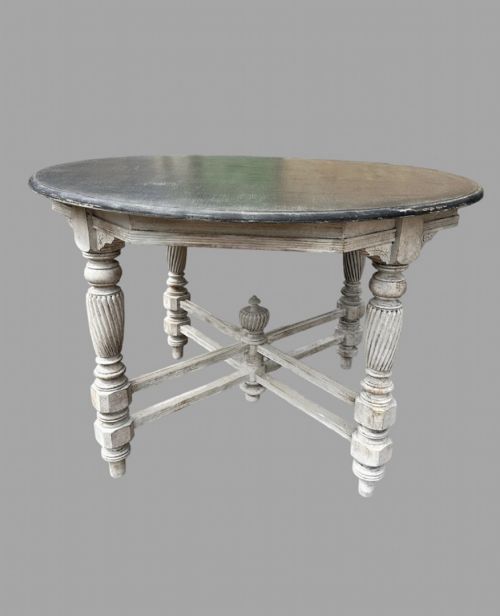
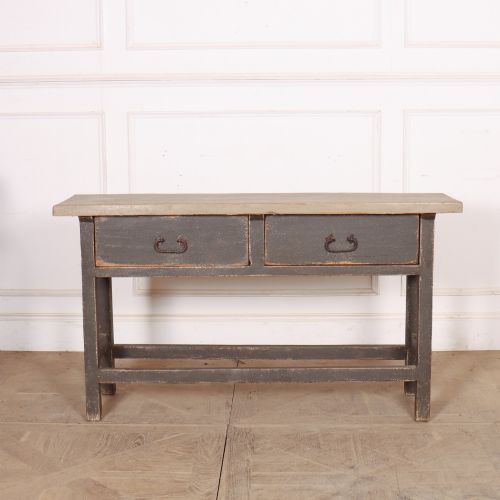
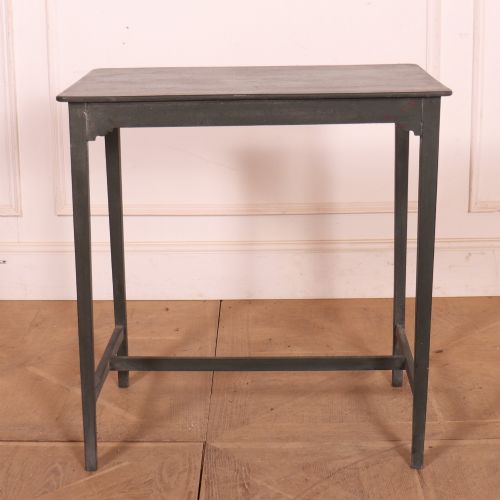
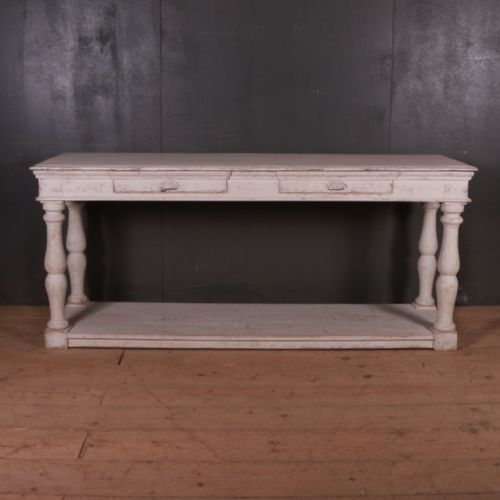
A grey wooden hall table encompasses narrow occasional surfaces, console tables, servers, and side tables designed for transitional spaces and passageways. These pieces appear across various historical periods, including the eighteenth century, nineteenth century, and Edwardian era, reflecting diverse regional styles such as English Country, Welsh Country, and Scandinavian Country.
The version most frequently encountered on this page is the painted wooden console or side table, often displaying muted historic paint finishes. Forms range from compact lamp tables to longer servers and dresser bases, accommodating different spatial requirements in a hallway.
Originating from domestic and country house contexts, these tables demonstrate how traditional furniture forms were adapted with painted surfaces over time. The selection draws on distinct stylistic revivals and vernacular traditions rather than a single uniform design.
Construction and materials
Construction relies primarily on sturdy timbers such as pine and oak, providing a robust structural carcase for daily use. Carpenters utilised traditional joinery methods appropriate to each period, ensuring stability in narrow furniture forms.
Surfaces are finished with paint, creating the characteristic grey coloration seen across these items. Additional material details include brass hardware, marble tops, and iron elements, which appear alongside the painted wood to add textural contrast.
Country house designs and provincial styles dominate the available forms, including console tables, servers, and dresser bases.
Judging quality in painted furniture
Quality in a grey wooden hall table rests upon the harmony of proportions and the integrity of the underlying timber construction. Pieces that retain their original structural form without excessive alteration command greater respect from discerning buyers.
The character of the painted finish plays a defining role in overall refinement, distinguishing subtle historic layering from later, heavier applications. Well-preserved surface patination and balanced regional craftsmanship elevate a piece above standard utilitarian examples.
The Grey Wooden Hall Table Glossary
- Console table
- A table designed to be fixed against a wall or supported by front legs, historically used in grand halls and reception rooms. Later vernacular versions offer similar narrow proportions suitable for domestic corridors.
- Dresser base
- The lower portion of a traditional kitchen or dining storage unit, featuring cupboards or drawers beneath a solid top. These sturdy pieces are frequently repurposed as deep hall tables or servers.
- Server
- A long, narrow table utilised for holding dishes or serving food in dining spaces, adapted over time for hallway use. Their generous length provides ample surface area without obstructing narrow pathways.
- Patina
- The surface sheen and wear developed by wood and paint over decades or centuries of use. It serves as a visual indicator of age and handling.
- Lamp table
- A small occasional table designed originally to support lighting fixtures. In a hallway, these compact items fit comfortably into restricted spaces.
Grey Wooden Hall Table: Frequently Asked Questions
Where does a grey wooden hall table work best?
These tables suit narrow entranceways, hallways, and landings where floor space is limited. Their shallow depths allow them to sit flat against a wall without blocking movement.
They also function effectively in reception rooms as side surfaces or lamp tables, echoing the finish of larger case pieces.
How do I care for a painted wooden surface?
Maintenance requires gentle dusting with a soft, dry cloth to protect the historic paint layers from abrasion. Avoid using harsh chemical sprays or abrasive cleaners that might strip or dull the finish.
Keep the timber away from direct heat sources and excessive moisture to prevent warping or paint flaking over time.
Are these tables from different historical periods?
The selection spans multiple eras, ranging from eighteenth-century pieces to Edwardian and early twentieth-century examples. Each period introduces distinct construction traits and stylistic influences, such as Regency or Italian Rococo.
Examining the underlying timber and joinery helps identify the specific era of manufacture.
What materials are used besides wood?
While pine and oak form the primary wooden structures, secondary materials appear across various examples. Brass fittings, marble tops, and iron details are integrated into specific regional and stylistic traditions.
These contrasting elements complement the painted grey surfaces and add functional durability.