



Grey Wood Hall Table
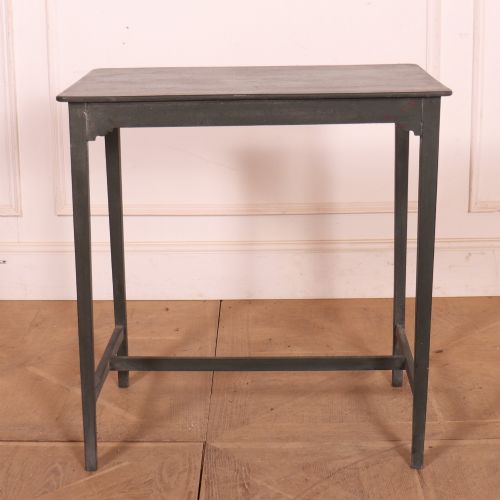
A grey wood hall table brings architectural presence to an entrance, offering surface space finished in muted painted timber or bleached grain.

Grey Wood Hall Table
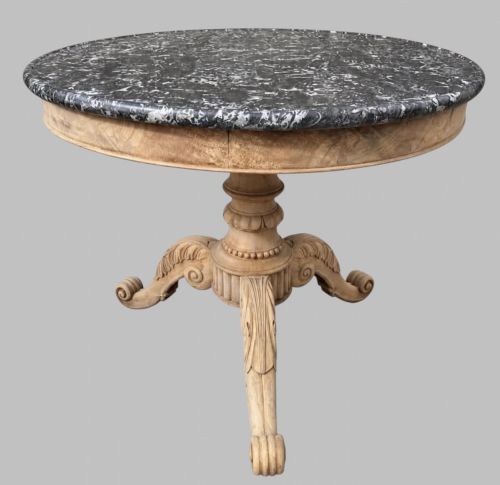
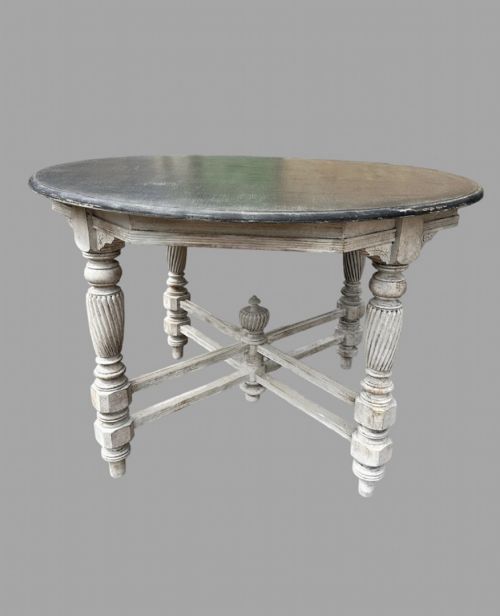
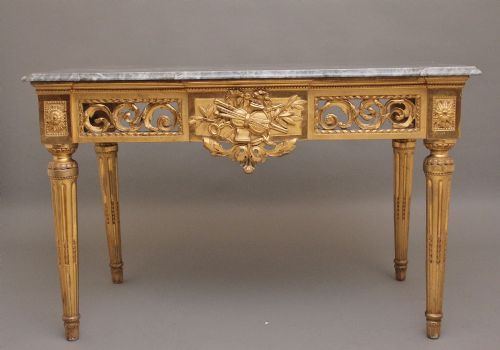
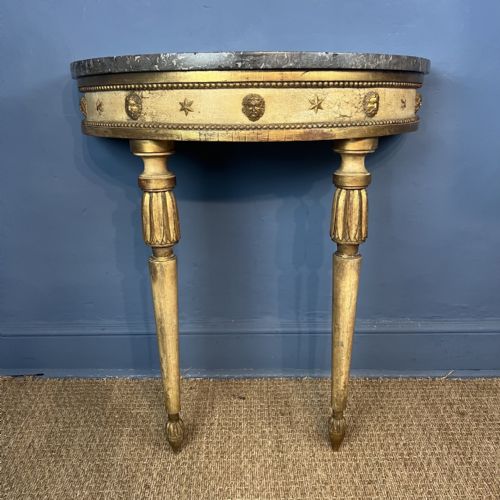
A grey wood hall table typically manifests as a console, side, or centre table originating from the eighteenth and nineteenth centuries, including Edwardian and Regency periods. These forms serve narrow entrance spaces and hallways through shallow footprints and decorative wall-abutting designs.
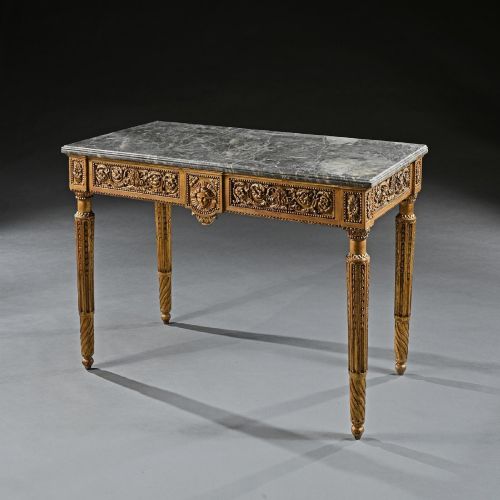
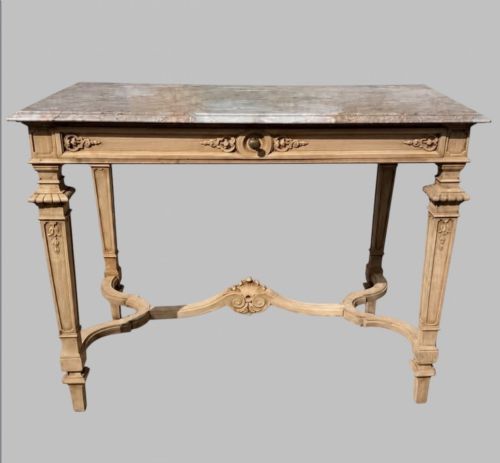
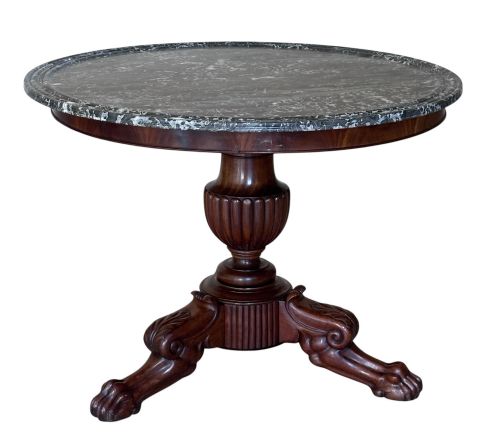
The selections span English country houses and continental workshops, showing French Rococo, Louis Philippe, and Neoclassical influences alongside simpler painted timbers. Console and side tables dominate the offerings, frequently incorporating marble tops above painted or carved frames.
Materials and Construction
Construction relies on solid timbers including pine, oak, walnut, and mahogany, often transformed through painted finishes, parcel gilding, or bleaching. Cabinetmakers shaped these woods into serpentine fronts, turned legs, and carved structures designed to carry heavy stone surfaces.
Many examples integrate inset marble slabs into wooden frames, demanding precise joinery to support the weight of the stone. Hand carving adorns giltwood and painted specimens, displaying period decorative vocabulary from French chateau styles to English country aesthetics.
Some eighteenth-century console tables were built deliberately shallow so they would not trip guests rushing into the drawing room for tea.
Quality and Execution
Quality reveals itself in the crispness of hand carving on giltwood and carved timber frames, where sharper chisel work distinguishes superior pieces. The integration of the marble top to the wooden base demonstrates the underlying standard of cabinetmaking.
The nuance of the painted or bleached finish alters the character of the piece, with layered pigments and aged patination outperforming flat modern applications. Proportions remain crucial, as balanced serpentine forms and harmonious scale separate distinguished examples from simpler utilitarian tables.
Gillows
The Grey Wood Hall Table Glossary
- Console table
- A table designed to stand against a wall, frequently fixed with brackets or resting on front legs. These pieces suit narrow hallways where floor space remains restricted.
- Gueridon
- A small circular table on a central pillar or multiple legs, originating in seventeenth-century France. They function well as centre tables in spacious halls.
- Giltwood
- Timber coated with gold leaf over a prepared gesso ground. This technique creates a luminous surface common on eighteenth-century decorative console tables.
- Serpentine
- A curved line that is convex in the centre and concave at the sides, creating a gentle undulating edge. This shape appears frequently on the fronts of higher-end tables.
- Parcel gilt
- Partially gilded woodwork where gold leaf highlights specific carved details against a painted or natural wood background.
Grey Wood Hall Table: Frequently Asked Questions
Where should I place a console table?
A console table fits naturally in a hallway, entryway, or behind a sofa where a shallow footprint is required. Its primary function is to provide a surface for lamps, mirrors, or decorative objects without obstructing passage.
Because these tables were originally designed to stand against walls, pairing them with a matching wall mirror or painting creates a balanced focal point upon entering a home.
How do I care for a marble top?
Marble requires gentle cleaning with a damp cloth and mild soap, avoiding acidic substances like vinegar or citrus that etch the polished surface. Using coasters and mats protects the stone from liquid rings and physical impacts.
Periodic application of a specialist stone wax helps maintain the sheen and guards against minor staining without altering the historic character of the material.
What is the difference between a console and a side table?
A console table is traditionally designed to stand flat against a wall and sometimes relies on the wall for structural stability via brackets or rear legs. Side tables are free-standing units finished on all sides and can float within a room.
In modern usage, the terms often overlap, but historical pieces intended for hallways are more frequently configured as wall-abutting consoles.
How do I identify a Regency period table?
Regency tables, dating from the early nineteenth century, often display classical architectural influences inspired by ancient Greece and Rome. Look for restrained carved details, parcel gilding, and clean geometric lines.
These pieces frequently utilise mahogany or painted pine, reflecting the transitional tastes between eighteenth-century ornamentation and Victorian heaviness.