






Grey Upholstered Bench
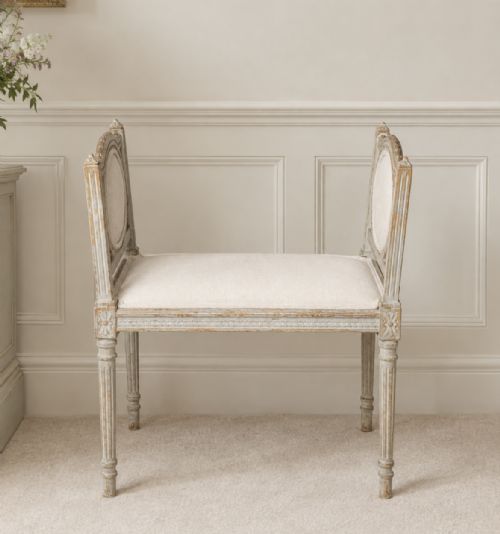
These grey upholstered bench pieces bring versatile seating and traditional form to interior spaces, blending period woodwork with neutral textiles.
Grey Upholstered Bench
A grey upholstered bench provides functional seating through various historical forms, from small stools and window seats to larger settees and sofas. Buyers searching for a grey upholstered bench will encounter pieces originating from the 18th century, Victorian period, and Edwardian era alongside continental designs.
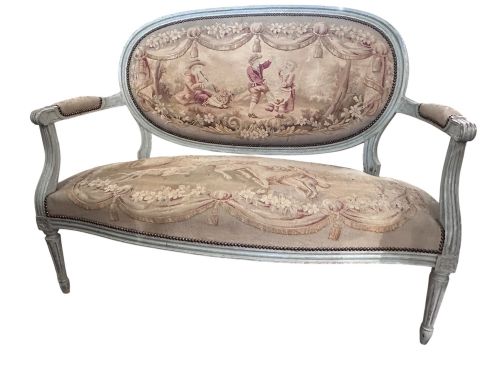
The selection ranges from compact footstools and piano stools to substantial French painted seating and Edwardian hall seats. Woodwork frames span painted finishes, mahogany, beech, and oak, supporting fabric or linen upholstery.
How they were made
Frames rely upon traditional timber construction using beech, mahogany, pine, and oak, frequently shaped with hand carving or painted treatments. Structural elements incorporate brass details and fluted or cabriole legs depending on the stylistic period.
Upholstery relies on fabric and linen surfaces applied over padding, sometimes accompanying cane work or gilded decorations. Joinery and decorative carving reflect the craftsmanship of periods spanning the 18th to the early 20th century.
Some Victorian piano stools come with concealed winding mechanisms so pianists could adjust their height mid-recital without missing a beat.
What varies in quality
The refinement of hand-carved woodwork and the execution of painted or gilded finishes distinguish finer examples from simpler vernacular pieces. Superior construction is evident in the articulation of period details such as fluted legs, cabriole supports, and neoclassical motifs.
The integrity of the structural timber frame and the quality of the textile upholstery determine the overall standing of an individual bench or settee. Origin, whether French provincial, English Edwardian, or Italian neoclassical, also influences the character of the design.
The Grey Upholstered Bench Glossary
- Cabriole leg
- A furniture leg that curves outward and then tapers inward, typically ending in a pad or scroll foot. This form appears frequently on Victorian and 18th-century seating.
- Canapé
- A decorative French sofa or settee featuring an upholstered seat and back. These pieces often display carved wooden frames from the 19th century.
- Neoclassical
- A style drawing inspiration from classical antiquity, characterised by straight lines and symmetrical forms. It is seen on Italian and French settees from the period.
- Fluted leg
- A column leg decorated with parallel vertical grooves. This detail appears on Louis XVI design furniture and Edwardian seating.
- Ottoman
- A low, upholstered seat without a back or arms, designed for resting feet or sitting. Early 20th-century examples provide generous padded surfaces.
Grey Upholstered Bench: Frequently Asked Questions
Where should I place a bench?
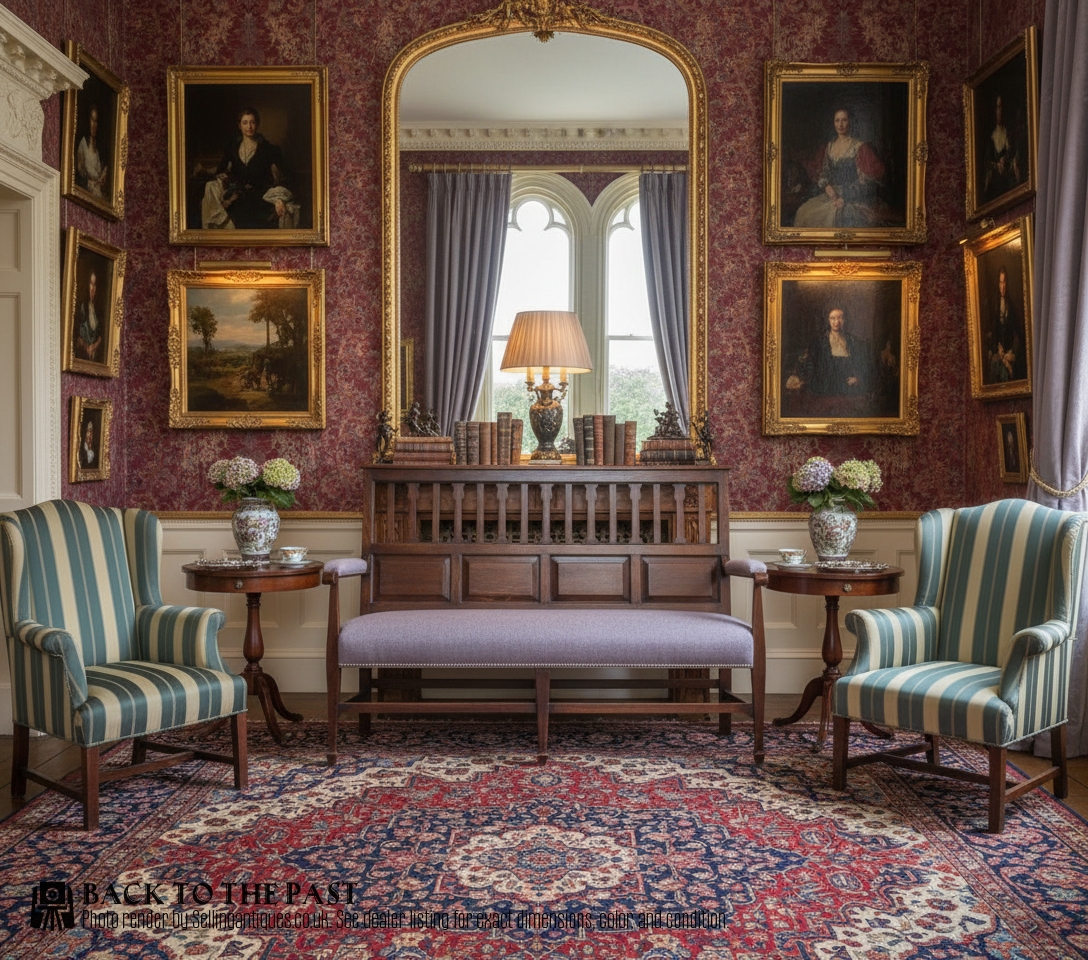
These pieces fit well at the foot of a bed, beneath a window, or along a hallway wall to provide accessible seating. Their low profiles allow them to occupy circulation spaces without blocking natural light.
Larger settee forms serve as secondary seating in living rooms or studies, while smaller stools function flexibly across different rooms.
How do I identify Edwardian seating?
Edwardian seating often combines lighter oak or painted frames with functional utility, reflecting arts and crafts influences or simpler domestic requirements. They date from the early 20th century and lean toward straightforward proportions.
Distinctive markers include clean lines and practical upholstery suited to period drawing rooms and halls.
What is a club fender?
A club fender is a low, brass-framed structure designed to sit around an open fireplace, incorporating padded seats on either side. They originate from British country houses and club rooms.
These pieces combine metalwork frames with upholstered tops for fireside seating.
How do French styles differ?
French provincial and Louis XVI designs emphasise decorative carved woodwork, painted finishes, and curved silhouettes. They frequently incorporate Aubusson tapestries, linen, or fine fabric coverings.
By contrast, English pieces from the Victorian or Edwardian periods often favour exposed mahogany, oak, or simpler structural forms.