


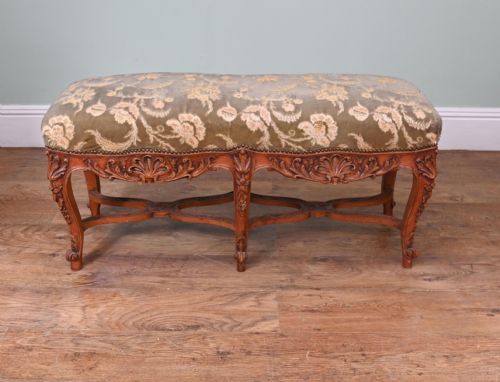


Padded Oak Bench
A padded oak bench brings solid timber and textured upholstery together, offering a sturdy seat for an entrance hall or a quiet window.
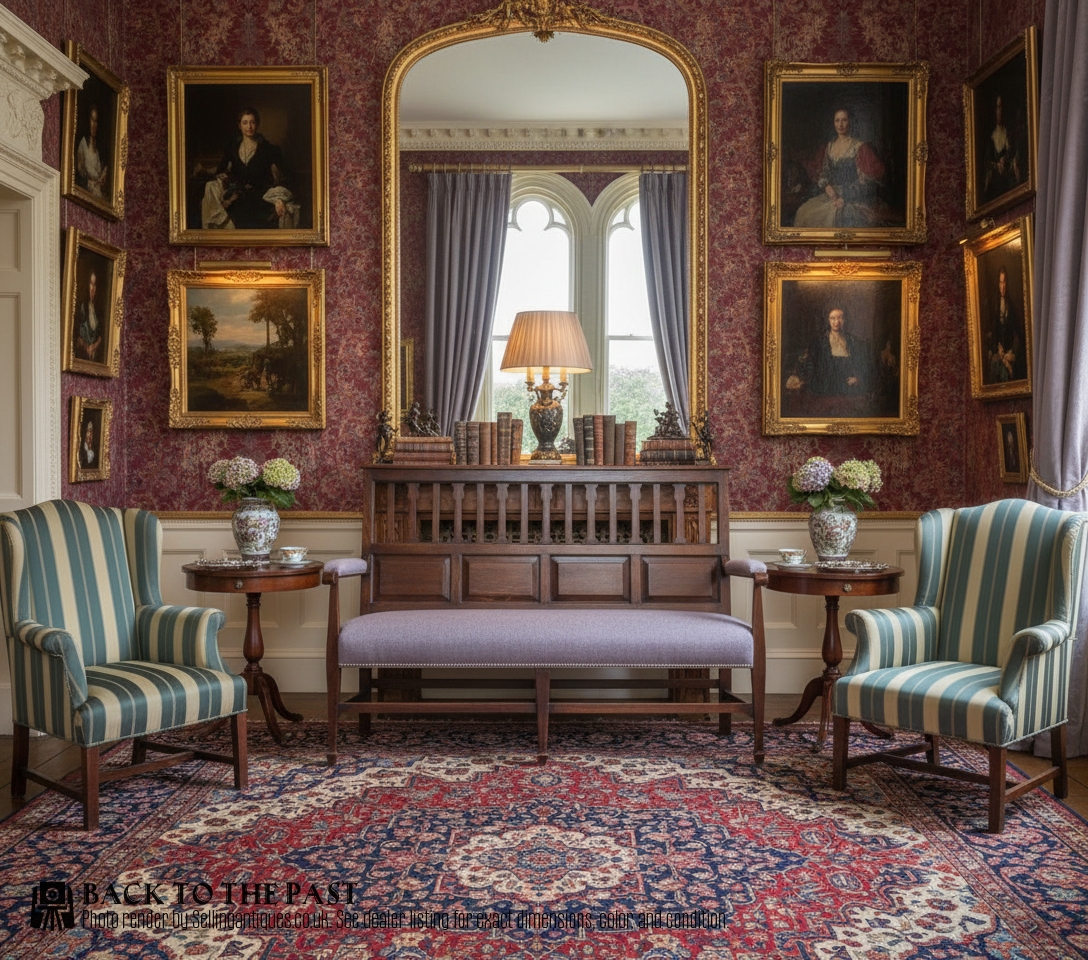
Padded Oak Bench
A padded oak bench combines a sturdy wooden frame with a cushioned top, creating a practical seat for hallways and living spaces. These pieces span the nineteenth century, the Edwardian era, and the early twentieth century, showing influences from Gothic Revival, Arts and Crafts, and French Provincial styles.
The form varies from long hall benches and window seats to compact joint stools, piano stools, and footstools. Oak forms the constant structural element, paired with fabric, leather, velvet, or textile upholstery secured with metal studs or fine carving.
How they were made
Makers built the foundational frames using solid oak, occasionally incorporating burr elm for figured grain contrast. Joinery methods relied on traditional woodworking techniques to ensure structural longevity under daily use.
Cushioning was traditionally applied over webbing or springs and finished with hard-wearing coverings such as leather, velvet, or woven textiles. Metal studs frequently secured the upholstery edges, adding a decorative linear detail to the wooden framework.
Some nineteenth-century piano stools included hidden compartments beneath the padding for storing sheet music.
What varies in quality
The distinction between standard and superior pieces rests on the crispness of the oak carving and the choice of secondary timbers. Pieces featuring burr elm highlights or intricate Gothic and Arts and Crafts detailing represent finer design ambition.
The execution of the upholstery and the integrity of the underlying frame construction dictate the overall refinement. Original leather or well-preserved textile coverings with traditional studwork elevate the character of the piece.
The Padded Oak Bench Glossary
- Joint stool
- A traditional wooden stool constructed with mortise and tenon joints rather than turned legs inserted into a seat. These sturdy items served versatile domestic purposes before chairs became common.
- Burr elm
- A woody growth on an elm tree that produces highly figured, swirling grain patterns. Cabinet makers utilised these sections as decorative veneers or solid highlights on prominent surfaces.
- Reformed Gothic
- A nineteenth-century design movement that reinterpreted medieval Gothic architecture with cleaner lines and simpler geometric forms. It rejected heavy Victorian ornamentation in favour of structural honesty.
- Metal studs
- Small decorative nails with domed heads used to secure upholstery edges to wooden frames. They provide both functional fastening and a traditional visual accent along the seat perimeter.
Padded Oak Bench: Frequently Asked Questions
Where should I place a padded oak bench?
These pieces sit well in entrance halls, beneath windows, or at the foot of a bed. Their compact footprint makes them suitable for narrow circulation spaces.
They offer a convenient spot for removing shoes or quiet reading while adding architectural character to a room.
How do I care for the oak frame?
Keep the wood nourished by applying a natural beeswax polish occasionally. Avoid placing the timber in direct sunlight or near intense heat sources to prevent splitting.
Regular dusting with a soft, dry cloth maintains the natural sheen of the grain.
How can I identify an Arts and Crafts piece?
Look for honest construction methods that showcase the natural qualities of the oak without excessive decoration. These items often feature simple geometric lines and functional forms.
The aesthetic prioritises handcrafted simplicity over mass-produced ornamentation.
What is the difference between a stool and a bench?
Stools are designed for a single occupant and feature a compact, square or round footprint. Benches provide an elongated seating surface intended for multiple people or extended lounging.
Both utilise identical framing materials and padded upholstery techniques.