



Grey Sky Watercolour Painting
A grey sky watercolour painting captures shifting coastal light and atmospheric dampness, offering buyers a moody glimpse into British landscapes from the Victorian era to the mid-twentieth century.
Grey Sky Watercolour Painting
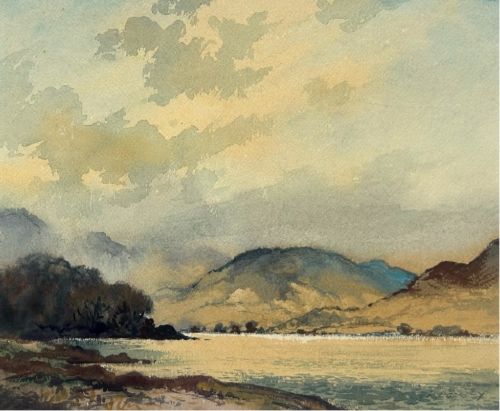
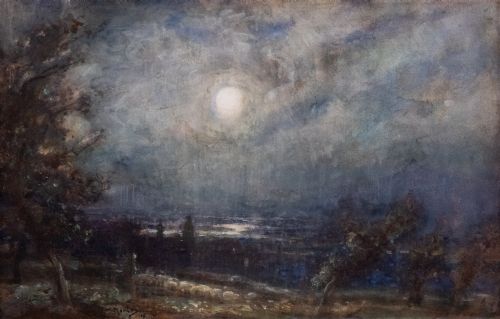
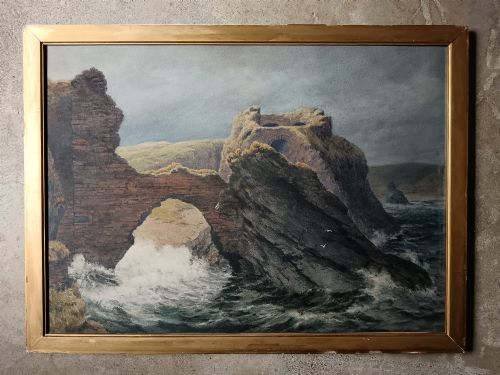
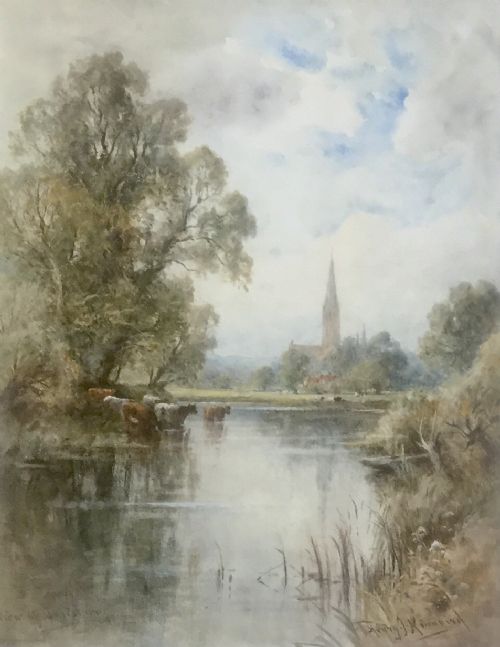
A grey sky watercolour painting presents atmospheric British views, typically executed on paper with water-soluble pigments to capture overcast coastal harbours, moody fenlands, and rolling hills. These works span periods from the late nineteenth century through to the mid-twentieth century, encompassing Victorian maritime scenes and mid-century topographical landscapes.
The most common examples encountered in this selection feature coastal havens, fishing boats, and rural rivers under heavy, cloud-laden skies. Artists employ subtle washes of grey and blue pigment to render the damp, heavy air characteristic of British weather across the decades.
What varies in quality
The distinction between standard works and exceptional pieces rests on the artist's handling of tone and the subtlety of atmospheric perspective within the sky. Superior examples demonstrate a confident control of pigment washes that convey genuine meteorological weight rather than flat, uniform grey washes.
Compositional balance and the preservation of the paper support also define the upper tier of these paintings. Stronger pieces maintain vibrant pigment integrity beneath glass without excessive fading or discoloration from age and exposure.
Listings feature watercolours created on paper support, mounted in wood and gilt wood frames behind glass across various Victorian and mid-century dates.
Robert Leslie Howey·John E. Aitken·Thomas William Morley·John Moxon·Charles William Adderton·Cuthbert Crossley·James Orrock·George Hamilton Constantine·Edmund Morris Wimperis·Thomas James Lloyd·Fred Lawson·Claude Muncaster·Tom Dudley·Henry J. Kinnaird·Frank Saltfleet·Thomas Bush Hardy·John D. Walker·Edward Wesson·Arthur Anderson Fraser·R I Barrow
The Grey Sky Watercolour Painting Glossary
- Watercolour pigment
- The finely ground colouring material mixed with water-soluble binders used to create the painting on paper.
- Gilt wood
- Timber framing finished with a thin layer of gold leaf or metallic gilt, commonly used to frame nineteenth and twentieth-century works.
- British Impressionism
- An artistic style focusing on loose brushwork and the play of natural light, visible in various British works from the early twentieth century.
Grey Sky Watercolour Painting: Frequently Asked Questions
What periods do these waterpaintings cover?
The works span from the Victorian era through the Edwardian period and into mid-century modern art movements. Most pieces date between the late nineteenth century and the nineteen-fifties.
Artists working across these decades documented changing British landscapes, maritime scenes, and industrial expansion under characteristically overcast skies.
How should I frame and display them?
These paintings on paper require protection behind glass to prevent atmospheric moisture and dust from damaging the pigment. Matting separates the paper surface directly from the glass.
Display the framed artwork away from direct sunlight to preserve the delicate grey and blue tones of the watercolour washes over time.
Are these paintings signed by the artists?
Many examples feature visible signatures or attribution by the original creator within the composition or on the mount. Monograms and signatures help attribute works to specific regional painters.
Unsigned pieces still offer distinct period characteristics through paper type, framing style, and the handling of watercolour pigment.
What subjects appear besides grey skies?
Common secondary subjects include beached fishing boats, historic abbeys, coastal harbours, and rural fenlands across England and Scotland. Maritime activity dominates many Victorian and Edwardian compositions.
These topographical views record specific locations such as the English Lake District, Whitby, and the River Thames.