


Vintage Windmill Artwork
These vintage windmill artwork pieces capture historic mills across British and Dutch landscapes in oils and watercolours.
Vintage Windmill Artwork
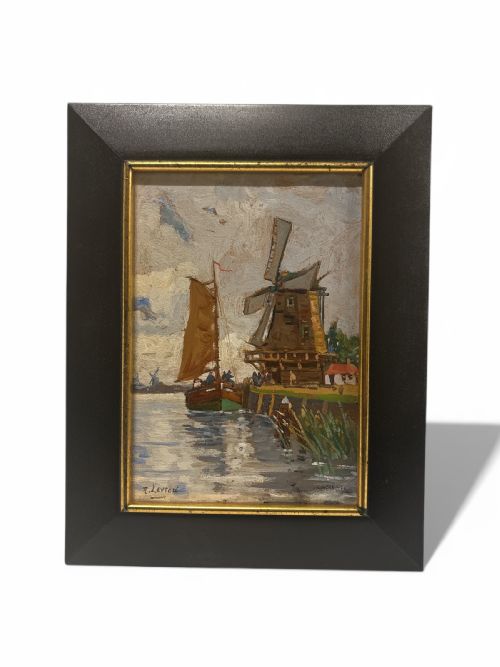
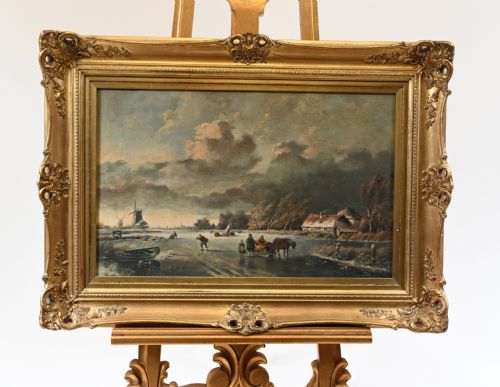
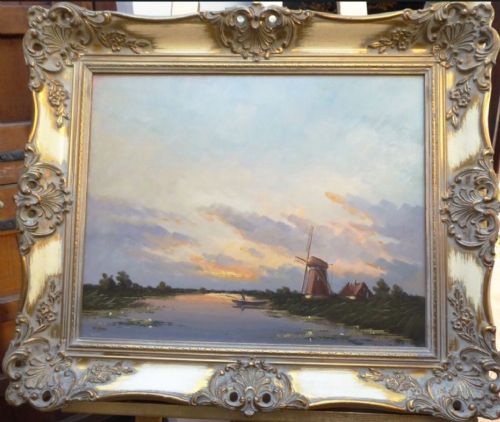
When you search for vintage windmill artwork, you encounter paintings capturing mills across marshlands, rivers, and coastal scenes. The selection here spans the nineteenth century through to the mid twentieth century, reflecting varied interpretations of these industrial landmarks.
You are most likely to meet oil paintings and watercolours on canvas, paper, and wood panels. These works range from impressionist interpretations of the Norfolk Broads to traditional Dutch school landscapes depicting frozen waterways and sunset rivers.
The subjects extend from specific locations like Holland and Stokesby to broader depictions of village taverns and hay farming. Artists recorded these mills using styles that shifted from Victorian landscape traditions to post-war impressionism.
How They Were Made
Painters utilised oil paint and watercolour pigment applied to canvas, prepared wood, and paper substrates. Many works incorporate gilding or gold leaf within the frames and picture surfaces to catch the light.
The technique relies upon brushwork that captures atmospheric conditions, from the misty air of a Dutch river to the snow of winter scenes. Artists balanced detailed architectural rendering of the mill sails with looser handling of surrounding skies and water.
Materials in these listings include canvas, wood, paper, oil paint, watercolour pigment, gilt, and gold leaf.
What Varies in Quality
The distinction rests in the confidence of the brushwork and the artist's command of light and atmosphere. Stronger pieces integrate the windmill into the landscape with purposeful composition rather than treating it as a static illustration.
Condition of the canvas and pigment stability influence the visual strength of each piece. Works retaining their original gilt frames and unblemished paint surfaces offer a clearer window into the period.
R Leyton·T. Bergman·THOMAS BUSH HARDY·Ernest Uden·Charles Harmony Harrison·John D. Walker·Frederick William Jackson·Edward Seago·John Holland Snr·Kershaw Schofield
The Vintage Windmill Artwork Glossary
- Canvas
- A heavy woven fabric stretched across a wooden frame to serve as a support for oil paintings. It provides texture that interacts with the applied pigment.
- Watercolour pigment
- Finely ground colour suspended in a water-soluble binder, applied to paper. This medium allows for luminous, translucent washes of light.
- Impressionist
- A style focusing on the visual impression of the moment, particularly shifting light and open air. Artists used visible brushstrokes rather than smooth blending.
- Dutch School
- A lineage of painting associated with Netherlands subjects and traditions. These works frequently feature flat horizons, extensive skies, and canals.
- Gilt
- A thin layer of gold applied to wood frames or picture surfaces. It adds decorative warmth around the edge of the artwork.
Vintage Windmill Artwork: Frequently Asked Questions
How do I hang a heavy oil painting?
Secure the hanging wire to the wooden frame rather than the stretcher bars for proper balance.
Use wall anchors rated for the weight of the canvas and frame.
Where should I place watercolour artwork?
Keep watercolours away from direct sunlight to prevent the pigments from fading over time.
Display them in rooms with stable humidity levels to protect the paper.
How do I identify the period of a painting?
Examine the canvas preparation, framing style, and stretcher construction on the reverse.
Signatures, artist registry records, and stylistic clues within the brushwork offer further dating evidence.
What is a windpump?
A windpump is a type of windmill specifically designed to pump water from low-lying marshes.
They are frequently seen in depictions of the Norfolk Broads and Dutch wetlands.