
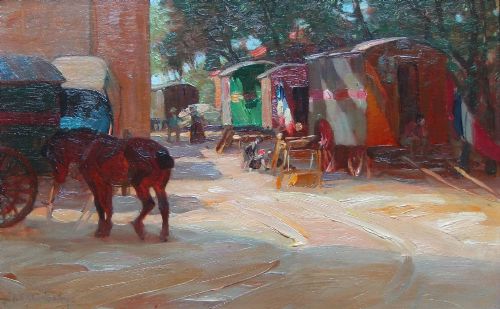


Brown Earth Landscape Painting
A brown earth landscape painting captures the muted, natural tones of the countryside through oil or watercolour.
Brown Earth Landscape Painting
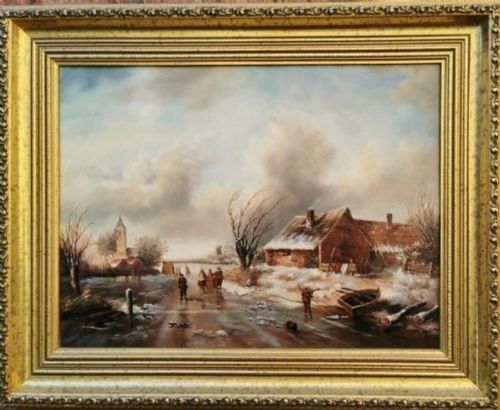
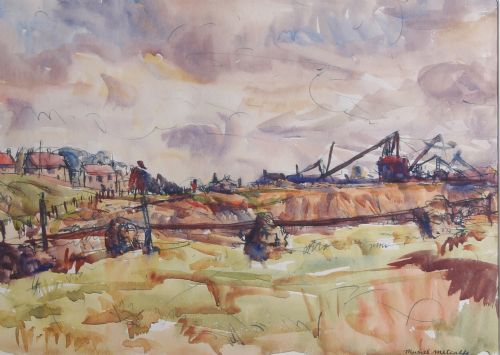
A brown earth landscape painting presents rural scenes, rivers, and country cottages rendered in earthy pigments across various British and European movements. These works span from the Victorian period through to mid-century modern interpretations, documenting pastoral life, harbours, and rolling hills.
The versions most frequently met on this page are oils and watercolours produced between the mid-nineteenth century and the mid-twentieth century. They capture specific regional locations, from Yorkshire valleys to Welsh mountains, using restrained palettes dominated by brown earth tones.
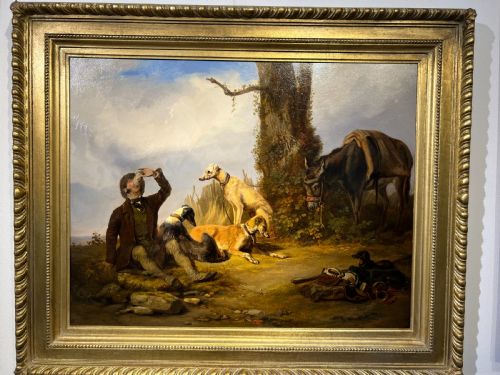
Collectors encounter both signed original watercolours on paper and substantial oil paintings on canvas depicting everyday agricultural tasks, livestock, and moody skies. The overarching subject matter remains rooted in traditional landscape representation rather than abstract experiment.
Materials and technique
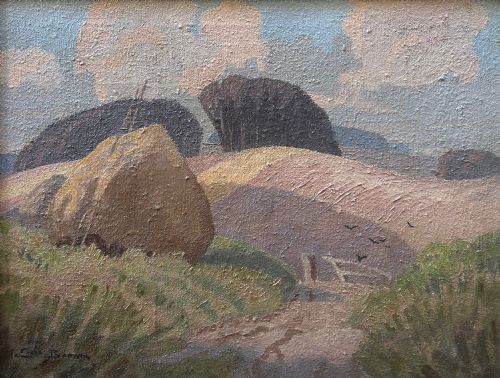
The primary mediums recorded in these listings are oil paint and watercolour paint, applied to stretched canvas, wood panels, or heavyweight paper. Artists built up their compositions using brushwork that ranges from smooth, traditional washes to heavier impasto applications.
Supports varied according to the medium, with watercolours typically framed behind glass on paper sheets, whilst oils utilise canvas stretched over wooden frames or wooden boards. These traditional supports ensure the longevity of the earthy pigments employed by the painters.
Listings feature works spanning from the mid-nineteenth century through to the nineteen-sixties, utilising both canvas and paper supports.
Assessing quality
Quality in these landscapes rests upon the confidence of the brushwork, the atmospheric depth achieved through tone, and the specificity of the location rather than the mere age of the piece. Stronger works demonstrate a sure handling of light and shadow, particularly in how earthy browns and muted greens are balanced against skies.
The distinction between standard works and finer examples lies in the artist's ability to convey texture and movement within the natural world, such as rippling water or heavy foliage. Works by established regional artists or those exhibiting academic affiliation often display greater compositional rigour.
Sir Edwin Henry Landseer·George Armfield·Hendrik Yan Wolter·Owen Bowen·Herbert Royle
The Brown Earth Landscape Painting Glossary
- Impasto
- Paint applied thickly to a canvas or panel, leaving visible brush or palette knife marks that stand proud of the surface. This technique adds tactile dimension to elements like tree trunks or turbulent water.
- Watercolour
- A paint consisting of pigment suspended in a water-based solution, traditionally applied to paper. It relies on the white of the paper showing through transparent washes of colour.
- Canvas
- A closely woven heavy fabric used as a surface for oil painting, typically stretched taut over a wooden frame. It provides a durable and slightly flexible ground for the application of oil paint.
- Provenance
- The documented history of ownership of a work of art, establishing its authenticity and previous keepers. A clear provenance adds historical context to regional landscape paintings.
Brown Earth Landscape Painting: Frequently Asked Questions
What subjects do these landscapes show?
These works predominantly depict rural British scenery, including rivers, agricultural workers, moorlands, and country cottages. Artists recorded specific regional views across Yorkshire, Wales, and Cumberland.
Subjects also extend to coastal scenes, harbours, and seasonal shifts like haymaking and winter frosts. The focus remains on unidealised, everyday country life.
How should I frame an antique watercolour?
Watercolours require framing behind glass with acid-free mounts to protect the paper and pigment from ultraviolet light and atmospheric moisture. Direct sunlight will fade these delicate water-based paints over time.
Keep them away from damp environments like kitchens or unheated rooms to prevent foxing spots and paper deterioration.
Are oil paintings on canvas heavy?
Oil paintings on stretched canvas are generally lightweight because the wooden stretcher frames are hollow at the back. Larger pieces with heavy wooden frames require secure wall fixings to support the overall weight.
When hanging, ensure the wire or D-rings match the scale of the painting to prevent accidental slips.
How do I date a nineteenth-century painting?
Dating relies upon stylistic markers, clothing of figures within the landscape, framing materials, and any signatures or inscriptions on the reverse of the canvas. Victorian works often feature detailed brushwork and traditional varnishes.
Examine the stretcher bars and canvas texture, as older pieces exhibit hand-built wooden frames and aged linen supports.