



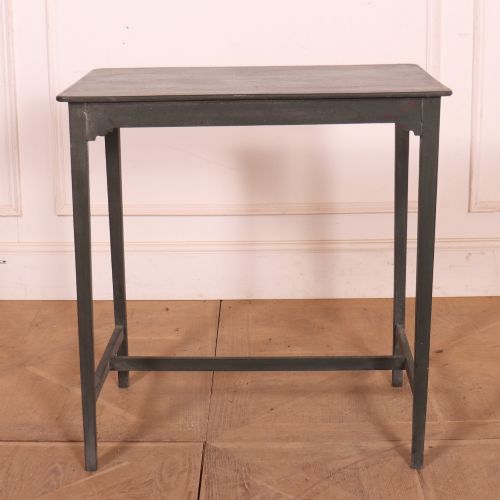
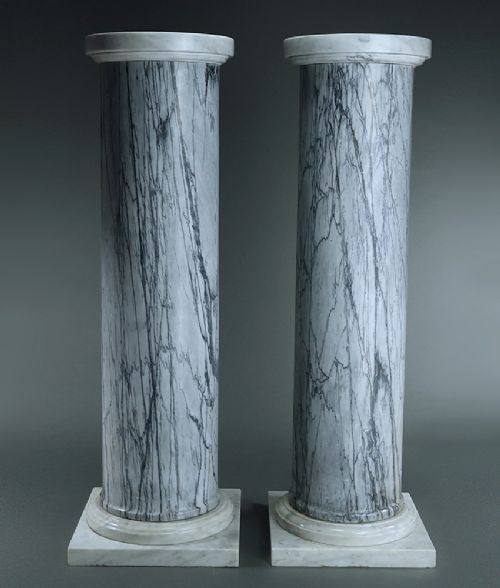


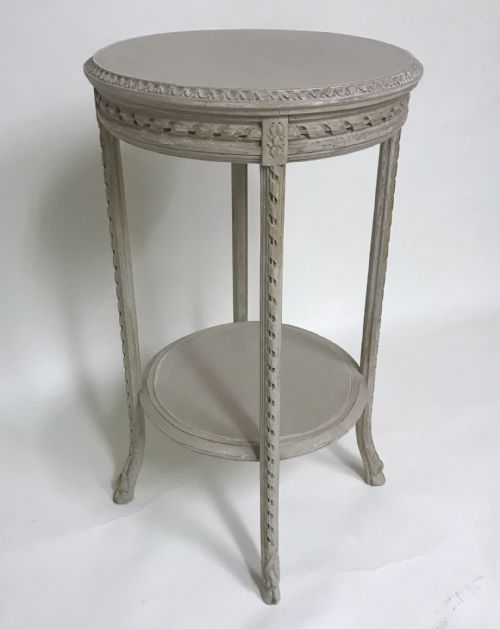
Grey Plant Stand
A grey plant stand elevates your greenery with classical presence, offering solid support and sculptural proportion to any room.
Grey Plant Stand
A grey plant stand primarily takes the form of a column, pedestal, plinth, or occasional table designed to display flora. These pieces appear across the nineteenth and twentieth centuries in materials such as painted wood, plaster, and marble.
The selection ranges from French decorative tables and painted columns to carved wood torchieres and marble-topped lamp tables. Neoclassical, Rococo Revival, and Chinese Export styles provide the decorative vocabulary for these stands.
How they were made
Craftsmen utilised carved wood, painted oak, and mahogany for the structural frames of tables and torchieres, often finishing surfaces with applied paint or mother of pearl inlay. Stoneware, plaster, and scagliola provided solid alternatives for classical columns and plinths.
Marble and alabaster formed heavy tops and monolithic column shafts, frequently paired with socle bases and contrasting plinths. These dense mineral components required precise cutting and polishing to achieve stable display surfaces.
Grey Plant Stand Retail Price Guide 2026
Typical asking prices for grey plant stand among the pieces listed under this phrase on Sellingantiques today, from the lower quarter to the upper quarter. They describe what is for sale here now, not the wider market.
Listings incorporate nineteenth-century and early twentieth-century examples, spanning Neoclassical, Chinese Export, and French decorative styles in marble, painted wood, and plaster.
What varies in quality
The standard of execution depends upon the ambition of the material and the crispness of the carving or surface finish. Solid stone, figured marble, and intricate mother of pearl inlay separate decorative furnishings from utilitarian supports.
Proportion and stylistic commitment dictate the visual success of each piece, whether manifesting as restrained Neoclassical revivalism or elaborate French Rococo ornamentation. Surface treatments such as layered paint or scagliola demand technical precision to hold visual weight.
The Grey Plant Stand Glossary
- Torchere
- A tall stand designed to support a light or a decorative object. These slender supports elevate displays above standard table height.
- Plinth
- A heavy rectangular block forming the base of a column or statue. It provides structural stability and visual grounding for the shaft above.
- Scagliola
- A composite material made from selenite, glue, and pigments, mimicking marble and other hard stones. Craftsmen apply and polish this mixture to create decorative architectural elements.
- Socle
- A short plinth or pedestal supporting a column, vase, or bust. This architectural foot lifts the primary form clear of the floor.
Grey Plant Stand: Frequently Asked Questions
Where should I place a plant stand?
These stands suit corners, window alcoves, or hallways where vertical space allows a plant to cascade or display its full form. Their compact footprints let them integrate easily beside seating or beneath architectural details.
Ensure the location offers adequate natural light for your greenery while keeping the standalone furniture piece stable and clear of heavy household traffic.
How do I clean marble and stone stands?
Dust surfaces regularly with a soft, dry cloth to prevent grit accumulation. Avoid acidic cleaners, vinegar, or harsh detergents that can etch marble and alabaster.
Use a damp cloth with mild soap for stubborn marks, followed immediately by thorough drying with a clean towel to protect the polished mineral finish.
Are these stands suitable for heavy pots?
Sturdy stone, stoneware, and solid wood columns provide exceptional weight capacity and stability for substantial plants. Lighter painted plaster or small decorative tables require more cautious balancing of heavy or top-heavy specimens.
Consider the base footprint and material density of the specific stand before mounting large or moisture-heavy planters.
How do I identify a Neoclassical style?
Neoclassical pieces draw inspiration from classical Greek and Roman architecture, featuring clean lines, symmetrical proportions, and restrained ornamentation. You will often see fluted columns, geometric plinths, and classical motifs without excessive scrollwork.
This aesthetic prioritises architectural dignity and structural clarity over the elaborate curves found in later revival styles.