

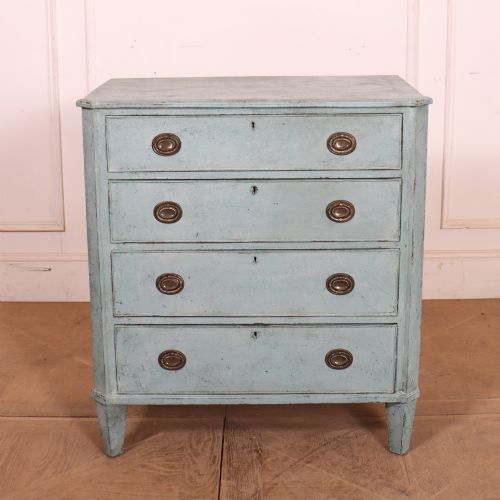
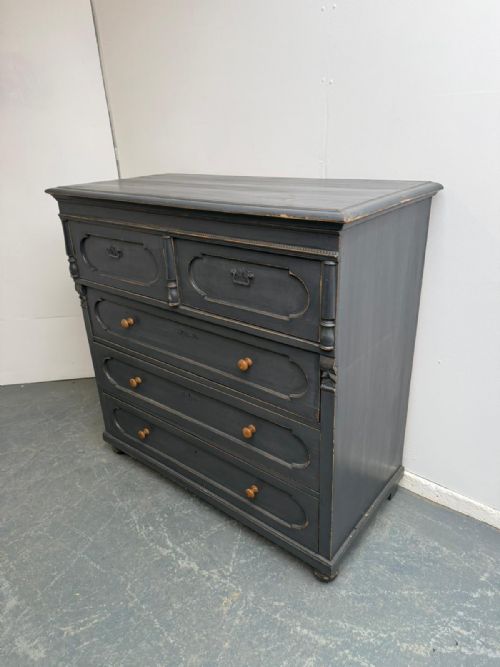
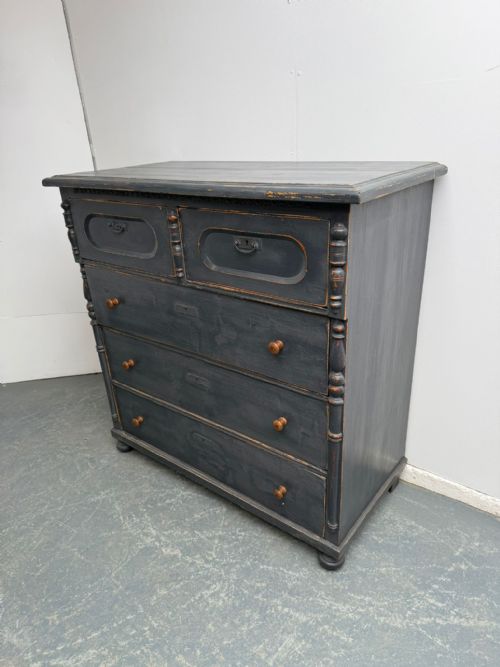


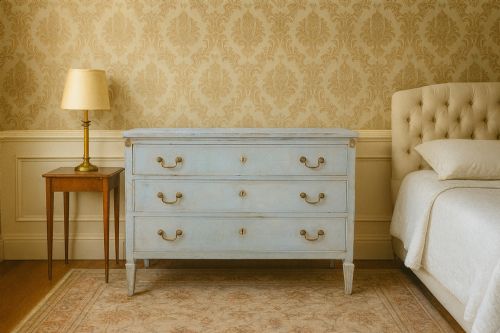
Grey Pine Chest Drawers
These grey pine chest drawers bring muted regional character and practical storage to a room through painted softwood surfaces.
Grey Pine Chest Drawers
Grey pine chest drawers encompass functional storage pieces rendered in painted softwood, often drawing on regional European traditions. Buyers searching this phrase encounter sturdy utilitarian furniture designed for domestic storage and daily use.
The pieces appearing on this page span several centuries, featuring forms ranging from standard multi-drawer chests and commodes to banks of drawers and linen presses. Many examples originate from British and continental workshops, particularly Swedish traditions.
The prevailing aesthetic relies on painted finishes in shades of grey, applied over pine wood structures. This category bridges simple country utility and decorative provincial design, making each piece visually distinctive.
Materials and construction
Makers utilised pine as the primary softwood timber for carcases and drawers, providing a stable yet accessible material for domestic furniture. Surfaces were subsequently painted, sometimes incorporating layered decorative schemes.
Hardware elements such as brass or iron handles and pulls secured functionality while complementing the painted exterior. Joinery methods relied on traditional timber construction suited to heavy daily use in country houses and provincial homes.
Grey Pine Chest Drawers Retail Price Guide 2026
Typical asking prices for grey pine chest drawers among the pieces listed under this phrase on Sellingantiques today, from the lower quarter to the upper quarter. They describe what is for sale here now, not the wider market.
Design styles represented include Gustavian, French Country, English Country House, and Swedish Baroque Revival.
Judging quality and character
The distinction between pieces rests in the integrity of the original timber construction and the preservation of historic painted surfaces. Well-preserved painted finishes retain an appealing patination that enhances the visual depth of the grey colour.
Proportion and scale also define the hierarchy, ranging from modest domestic chests to massive five-drawer configurations or extensive banks of drawers. The refinement of provincial details, whether Gustavian neoclassical lines or simpler country forms, dictates the overall character.
The Grey Pine Chest Drawers Glossary
- Pine
- A softwood timber commonly utilised for country furniture and case pieces due to its availability and workability. It accepts painted finishes readily.
- Commode
- A low chest of drawers, frequently associated with continental European cabinetmaking traditions such as Swedish neoclassical design. These pieces often feature decorative painted surfaces.
- Gustavian
- The Swedish neoclassical style spanning the late eighteenth century, characterised by restrained classical ornamentation and pale painted finishes. Pieces from this tradition often display symmetry and understated elegance.
- Bank of drawers
- A utilitarian storage form comprising numerous small drawers, originally utilised in shops, offices, or workshops. Examples often feature exposed pine or painted wooden construction.
Grey Pine Chest Drawers: Frequently Asked Questions
How do I clean a painted pine chest?
Dust surfaces regularly with a soft, dry cloth to prevent dirt accumulation on the painted finish. Avoid harsh chemical cleaners that might damage the historic paint layer.
Maintain stable humidity levels in the room to protect both the pine timber and the painted surface from cracking or warping over time.
Are these chests suitable for bedroom storage?
These pieces provide deep and sturdy drawer space well suited for clothing and domestic linens. Their substantial construction handles daily use reliably.
Consider the external dimensions and drawer depths carefully to ensure the piece accommodates your specific storage requirements.
What is the difference between Gustavian and Victorian pieces?
Gustavian pieces typically date from the late eighteenth century and exhibit restrained neoclassical proportions with pale painted surfaces. They reflect Swedish interpretations of French court styles.
Victorian examples generally date from the nineteenth century, often presenting heavier proportions and utilitarian country forms with painted finishes.
How can I tell if the paint is original?
Examine the surface under natural light for signs of wear, craquelure, and integration with the underlying pine timber. Historic painted finishes usually show natural thinning and consistent ageing across high-touch areas.
Inspect corners and crevices for layers of subsequent overpaint, which often indicate later redecoration rather than factory or workshop origins.