



Grey Pewter Pitcher
A grey pewter pitcher brings centuries of tavern and household service into a modern room through honest metalwork and utilitarian forms.
Grey Pewter Pitcher
A grey pewter pitcher on this page encompasses functional vessel forms such as flagons, measures, ale jugs, and coffee pots produced across several centuries. These items serve as tangible records of domestic and institutional drink service from English, Irish, Scottish, Jersey, and German workshops.
The selections span distinct historical eras, moving from eighteenth-century George II flat-lid flagons and spire flagons to nineteenth-century Irish haystack measures and Arts and Crafts pieces. Buyers encounter various regional capacities, from small noggin measures up to full gallon jugs.
Makers and regional styles dictate the specific silhouette of each piece, whether it is the tall profile of a church flagon or the bulbous shape of an ale jug. Each iteration reflects the prevailing manufacturing standards of its specific period, grounding the search phrase in physical utility.
Materials and construction
These vessels are primarily constructed from pewter, an alloy traditionally composed of tin combined with lead or copper to achieve durability and workability. The metal develops a characteristic grey surface patina over decades of handling and oxidation.
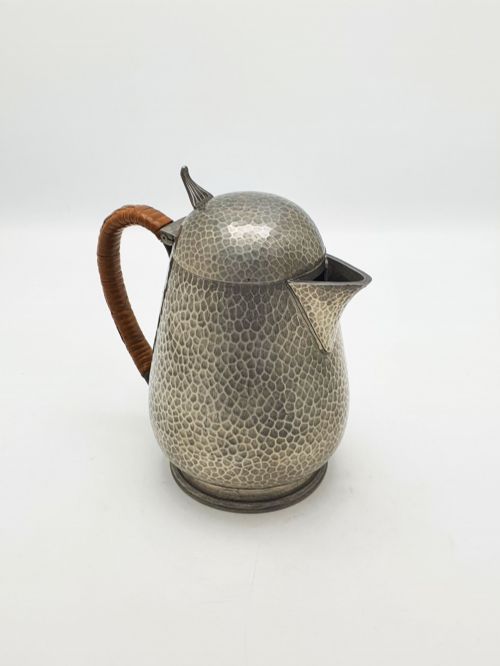
Certain later pieces incorporate supplementary materials for functional insulation, such as cane handles wrapped around the metal grips of Arts and Crafts coffee pots. Components are cast, hammered, and soldered together to form watertight containers designed for daily service.
One towering German beer flagon comes decorated with hops, ready to host a medieval feast in miniature.
Assessing quality and craftsmanship
Quality in these pitchers rests upon the crispness of maker touchmarks, the integrity of original soldered joints, and the retention of balanced proportions. Superior examples maintain their structural heft and display clean lines without excessive thinning of the metal walls.
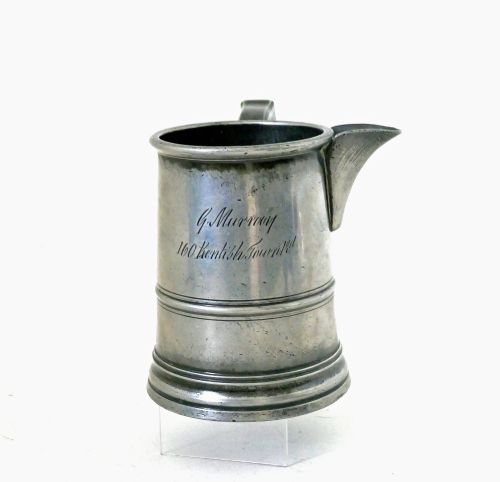
The presence of original engraving, such as presentation inscriptions or capacity verification marks, adds depth to a piece. Conversely, heavy distortion or intrusive repairs alter the historical utility of the metal.
G Murrouy·John Heaney·Robert Iles·John de St Croix
The Grey Pewter Pitcher Glossary
- Flagon
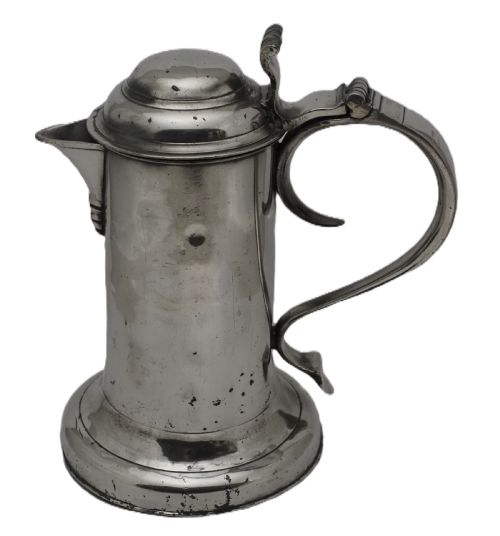
- A large vessel with a handle and lid, historically used for holding liquids such as wine, beer, or church communion wine. These tall containers often feature flat or spire lids.
- Measure
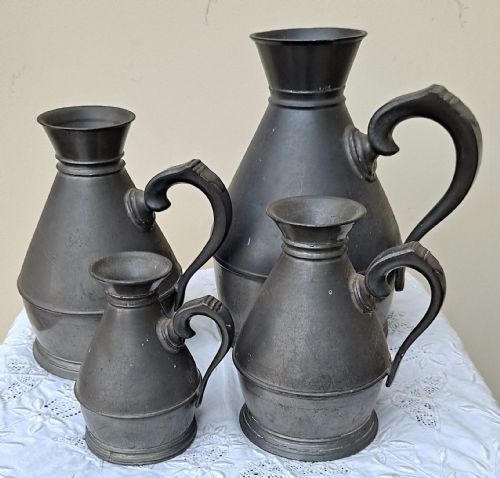
- A standardised vessel utilised for dispensing exact quantities of ale, spirits, or other liquids in taverns and households. Common forms include Irish haystack and Jersey capacity shapes.
- Spire flagon
- A tall drinking or service vessel characterised by a steeply tapered lid resembling a spire. This distinct silhouette is frequently found on eighteenth-century English examples.
- Tappit hen
- A traditional Scottish form of pewter measure featuring a lid with a knob and a distinct bulbous body. They were produced in specific capacities such as the Scots pint.
- Touchmark
- An identifying stamp or hallmark impressed into the pewter by the maker or workshop. These marks serve as indicators of origin and workshop standards.
Grey Pewter Pitcher: Frequently Asked Questions
What were pewter pitchers used for?
Pewter pitchers and flagons served practical roles in domestic, tavern, and church settings for holding and pouring liquids like ale, wine, and water.
Larger vessels functioned as storage or measuring containers, while smaller pots were brought directly to the table for daily dining.
How do I care for grey pewter?
These vessels require minimal intervention to preserve their historic surface. Gentle dusting and occasional washing in warm, soapy water are sufficient to keep the metal stable.
Harsh commercial metal polishes should be avoided, as they strip away the accumulated grey patina that authenticates the age of the piece.
How do I identify eighteenth-century pieces?
Eighteenth-century examples often display specific regional characteristics, such as the flat lids of the George II period or the vertical profile of spire flagons.
Examining the vessel for touchmarks and understanding capacity standards like old English wine or ale measures also helps anchor the date of manufacture.
Can I use these pitchers for drinks?
Historic pewter often contains lead, meaning these antique vessels are generally intended for display and collection rather than modern food and beverage consumption.
Their primary value lies in their historical craftsmanship and decorative presence in a room.