
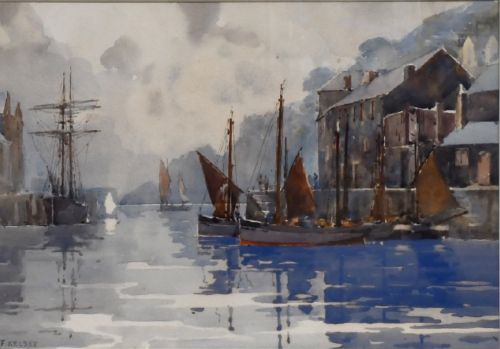


Grey Maritime Watercolour
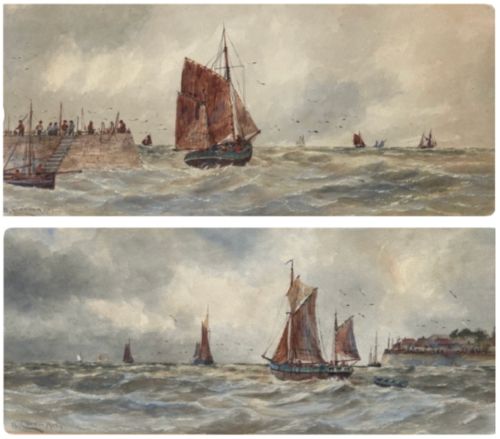
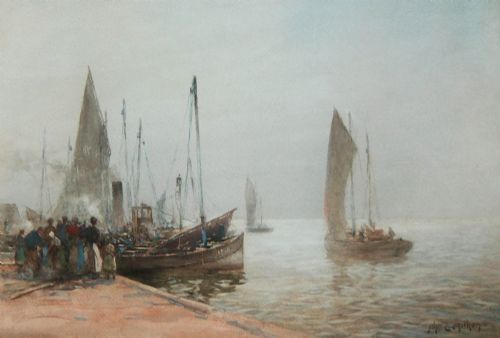
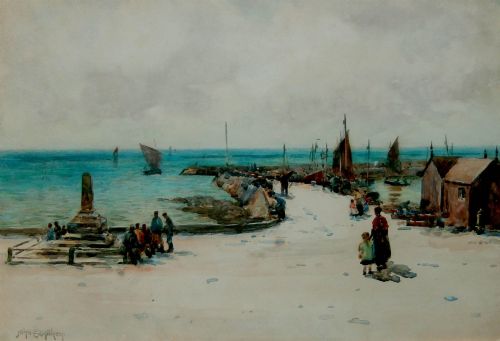
When you search for a grey maritime watercolour, you are looking at coastal scenes, harbours and shipping rendered in muted tones on paper.
Grey Maritime Watercolour
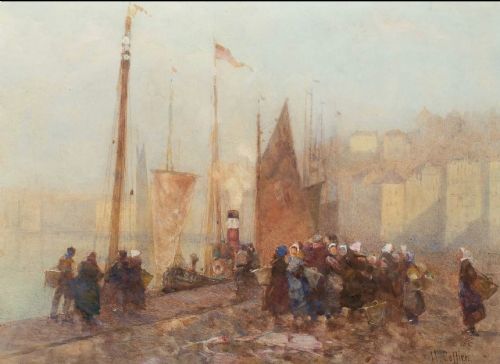
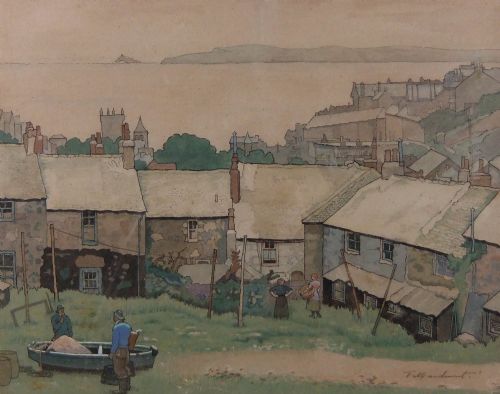
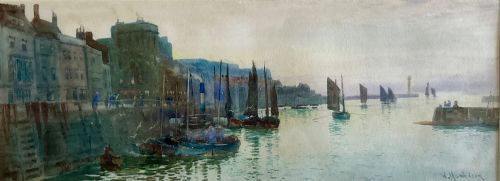
A grey maritime watercolour captures British and European coastal life, depicting fishing boats, harbours, and naval vessels under overcast skies. The works range from nineteenth-century Victorian seascapes to mid-twentieth-century harbour views.
The most common examples on this page date from the Edwardian period through to the 1950s, created by regional artists working in locations such as Whitby, Staithes, and various tidal rivers. These paintings document working ports, coastal towns, and maritime activity with a distinct atmospheric palette.
Materials and Technique
These works are executed primarily in watercolour pigment applied to paper, occasionally combined with gouache to build opaque highlights on sea spray, vessel superstructures, and cloud formations. Artists worked with fluid washes to capture the grey light of North Sea havens and tidal estuaries.
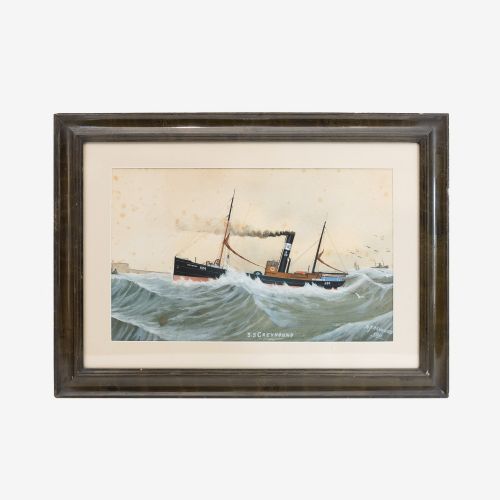
Framed behind glass within wooden surrounds, the sheets rely on the natural tone of the paper to provide luminosity through thin layers of grey, blue, and ochre pigment.
Listings span from the nineteenth century through the 1950s, employing watercolour and gouache on paper.
Assessing the Work
Quality rests upon the artist's handling of tone and atmosphere, distinguishing rapid topographical sketches from confident atmospheric compositions that capture the movement of water and weather. The handling of rigging, hull perspective, and water surface determines the artistic success of each sheet.
Condition also influences the standing of a piece, particularly regarding paper discolouration, fading from exposure to light, and the stability of the original pigments.
Thomas Bush Hardy·Edward Seago·Thomas William Morley·Clara Montalba
The Grey Maritime Watercolour Glossary
- Gouache
- An opaque watercolour paint containing white pigment, utilised to add body and highlights to water and sky.
- Seascape
- A painting depicting the sea, coastal views, shipping, or harbour scenes.
- Wash
- A thin, fluid layer of diluted watercolour pigment spread evenly across the paper to create skies or water.
- Provenance
- The documented history of a painting's previous ownership and exhibition record.
Grey Maritime Watercolour: Frequently Asked Questions
What subjects appear in these paintings?
The works depict fishing vessels, naval ships, coastal towns, and bustling harbours along British and European shores. Common motifs include herring drifters, sailing barges, and coastal architecture under grey skies.
Scenes range from quiet tidal estuaries to busy port yards, reflecting the maritime trade and fishing industries of the nineteenth and twentieth centuries.
How should I frame and display a watercolour?
Watercolours require framing behind glass with acid-free mounts that prevent the paper from touching the glazing. This protects the delicate pigments from atmospheric moisture and physical damage.
Display the pieces away from direct sunlight to prevent the watercolour pigments and paper support from fading over time.
How do I date a maritime watercolour?
Dating relies upon stylistic markers, artist biography dates, and occasional dated signatures or inscriptions on the front or reverse of the paper. Depicted vessels, such as specific naval ironclads or steamships, also provide a precise point of reference.
Framing materials and backing boards frequently offer further clues to the period in which the sheet was executed.
Who were the artists producing these works?
The creators include professional marine painters, naval officers recording fleet movements, and regional artists associated with groups such as the Staithes Art Club. Many exhibited widely during the Victorian and Edwardian eras.
Their familiarity with coastal environments allowed them to portray shipping vessels and tidal conditions with technical accuracy.