
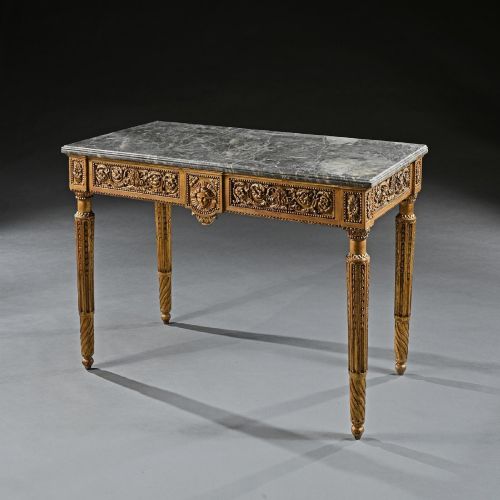
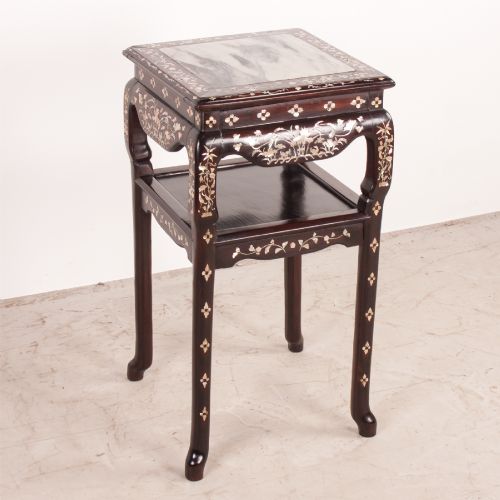
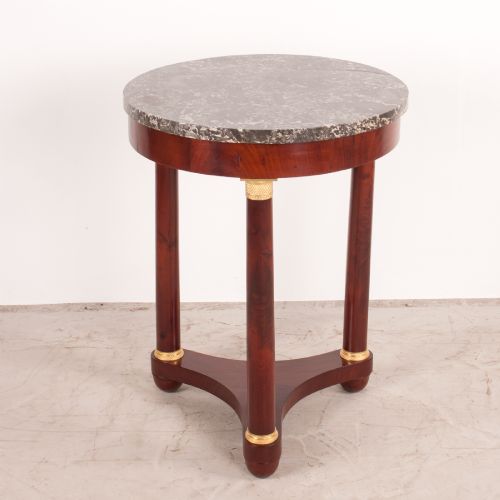
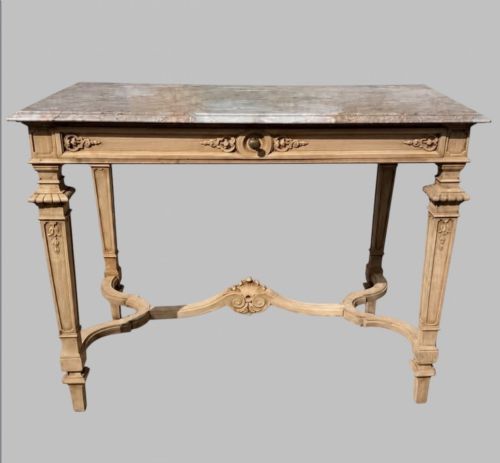
Grey Marble Topped Table
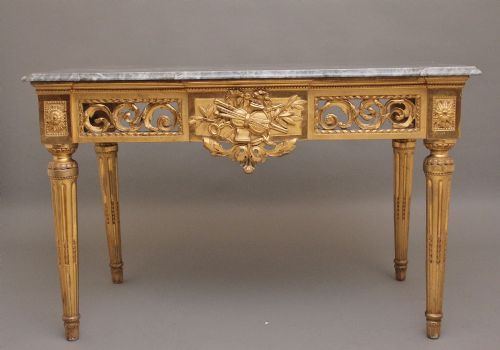
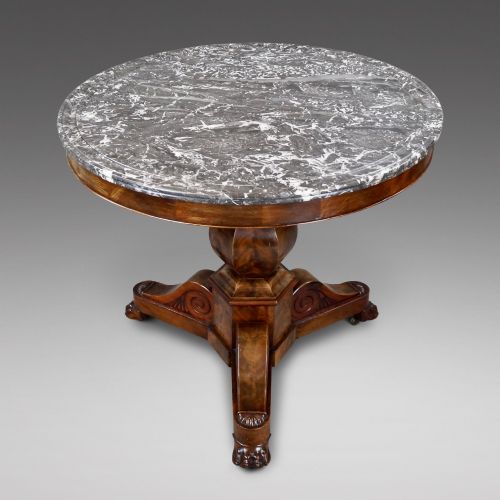
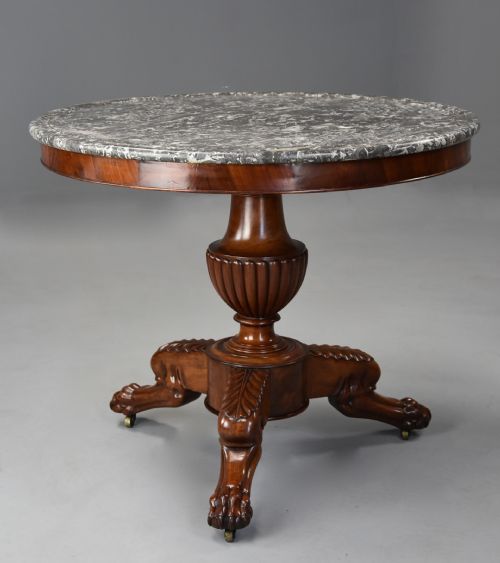
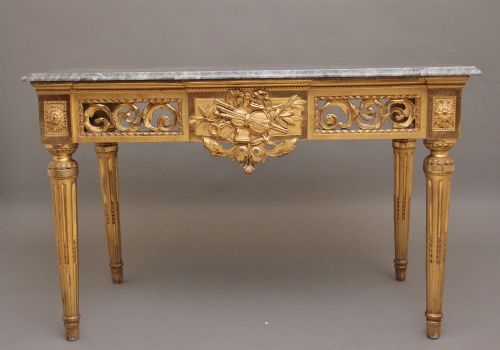
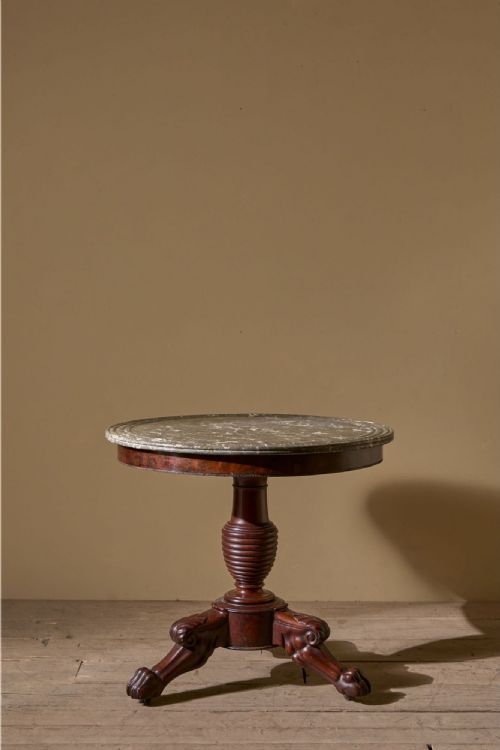
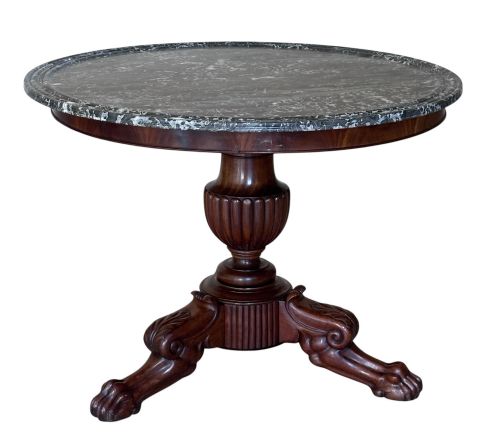
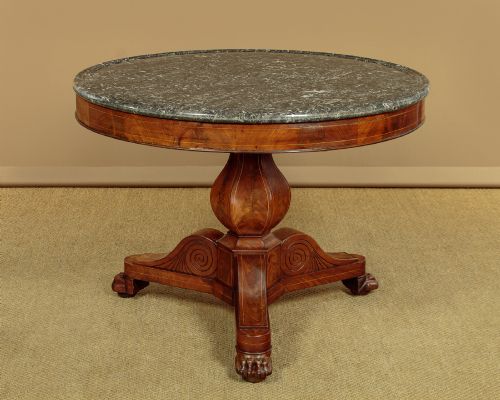
A grey marble topped table brings a cool, heavy surface and undeniable utility into a room, spanning French gueridons, console tables, and bedside cabinets.
Grey Marble Topped Table
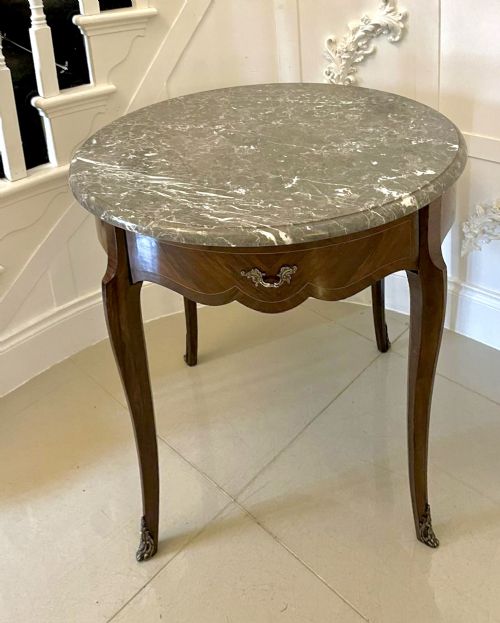
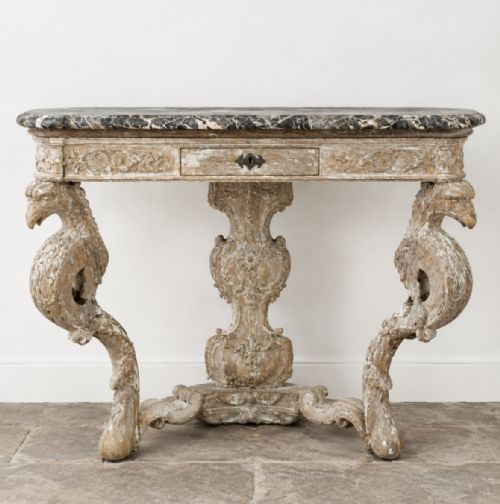
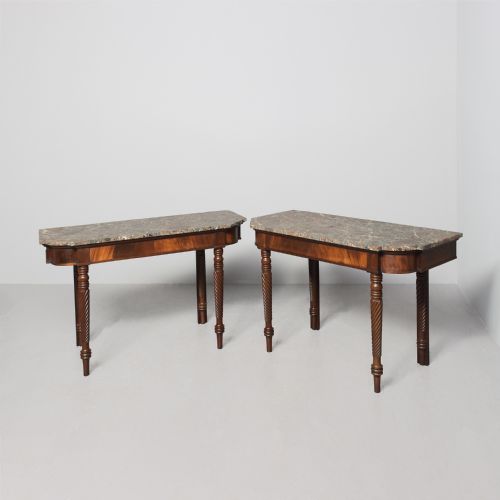
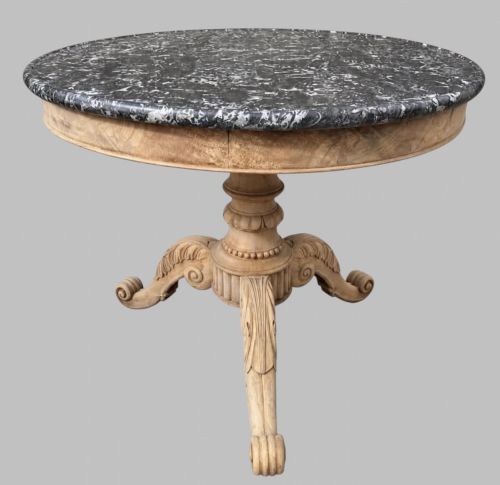
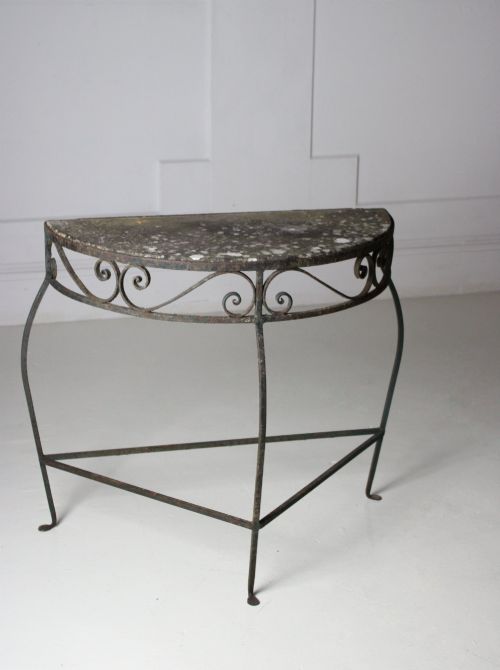
When searching for a grey marble topped table, buyers encounter a diverse array of forms originating primarily from French and Italian workshops across the eighteenth and nineteenth centuries. These pieces range from grand console tables and centre tables to smaller occasional tables, bistro pieces, and bedside cabinets.
The most common iterations on this page are nineteenth-century French gueridons and console tables featuring circular or rectangular stone slabs. Alongside these, buyers find walnut, mahogany, oak, and iron frames that support the cool grey stone in various domestic settings.
How they were made
The construction relies on the pairing of dense stone slabs with substantial timber or metal frames, utilising mahogany, walnut, oak, giltwood, wrought iron, and cast iron. Cabinetmakers shaped structural supports to bear the considerable weight of the marble tops.
Surfaces receive specific finishes including French polishing, paint, parcel gilt, or carved detailing. Joinery methods appropriate to each period ensure stability beneath the heavy stone.
Listings for a grey marble topped table span the eighteenth, nineteenth, and early twentieth centuries, featuring walnut, mahogany, oak, and iron.
What varies in quality
Quality rests in the harmony between the stone top and the supporting base, distinguishing standard utility pieces from finely carved console tables or parcel gilt Italian works. The depth of hand-carved ornament on giltwood and mahogany frames separates superior examples from simpler ones.
The character of the marble itself, including visible veining and the precision of its edge profiling, dictates the aesthetic standard of the piece. Subtlety in the timber grain and originality of the structure elevate the overall merit.
The Grey Marble Topped Table Glossary
- Gueridon
- A round table supported by a single central pillar or pedestal. These often feature inset marble tops.
- Console table
- A table designed to stand against a wall, traditionally fixed with brackets. Many nineteenth-century examples utilise grey marble slabs.
- Giltwood
- Wood carved and coated with gold leaf. This finish appears frequently on eighteenth-century Italian frames.
- Parquetry
- Geometric patterns formed by small pieces of wood veneer. It occurs on select cabinet bases supporting stone tops.
- Trumeau
- A decorative mirror or panel placed above a piece of furniture. It is associated with specific French console tables.
Grey Marble Topped Table: Frequently Asked Questions
How do I clean the marble top?
Wipe the stone surface with a soft, damp cloth using mild, neutral soap. Avoid acidic cleaners that etch marble.
Dry thoroughly with a clean towel to maintain the natural finish without damaging the polish.
Were these tables used for dining?
Most pieces listed as console tables or gueridons served decorative, display, or serving functions rather than formal dining. Smaller bistro versions accommodated drinks and light meals in cafes.
Larger centre tables provided a surface for lamps and decorative objects in principal rooms.
How do I date these tables?
Examine the timber construction, joinery methods, and the style of the carved ornament on the frame. French Empire and Regency pieces display distinct neoclassical motifs.
Later Victorian and Edwardian examples often combine heavier woods with cast or wrought iron.
Are the marble tops original?
Many pieces retain their original veined stone slabs, fitted specifically to the timber bases. Evaluating the fit and the wear around the edges helps determine if the top belongs to the period of the base.