



French Country Marble Table
A french country marble table brings robust stone tops and rich timber frames together for daily utility and understated provincial elegance.
French Country Marble Table
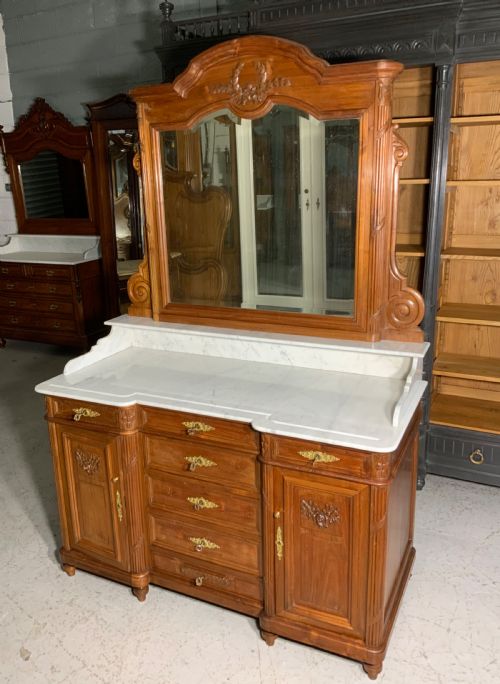
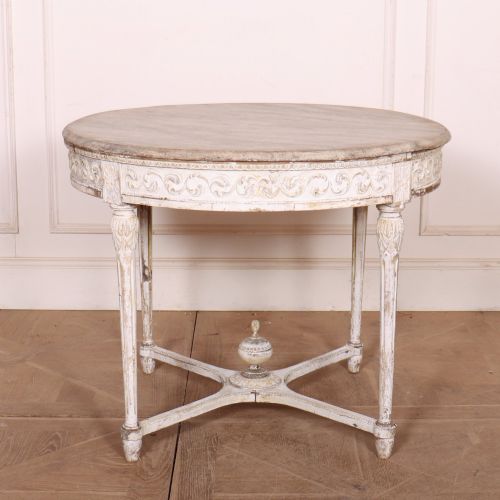
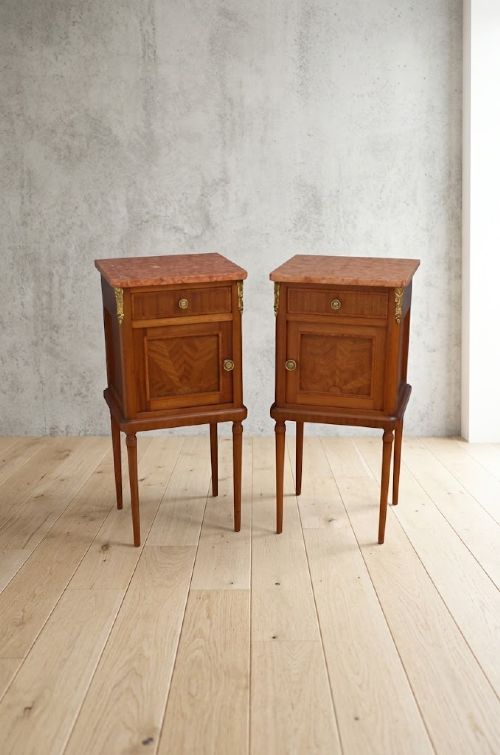
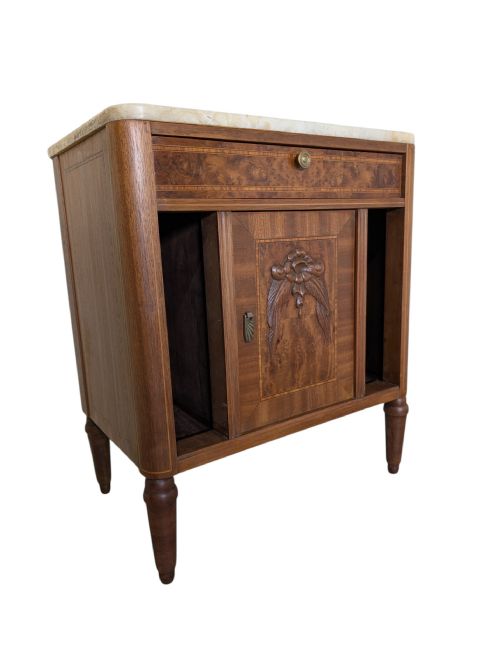
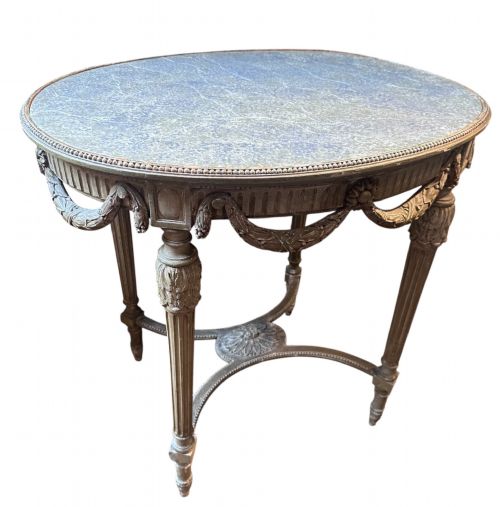
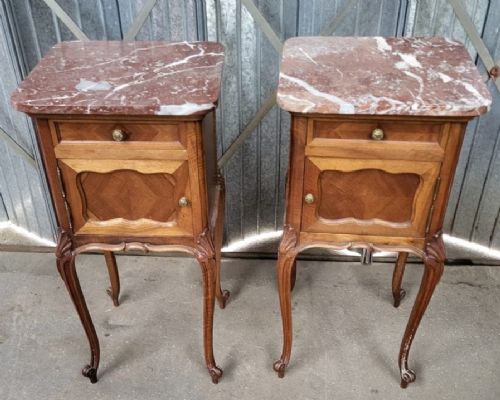
When you search for a french country marble table, you encounter a selection spanning bedside cabinets, prep tables, and occasional lamp tables. These items originate predominantly across the nineteenth and early twentieth centuries, drawing on styles such as Louis XV and French Provincial.
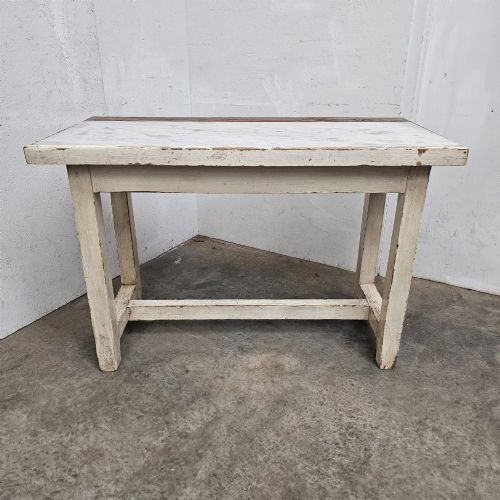
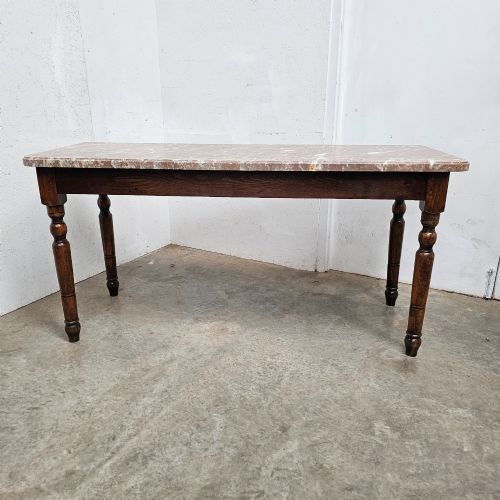
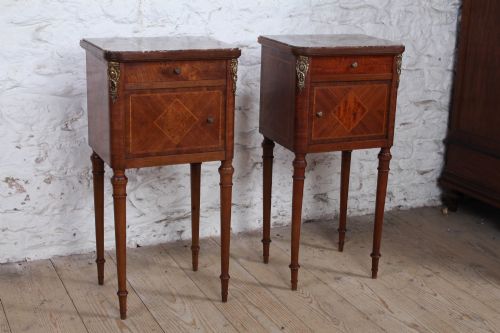
The most common iterations on this page are bedside cabinets and smaller side tables fitted with smooth stone slabs. Oak, walnut, and painted wood form the primary bases supporting these heavy marble tops.
Pieces range from rustic charcuterie prep counters to refined Gueridon lamp tables mounted with gilt brass. Each variation reflects the dual heritage of utilitarian country use and decorative urban taste.
Materials and construction methods
Makers utilised solid timbers like oak, walnut, mahogany, and fruitwood to construct the structural frames and cabinetry. These woods were frequently carved, veneered, or painted to achieve the characteristic provincial aesthetic.
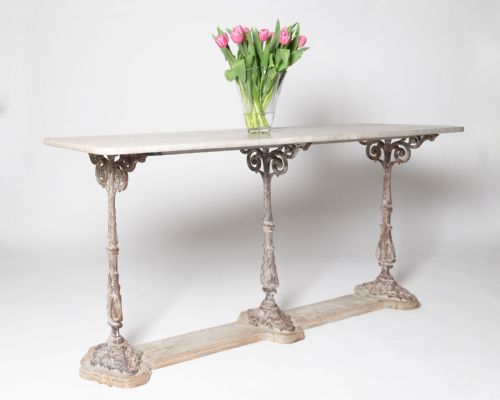
Heavy marble slabs were cut and polished to form functional, cool-surfaced tabletops designed to withstand food preparation or everyday bedside use. Brass, bronze, and iron mounts frequently provide structural reinforcement and decorative accenting.
Listings feature marble, brass, walnut, and oak across forms including bedside tables, washstands, and prep tables dating from the nineteenth and early twentieth centuries.
Distinctions in construction and material grade
Quality rests upon the selection of timber and the integration of the stone top within the wooden frame. Superior examples display finely figured veneers, such as burr wood and kingwood, paired with heavy, well-fitted marble.
The precision of the cabinetwork and the subtlety of applied bronze or gilt brass mounts separate standard utility pieces from finer salon furniture. Structural integrity in the legs and joints remains vital for supporting dense stone.
The French Country Marble Table Glossary
- Gueridon
- A small round French table, often supported by a central pillar or three legs, designed for lamps or wine. These are frequently topped with marble and mounted in brass.
- Bombe
- A term describing furniture with outward-curving, swelling sides and fronts. This characteristic silhouette appears frequently on nineteenth-century side cabinets.
- Charcuterie
- A style of heavy prep table utilised for meat preparation, characterised by a thick marble surface set into a robust wooden base. They were built for heavy domestic labour.
- Louis XV Style
- An ornate aesthetic marked by asymmetrical curves, naturalistic foliage, and cabriole legs. Pieces in this manner emphasise fluid lines and decorative brass mounts.
French Country Marble Table: Frequently Asked Questions
What rooms suit a french country marble table?
These tables adapt well to bedrooms as bedside cabinets or to living spaces as compact lamp and side tables. Their stone surfaces provide durable utility while the wooden frames offer warm textural contrast.
Larger prep or console variants function effectively in kitchens and hallways. Their historic character grounds modern interiors with authentic provincial weight.
How do I identify a nineteenth-century piece?
Examination of the timber construction, joinery methods, and the cut of the marble reveals the age of an item. Nineteenth-century examples often feature hand-cut joints and denser, heavier stone tops.
Stylistic markers like Louis XV or Louis XVI revivals also point towards this era. Comparing the hardware and patination against documented periods clarifies the timeline.
Are marble tops original to the tables?
The marble slabs on these tables were typically cut to fit the specific timber frame during manufacture. Observing the fit between the stone edge and the wooden rebate indicates whether they grew old together.
Weight, thickness, and natural edge wear should align with the age of the base. Period pieces display consistent patination across both the stone and the wood.
How do I care for a marble surface?
Marble requires gentle cleaning with warm water and mild, non-acidic soap to preserve the polish. Harsh chemicals can etch the stone and dull its historic finish over time.
Using coasters and mats prevents staining from liquids or oils. Regular dusting maintains the natural lustre without risking abrasion to the surface.