


Antique French Counter Table
These antique french counter table pieces are heavy timbers and deep work surfaces that anchor a room, and you want one for the honest utility and timeworn grain.
Antique French Counter Table
An antique french counter table brings practical workspace and display into a modern interior through robust construction and long proportions. When you search for this phrase, you find heavy work tables built for shops and kitchens alongside glazed display pieces.
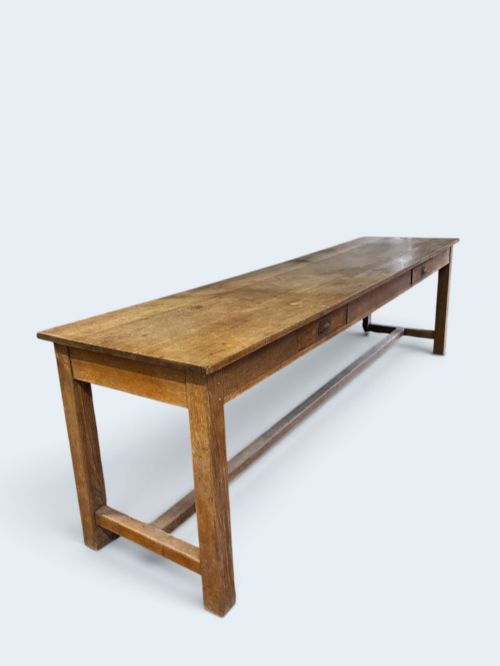
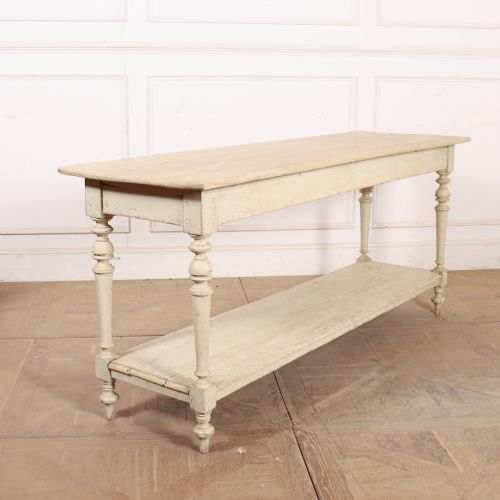
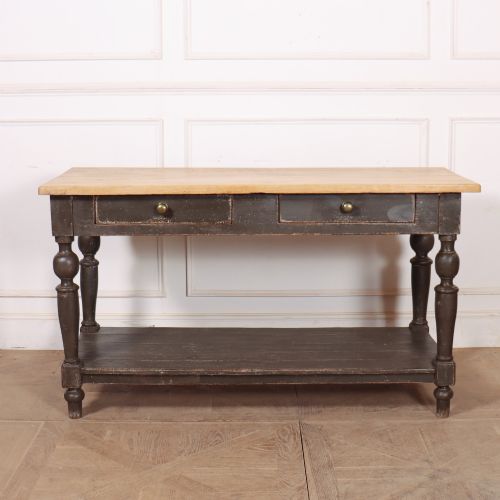
The versions most common here are drapers tables and shop counters in oak and pine, spanning the nineteenth century up to the Edwardian era. These pieces carry the marks of daily trade, from scrubbed pine tops to substantial oak frames designed for heavy goods.
Materials and Construction
Makers relied on solid oak and pine for the main structures, ensuring durability under heavy loads and frequent use. Surfaces often show the pale, scrubbed finish of bleached timber or original painted coats.
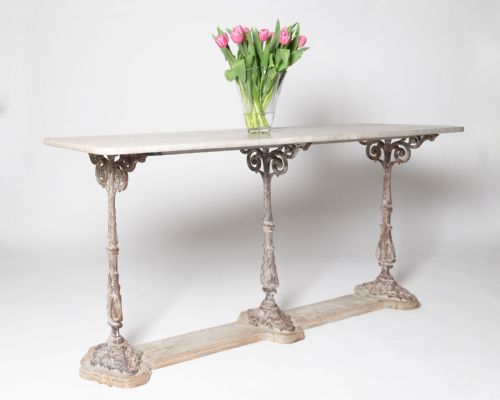
Metal elements appear in brass and iron fittings, while finer display pieces incorporate glass and ormolu mounts. Joinery is straightforward and robust, built to withstand commercial environments without losing structural integrity.
Listings feature nineteenth century pine and oak drapers tables alongside shop counters and butchers blocks.
Factors of Quality
Quality rests in the proportion of the timber and the honesty of the wear accumulated over decades of use. Tables retain greater character when the original scrubbed or painted surfaces remain untouched by heavy restoration.
Substantial scale and dense grain elevate a piece above standard utility furniture. The presence of maker stamps or specialised commercial fittings, such as those on butchers blocks, further distinguishes the finer examples.
Trussant & Cie
The Antique French Counter Table Glossary
- Drapers Table
- A long, narrow work table traditionally used in fabric shops for measuring and folding cloth. These pieces feature deep timber boards and often include lower shelving.
- Butchers Block
- A heavy, thick wooden block designed for meat preparation, supported by sturdy legs. They display end-grain timber surfaces scarred by heavy cleaver use.
- Shop Counter
- A long commercial fixture built to face customers, incorporating drawers, shelving, or display space on the serving side. They anchor large kitchens and open-plan rooms.
- Ormolu
- Gilded bronze mounts applied to furniture for decorative effect, seen on revival pieces. The technique adds metallic contrast to wood surfaces.
Antique French Counter Table: Frequently Asked Questions
What is an antique french counter table used for?
These tables serve primarily as central kitchen islands, large prep surfaces, or statement furniture in open-plan living areas. Their long proportions and sturdy construction lend themselves to heavy daily use.
In contemporary spaces, they also function as sideboards or display units where ample surface area is required. The lower shelves and drawers provide practical storage for household items.
How do I clean a scrubbed pine top?
Use warm water and mild soap with a stiff brush to remove dirt along the grain of the wood. Avoid harsh chemical strippers that strip away the aged patina.
Allow the timber to dry naturally after washing to prevent warping. A light application of neutral beeswax can help protect the surface without adding artificial shine.
How can I tell nineteenth century pine from later wood?
Nineteenth century pine exhibits tight, natural growth rings and deep patination accumulated through decades of handling and cleaning. The boards are often wider than modern milled timber.
Tool marks left by hand saws and planes are frequently visible on the underside and interior surfaces. Modern reproductions lack the authentic wear patterns and soft edges found on genuine trade pieces.
Are these tables suitable for modern kitchens?
Their solid timber construction and generous dimensions make them ideal for food preparation and communal dining. The height often matches standard work requirements, though historic pieces can vary slightly.
Protecting the surface from excessive moisture helps preserve the antique wood. Regular oiling or waxing maintains the finish against daily kitchen wear.