


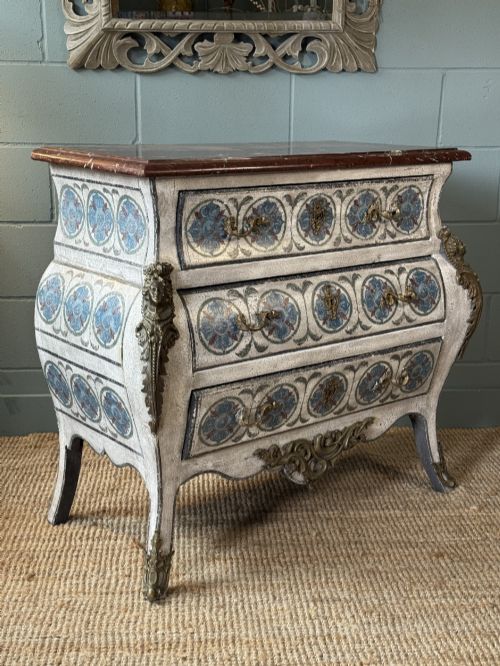
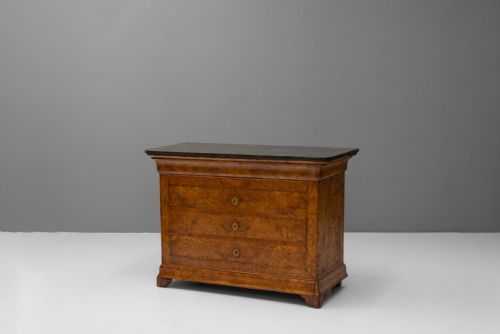


Grey Marble French Commode
A grey marble french commode brings substantial presence and cool stone surfaces to a room, offering deep storage within classical proportions.
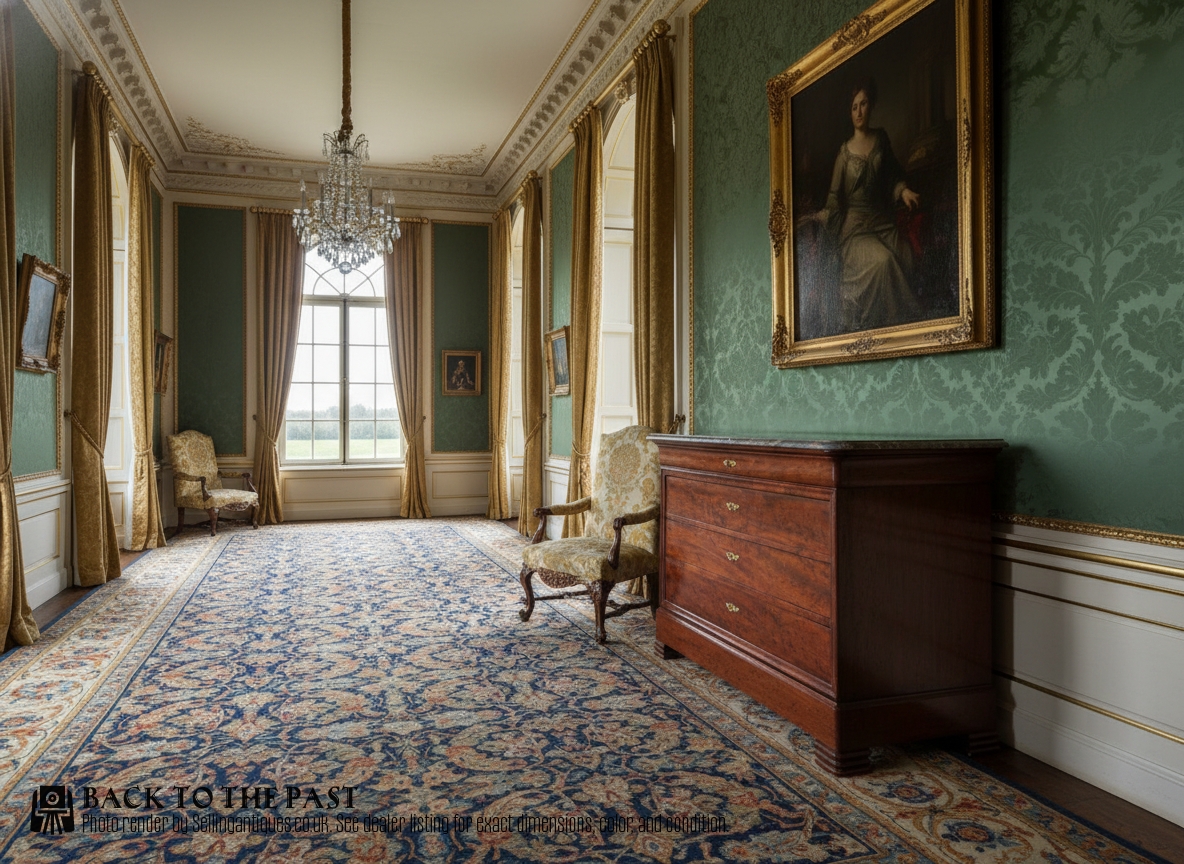
Grey Marble French Commode
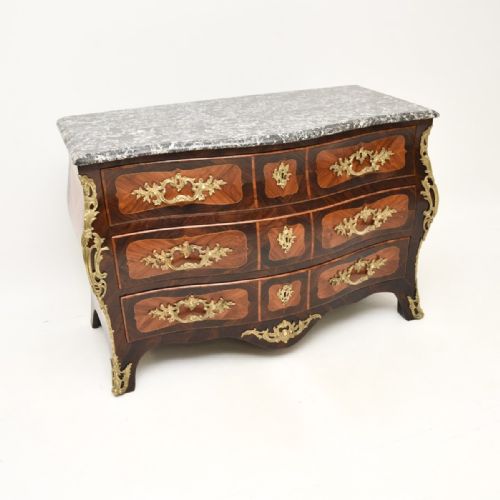
A grey marble french commode functions as a low chest of drawers, combining generous timber storage with a heavy stone upper surface. These pieces span from the eighteenth century through to the early twentieth century, originating across various regions of France.
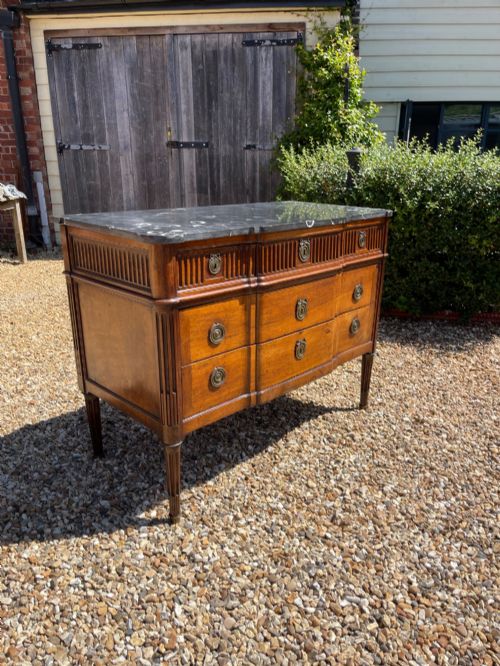
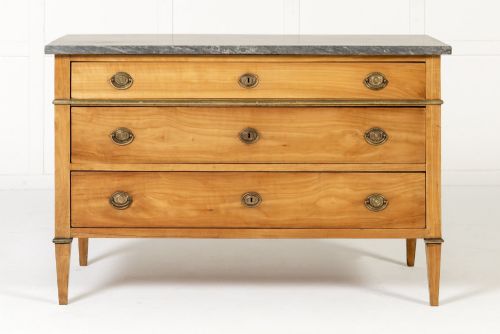
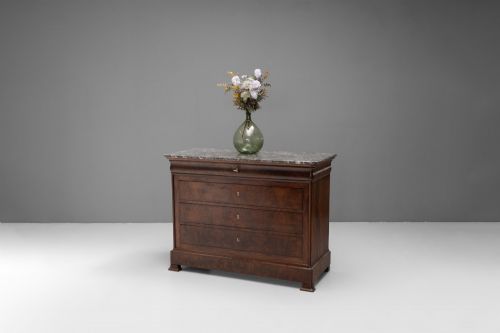
The versions most frequently met on this page date from the nineteenth century, often reflecting Louis Philippe or provincial styles. They appear in walnut, mahogany, and painted finishes, topped with characteristic grey marble slabs.
Materials and construction
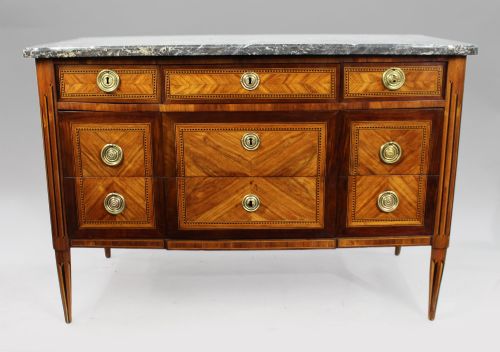
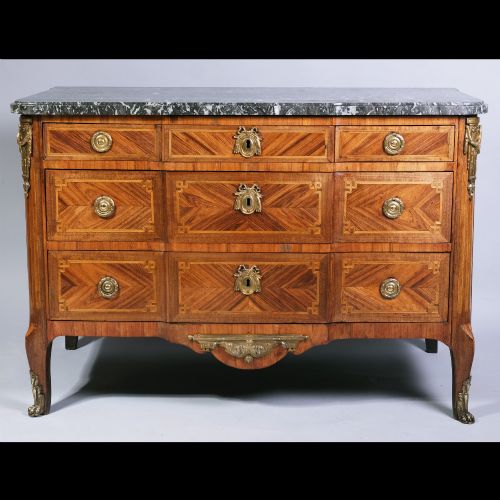
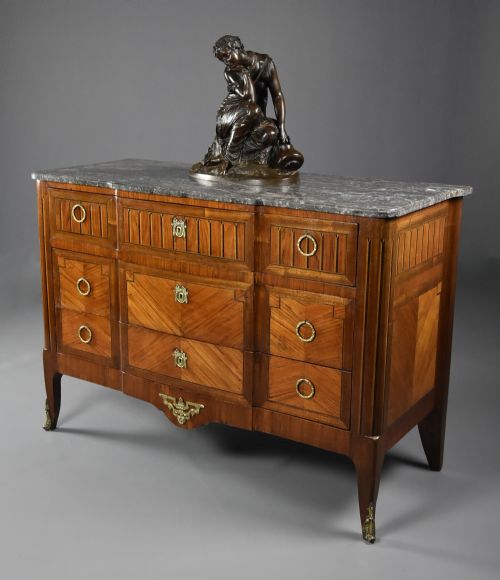
Cabinetmakers built these chests using native timbers such as walnut, mahogany, cherrywood, and oak, frequently applying intricate parquetry or veneer patterns to the drawer fronts. Carved details and painted finishes appear alongside unadorned surfaces depending on the regional workshop and period.
Heavy marble tops, notably grey marble varieties, rest directly upon the timber carcase. Brass and ormolu mounts, handles, and escutcheons finish the construction, anchoring the heavy drawers securely.
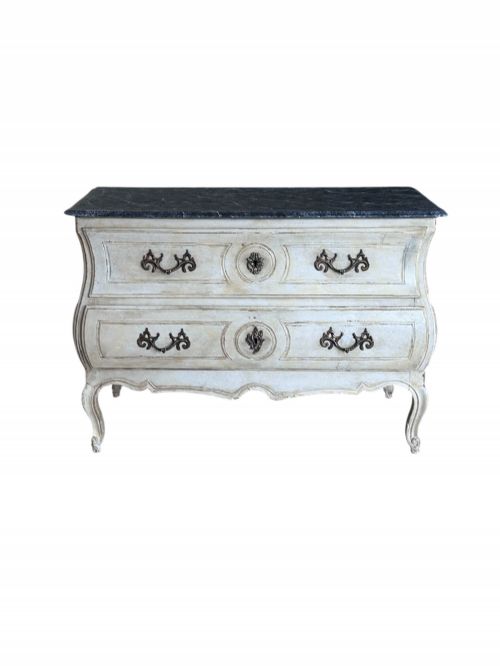
Several listings note later painted treatments, proving that even distinguished antique chests occasionally endure sudden colour phases.
Assessing quality in French commodes
Quality rests in the precision of the timber joinery, the thickness and geological depth of the marble top, and the crispness of any bronze or brass mounts. Superior pieces show careful matching of veneer grains and tight drawer construction.
Later replacements or altered painted surfaces alter the integrity of a piece, whereas original hardware and untouched timber patination elevate an example significantly.
Jacques Bircklé
The Grey Marble French Commode Glossary
- Ormolu
- Gilt bronze mountings applied to furniture for decoration. These gilded details accent key structural corners and drawer pulls.
- Parquetry
- Geometric wood veneer patterns arranged across the drawer fronts or top. Craftsmen cut contrasting timbers to create these decorative surfaces.
- Bombe
- A swelling, outward-curving chest profile characteristic of mid-eighteenth century design. This rounded shape requires advanced timber-bending skill.
- Directoire
- A transitional French design style bridging the Louis XVI and Empire periods. It relies on clean architectural lines rather than excessive ornamentation.
Grey Marble French Commode: Frequently Asked Questions
What is a grey marble french commode?
A grey marble french commode is a traditional European chest of drawers distinguished by a heavy stone slab top and timber carcase.
These storage pieces range from formal eighteenth century parquetry designs to simpler nineteenth century provincial walnut and mahogany examples.
How were these commodes used originally?
Households utilised these low chests primarily in bedrooms and salons for storing linen, clothing, and personal valuables.
The flat stone upper surface also provided a sturdy display area for decorative objects, lighting, and mirrors.
How do I date a french commode?
Dating relies on observing structural proportions, timber choices, hardware styles, and the specific shaping of the drawer fronts and feet.
Earlier eighteenth century pieces often display curved bombe profiles or detailed parquetry, while nineteenth century examples favor rectilinear mahogany or walnut veneers.
Are the marble tops original?
Many pieces retain their original grey marble slabs, though heavy stone tops were occasionally replaced or re-edged over centuries of domestic use.
Examining how the marble seats within the timber frame helps determine whether the top belongs to the original construction.
How do I care for marble and wood?
Protect the stone surface by avoiding acidic spills and wipe the timber regularly with a soft, dry cloth to preserve the natural wax patination.
Keeping the furniture away from direct heat sources prevents the antique veneers from drying and cracking.