
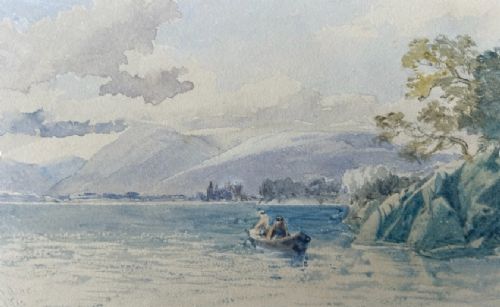
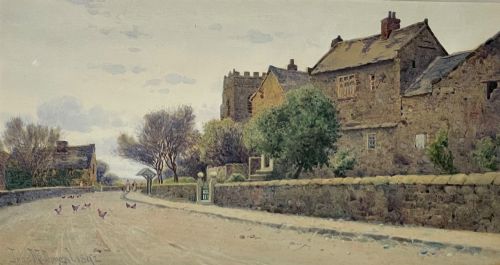
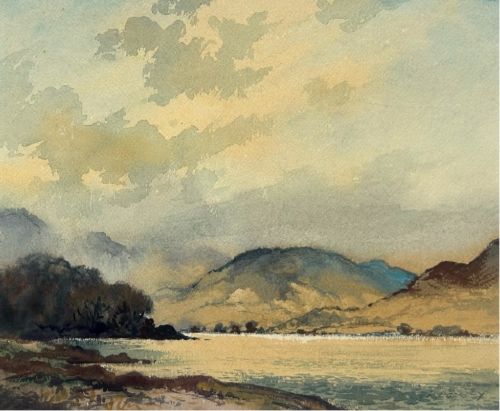
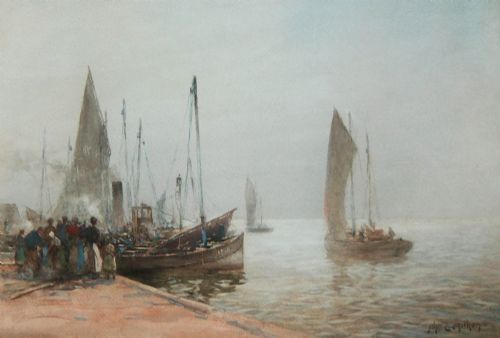
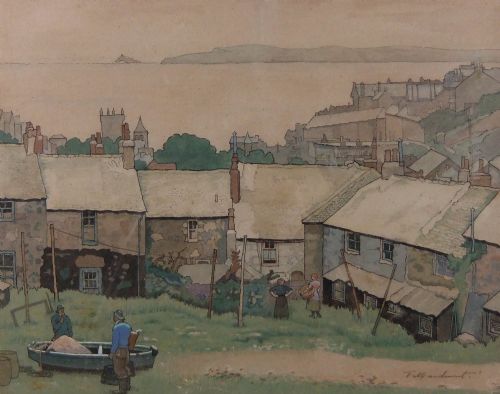
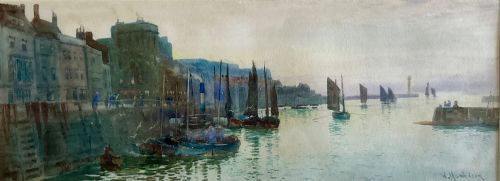
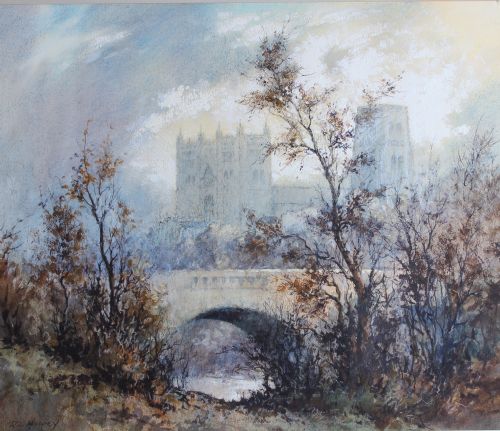
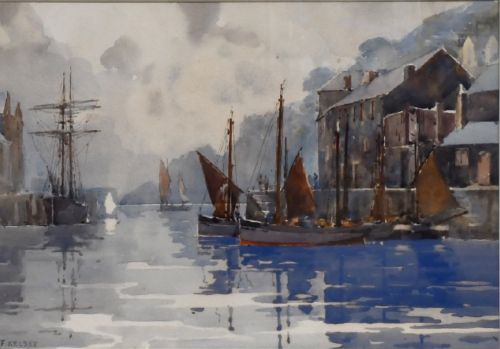
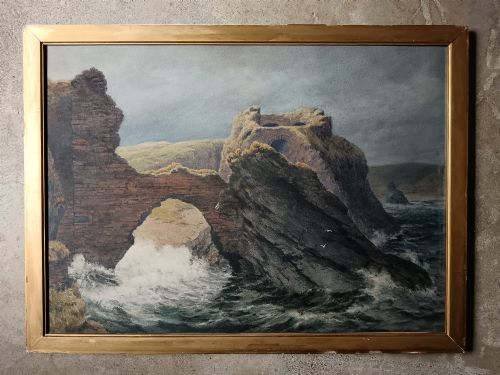


Grey Landscape Watercolour
A grey landscape watercolour captures atmospheric distance through monochrome pigment on paper, bringing subtle British Impressionism into your home.
Grey Landscape Watercolour
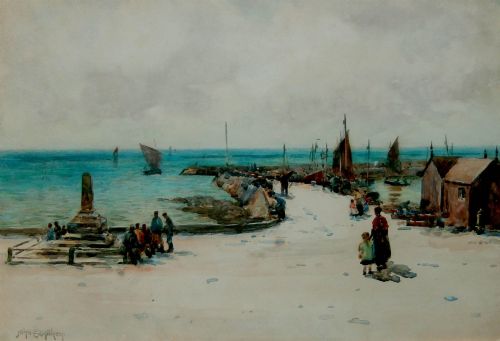
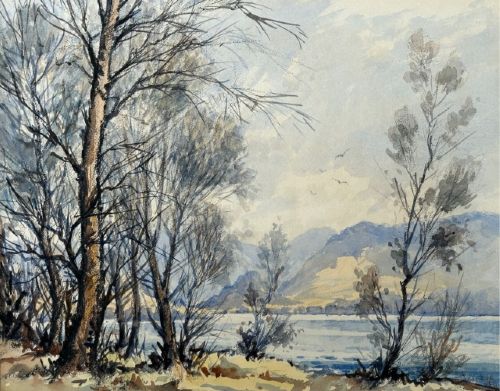
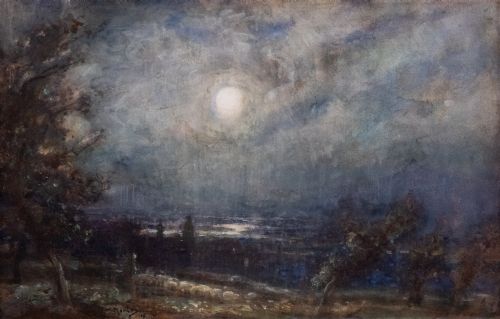
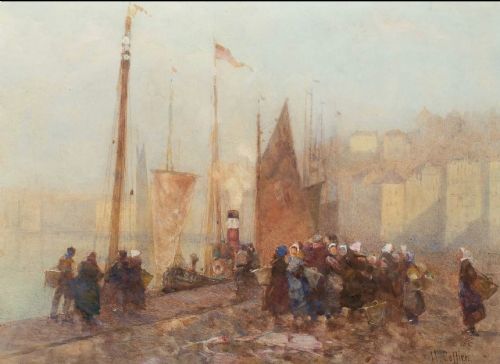
When you search for a grey landscape watercolour, you find fine art paintings created across the Victorian and Edwardian periods up to nineteen twenty. These works portray coastal views and pastoral settings using restrained tones on paper.
The examples on this page include framed works by British painters from the early twentieth century. Each piece demonstrates how artists rendered depth and atmosphere through minimal colour palettes.
How they were made
Artists applied watercolour paint onto paper supports, often mounting the finished works behind glass within wood frames. Certain pieces incorporate gold leaf accents alongside the pigment.
The technical execution relies on controlled washes of monochrome or muted tones to build atmospheric coastal and pastoral scenes without heavy opaque layers.
One hound painting from nineteen hundred proves that even dedicated hunt packs occasionally paused to pose for Victorian artists.
What varies in quality
The distinction between standard works and superior pieces lies in the subtlety of the tonal gradation across the paper. Finer paintings achieve atmospheric depth through precise handling of monochrome washes.
Framing and presentation also separate individual pieces, with period wood frames and glass protection preserving the delicate watercolour pigments over the decades.
Thomas William Morley·Arthur Wardle·Frederick William Jackson
The Grey Landscape Watercolour Glossary
- Watercolour paint
- A medium consisting of colour pigments suspended in a water-soluble vehicle, applied to paper to create translucent washes. It allows artists to build delicate atmospheric effects.
- Edwardian
- The period spanning the reign of Edward VII until nineteen ten, characterised by refined artistic styles. Works from this era often reflect lighter palettes.
- Victorian
- The period of Queen Victoria's reign, encompassing diverse artistic movements and traditional painting techniques. Pieces from this era show meticulous attention to detail.
- British Impressionism
- An art movement focusing on everyday scenes and natural light through loose brushwork and atmospheric tones. It heavily influenced early twentieth-century landscape painters.
Grey Landscape Watercolour: Frequently Asked Questions
What is a grey landscape watercolour?
A grey landscape watercolour is a fine art painting created with water-soluble pigments on paper, focusing on monochrome or subdued tonal views.
These artworks date from the Victorian and Edwardian eras, showcasing atmospheric British scenes framed behind glass.
How do I frame a watercolour?
Watercolour paintings require framing behind glass to protect the delicate paper and pigment from airborne moisture and dust.
Period wood frames often complement these historic landscape works while maintaining their original aesthetic appeal.
How do I date a watercolour?
Dating involves examining the artist's recorded lifespan, stylistic clues from the Victorian or Edwardian periods, and framing materials.
Signatures, inscriptions on the reverse, and period framing techniques provide reliable chronological markers.
Where should I hang these paintings?
Hang these watercolours away from direct sunlight to prevent the monochrome pigments on paper from fading over time.
Placing them in interior spaces with stable humidity levels helps preserve both the paper support and the wood frame.