



Grey Harbour Landscape Art
Grey harbour landscape art captures maritime life and coastal working ports through Victorian, Edwardian, and mid-20th-century paintings.
Grey Harbour Landscape Art
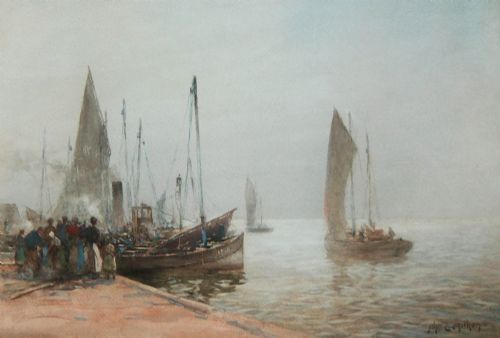
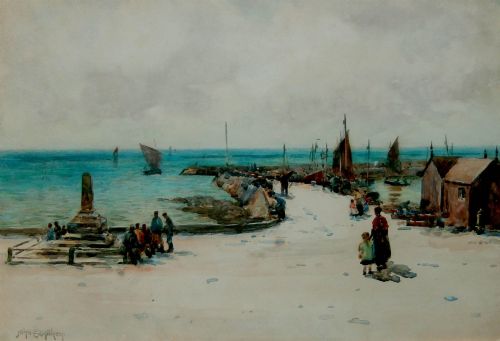
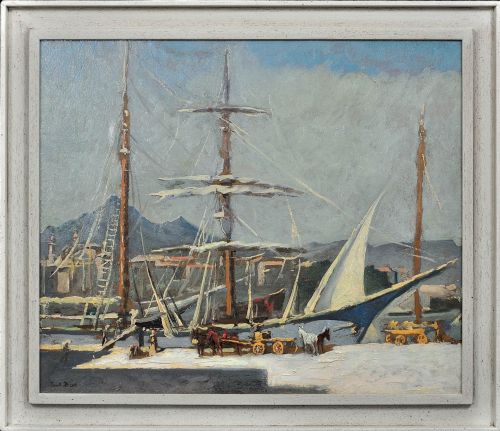
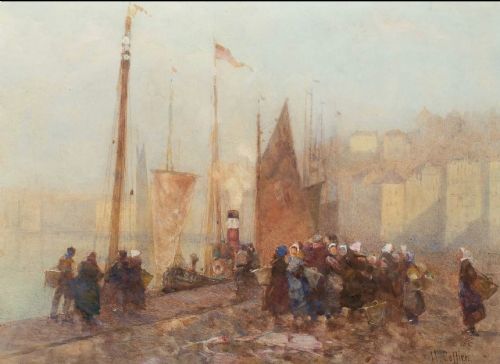
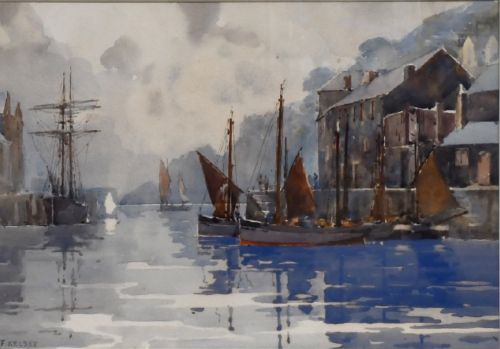
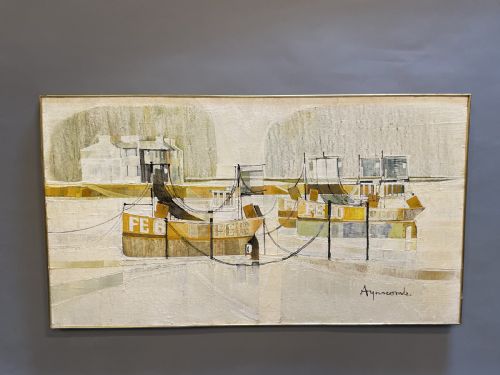
Grey harbour landscape art depicts maritime scenes, coastal shipping, and busy ports through paintings and fine art works. These pieces focus on harbours, rivers, and coastal figures, recording working vessels and maritime architecture from various eras.
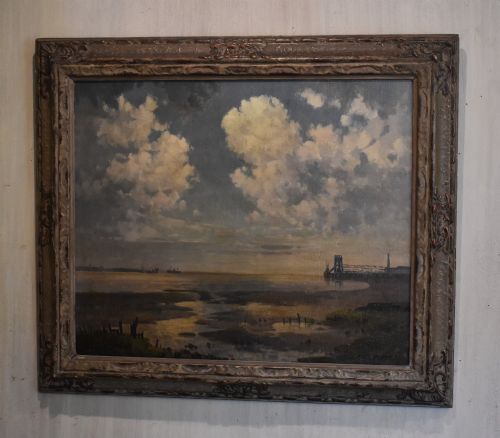
The selections available lean heavily towards watercolours and oil paintings on canvas or board. Works range from Victorian depictions of British fishing ports to mid-century modern and post-impressionist interpretations across Britain and continental Europe.
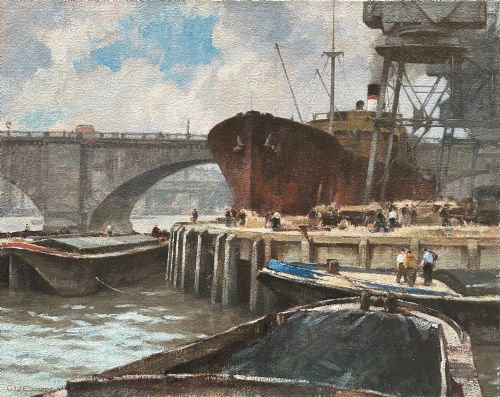
Subjects frequently centre on specific locations such as Whitby, Staithes, and London Pool, alongside continental harbours in France, Italy, and Belgium. Painters utilise these coastal settings to explore atmospheric light, water reflections, and industrial maritime activity.
Materials and Technique
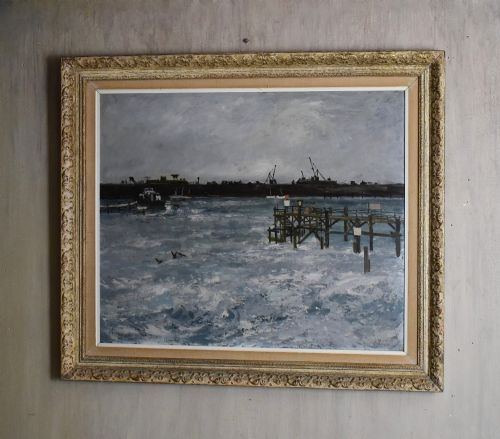
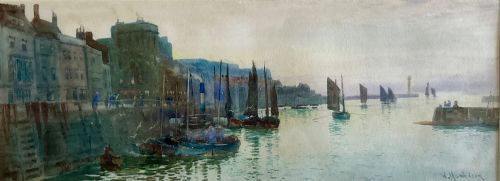
Artists create these works using watercolour pigment on paper or oil paint applied to canvas and wooden boards. Watercolour washes build transparent atmospheric effects for misty northern ports, while thick oil paint layers capture the texture of rough seas and weathered harbour walls.
Techniques span British Impressionism, Post-Impressionism, and 20th-century realism. Painters employ visible brushstrokes and tonal restraint to evoke overcast coastal weather and grey maritime light.
Listings feature works spanning the nineteenth century through the 1960s, executed in oil and watercolour on paper, canvas, and board.
Distinctions in Quality
Quality rests upon the artist's command of atmospheric tone and compositional balance within a restrained palette. Superior works capture the specific grit and light of working ports without relying on decorative formulas.
The handling of medium distinguishes the range, from fluid watercolour washes that retain luminosity on paper to confident oil application on canvas that gives weight to industrial shipping and stone quays.
James E Aitken·Hector Caffieri·William Matthison·Frank Kelsey·Arthur Tucker·Tom Clough·Ernest F Hill·Frank W Scarborough·Harry Wanless·Fred Mayor·John Sanderson Wells·Rowland Henry Hill·Frank Rousse·William Collins·Clive Browne·Peter Brannan·Paul Bret·Cyril Walduck Edwards·Paul-Jean Anderbouhr·Raymond Picque·Fred Pailhes·Herbert Royle·Kenneth Cozens
The Grey Harbour Landscape Art Glossary
- Watercolour pigment
- A colour medium ground with water-soluble binders, applied in washes to paper to create translucent effects. It requires precise brushwork because corrections are difficult to make.
- Oil on canvas
- Pigment mixed with drying oils such as linseed, spread across a stretched woven fabric surface. This combination allows for rich colour blending and substantial surface texture.
- Post-Impressionism
- An art movement extending beyond impressionism that prioritises emotional intensity and structural form over raw visual recording. Artists in this style use bold brushwork and simplified shapes.
Grey Harbour Landscape Art: Frequently Asked Questions
What defines grey harbour art?
These works capture maritime subjects, ships, and coastal towns using oil or watercolour. They focus on working ports and industrial waterfronts.
The aesthetic relies on muted tones, atmospheric light, and depictions of everyday maritime labour across the nineteenth and twentieth centuries.
Where were these scenes painted?
Artists painted British fishing ports like Whitby, Staithes, and Scarborough, alongside London river views. Continental European harbours in France, Italy, and Belgium also appear frequently.
Many painters worked on location to record the changing light and daily rhythms of active coastal communities.
How do I date a painting?
Dating relies on recorded artist lifespans, stylistic movements like post-impressionism, and framing materials. Signatures and title inscriptions on the reverse often provide specific provenance.
Changes in shipping technology and harbour architecture depicted in the composition also help narrow down the period.
How should I display these works?
Paintings on canvas and board suit traditional frames that protect the edges, while watercolours require conservation mounts and glass for protection against light. Placing them away from direct sunlight preserves the pigments.
Matching the frame style to the artwork's specific period enhances the visual presentation on the wall.