

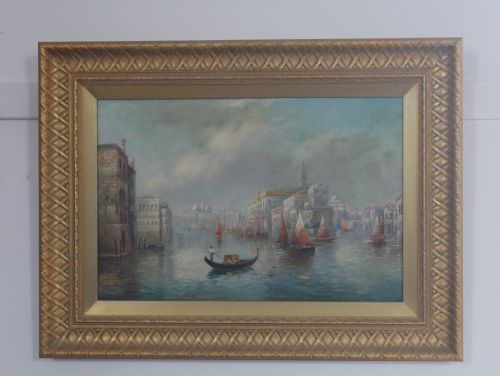
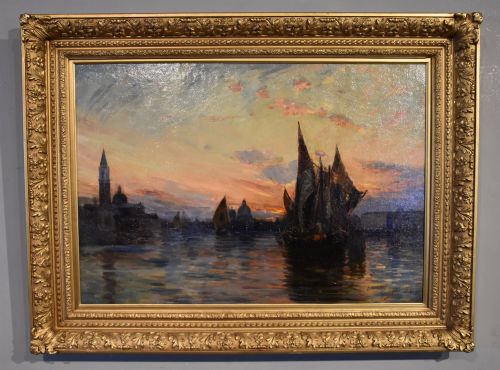


Original Venice Artwork
Original venice artwork captures the light and canals of the lagoon in oils and watercolours across the nineteenth and twentieth centuries.
Original Venice Artwork
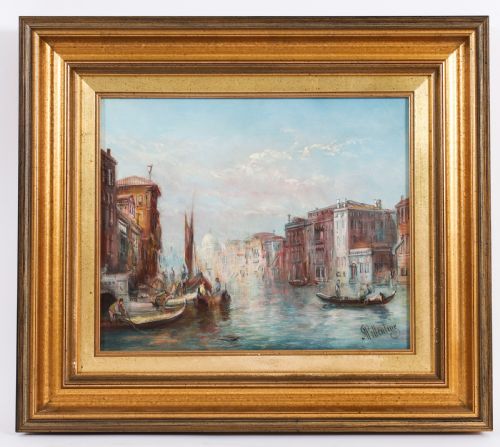
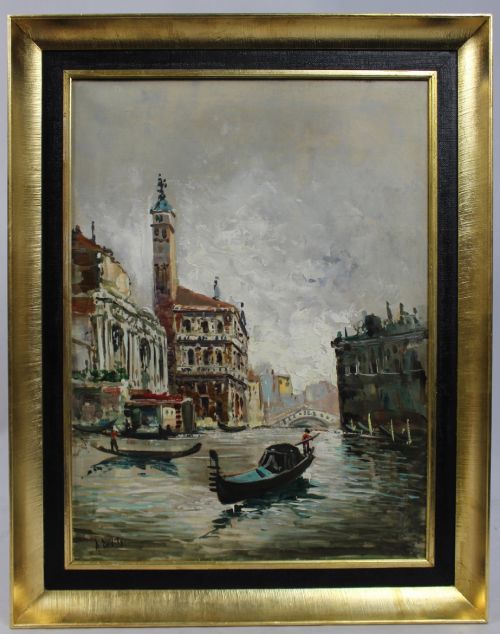
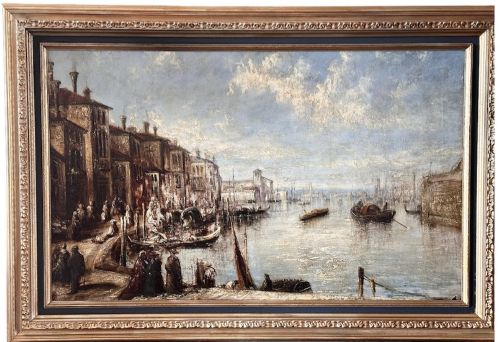
Original venice artwork encompasses paintings and watercolours depicting the Grand Canal, the Doge's Palace, and local waterways. The selection relies heavily on nineteenth-century academic and impressionist views alongside mid-century interpretations.
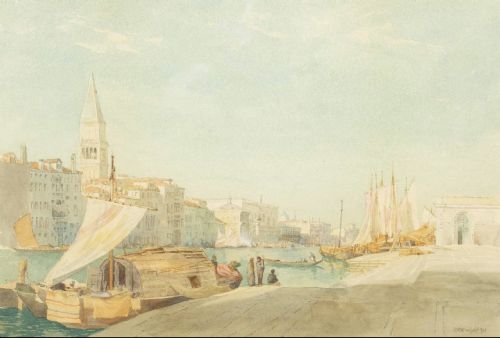
Buyers encounter framed watercolours on paper and oil paintings on canvas depicting iconic landmarks like Santa Maria della Salute and the Bridge of Sighs. These pieces range from detailed Victorian topographical studies to looser twentieth-century impressions.
Materials and Technique
Artists record the lagoon using oil paint on canvas or watercolour applied to paper, occasionally incorporating gouache and pastel. These mediums capture the shifting reflections and atmospheric haze unique to the Venetian waterways.
Canvases are stretched and housed within period frames, frequently constructed from giltwood or gilded wood that complements the traditional subject matter.
Gondoliers navigate numerous canvas bridges here without ever needing a traffic warden.
Assessing Quality
Quality in these paintings rests upon the artist's ability to render the specific light, movement, and architecture of the canals rather than mere topographical accuracy. Stronger works demonstrate assured brushwork and a coherent handling of water and sky.
The sophistication of the palette and the depth of the composition separate masterworks from standard souvenir pieces. Original framing also contributes to the integrity of the piece.
Alfred Pollentine·Francis Moltino·Hercules Brabazon Brabazon·Claude Jousset·Antonio DeVity
The Original Venice Artwork Glossary
- Giltwood
- Wood carved and coated with gold leaf or a gold-coloured finish. This material is standard for traditional frames housing nineteenth-century canvases.
- Watercolour
- A paint consisting of pigment suspended in a water-based solution, applied to paper. It is favoured here for capturing translucent atmospheric effects.
- Impressionism
- A style of painting that focuses on light and its changing qualities rather than precise details. This approach appears frequently in twentieth-century renderings of the lagoon.
- Canvas
- Heavy woven fabric used as a surface for oil painting. It provides the necessary texture for heavier pigment applications.
Original Venice Artwork: Frequently Asked Questions
How do I date a Venice painting?
Dating relies upon stylistic markers, materials, and framing techniques characteristic of periods from the nineteenth century onward. Signatures and biographical dates of the artist provide definitive chronological anchors.
Changes in painting styles, such as the transition from Victorian fine art to mid-century impressionism, also help narrow the decade of production.
Are watercolours more fragile than oils?
Watercolours on paper require protection from direct sunlight and moisture to prevent fading and paper degradation. They are typically framed behind glass to safeguard the delicate pigments.
Oil paintings on canvas are generally more robust but still benefit from stable indoor humidity and temperature.
What subjects appear most often?
Views of the Grand Canal, the Doge's Palace, and Santa Maria della Salute dominate these depictions. Gondoliers passing beneath bridges also feature prominently across different periods.
Artists continually returned to these specific landmarks to study the unique interplay of water reflections and Italian light.
How should I display these frames?
These works suit traditional living spaces where period giltwood frames can complement existing furniture and decor. Hanging them away from direct heat sources protects both canvas and paper from warping.
Proper wall placement ensures the detailed brushwork of nineteenth and twentieth-century artists remains clearly visible.