

Grey Console Table
A grey console table brings architectural presence to a narrow hallway or drawing room through disciplined colour and slender proportions.
Grey Console Table
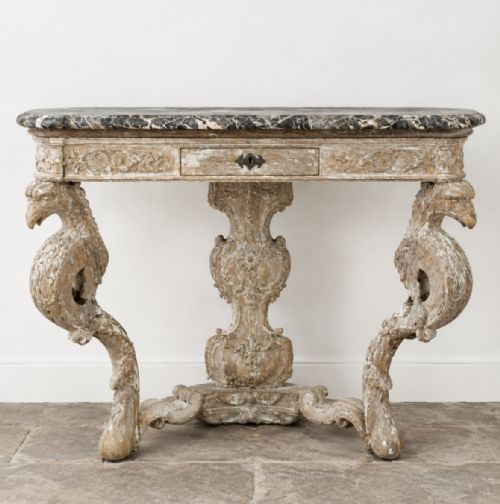
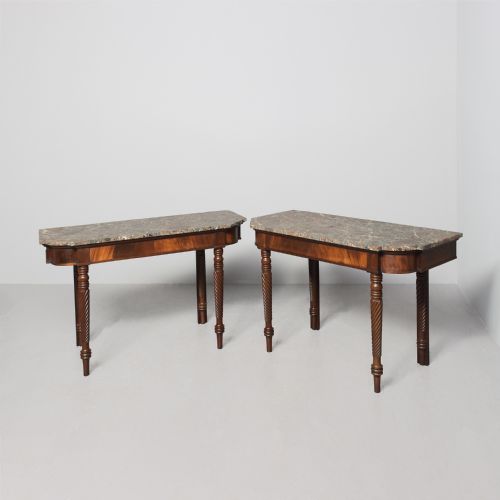
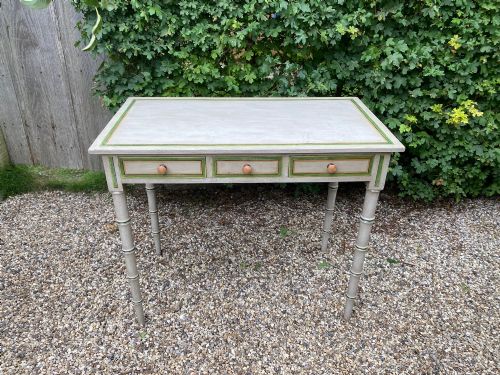
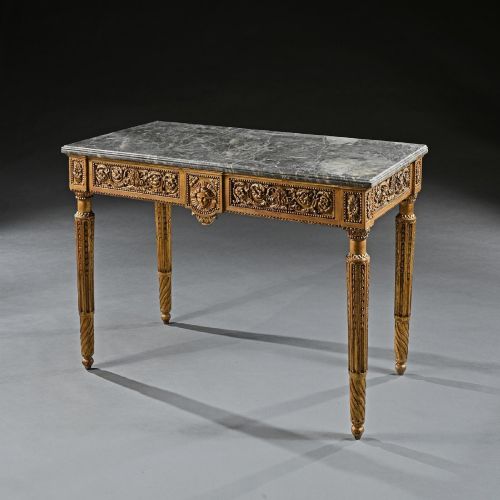
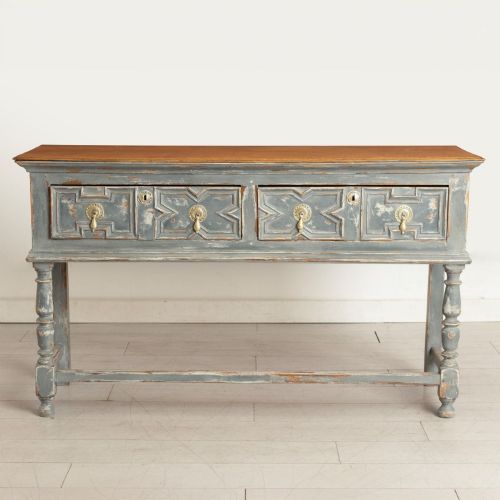
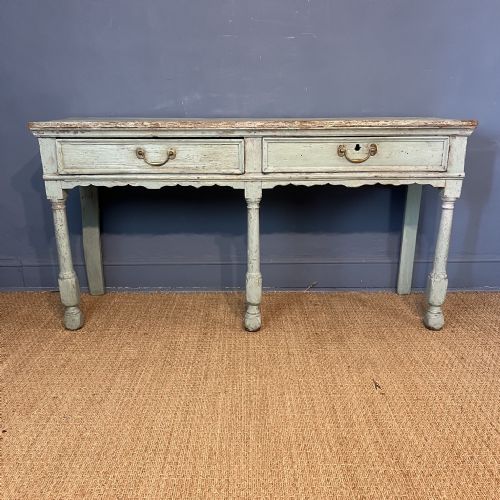
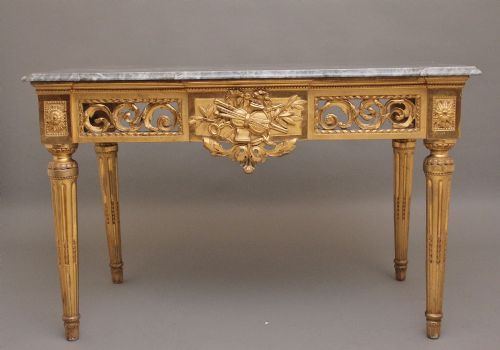
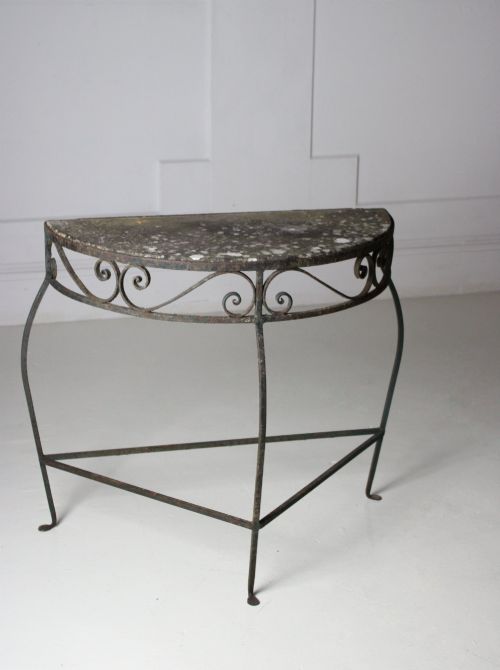
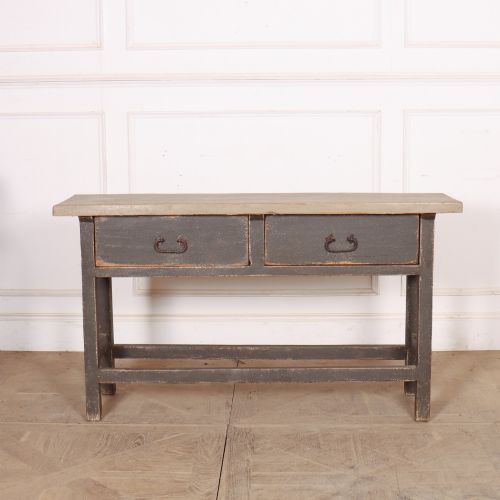
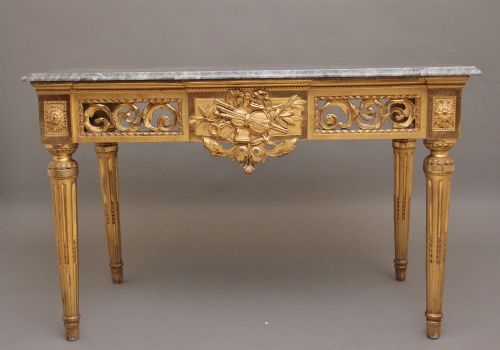
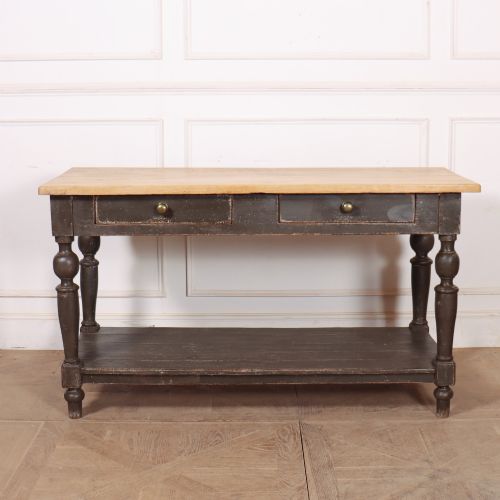
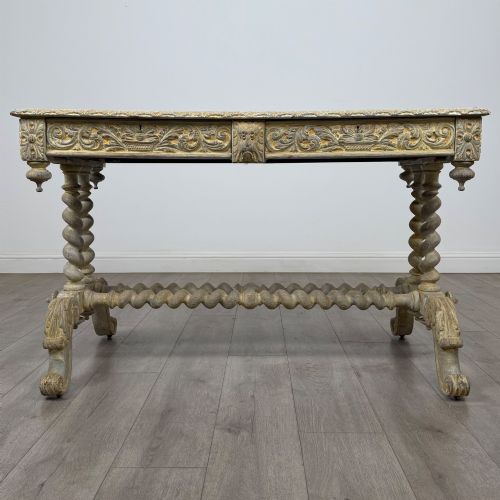
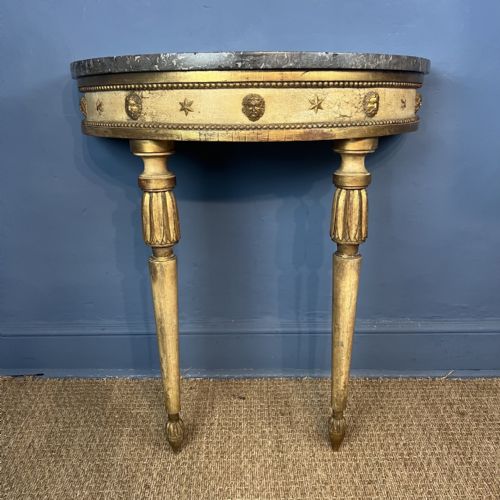
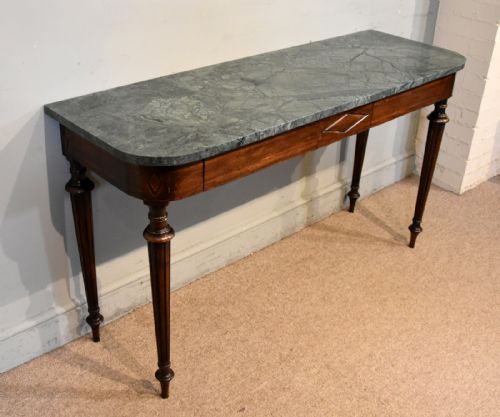
A grey console table functions as a narrow surface designed to stand flat against a wall, frequently appearing in forms spanning from eighteenth-century Italian giltwood to Edwardian painted pine.
The selections encountered here range across various periods including the nineteenth century, Regency era, and the eighteenth century, encompassing related forms like side tables, writing tables, and dresser bases.
Makers and regional workshops across England, France, Italy, and Sweden utilised painted wood, scrubbed tops, and occasional marble slabs to create these functional furniture pieces.
Materials and Construction Methods
Carpenters constructed these tables using native and imported timbers such as oak, pine, mahogany, walnut, and larchwood, often applying layered paint finishes in cream, French grey, or parcel gilt.
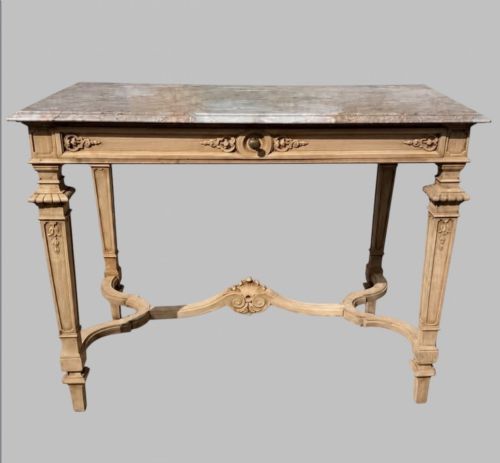
Heavier surfaces relied on fitted slabs of marble, while structural elements integrated wrought iron, cast iron, and carved giltwood depending on the regional workshop tradition.
Joinery methods varied from eighteenth-century pegged construction to nineteenth-century framing, with surfaces finished in historical paint layers or scrubbed timber.
Several tables retain traces of French bistro service alongside stately country house dining.
Distinctions in Quality
The standard of a piece rests upon the crispness of carved details in wood or gilt, the integrity of original painted surfaces, and the harmonious weight of fitted marble tops.
Subtleties in proportion, the retention of early paint layers, and the quality of underlying cabinetmaking separate standard utility tables from exceptional country house examples.
The Grey Console Table Glossary
- Console table
- A table designed to be fixed against a wall, frequently supported by two front legs with the rear secured to the masonry. This form became popular in grand European interiors during the seventeenth and eighteenth centuries.
- Demi-lune
- A half-moon shape used for table tops and furniture footprints. These pieces fit flat against a wall while projecting a curved profile.
- Giltwood
- Timber that has been coated with a thin layer of gold leaf or gesso preparation. It is commonly found on decorative eighteenth-century Italian and French frames.
- Dresser base
- A low wooden sideboard or storage unit featuring drawers or cupboards beneath a solid top. These utilitarian pieces originate from English and European vernacular traditions.
- Faux bamboo
- Wood turned and carved to imitate the segmented stalks of natural bamboo. This decorative technique enjoyed popularity during the Regency and nineteenth-century periods.
Grey Console Table: Frequently Asked Questions
Where should a console table go?
These narrow tables suit entrance halls, corridors, and reception rooms where floor space is limited. They provide a surface for lamps and decorative objects without obstructing pathways.
They also function effectively beneath large mirrors or paintings, anchoring the wall space in formal and informal rooms alike.
Are marble tops original?
Many eighteenth and nineteenth-century tables, particularly those of French, Italian, or Swedish origin, were manufactured specifically to carry heavy marble slabs. The weight of the stone helps keep the piece stable against the wall.
Examining the rebate and surrounding timber frame reveals whether the stone sits within the original intended construction.
How do I identify a Regency table?
Regency pieces date from the early nineteenth century and typically display classical restraint, occasional faux bamboo turnings, or parcel gilt highlights. Proportions are often architectural and inspired by ancient Greek and Roman design.
Woods from this era include mahogany, rosewood, and painted finishes reflecting neoclassical tastes.
What is a Swedish painted table?
Swedish tables from the eighteenth and nineteenth centuries frequently feature light, pale paint finishes designed to maximise daylight in northern European interiors. Gustavian and provincial workshops produced these with restrained neoclassical carvings and tapered legs.
They often appear in soft greys, creams, and muted blues.