
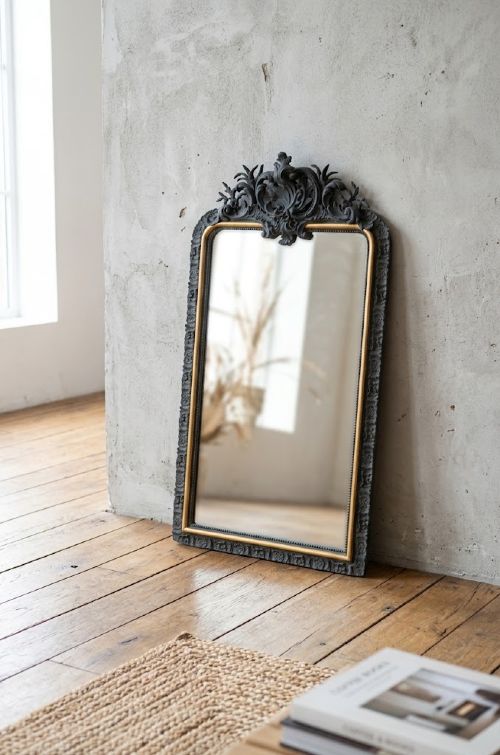
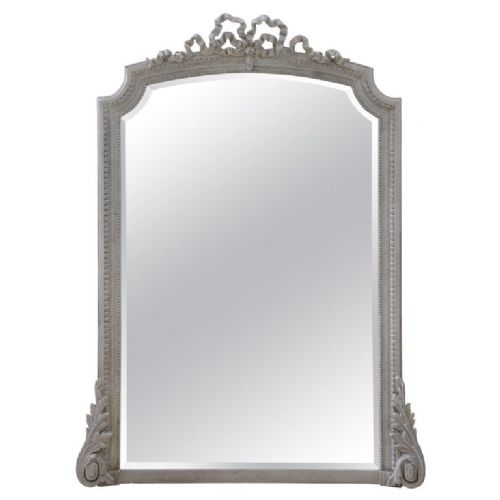


Grey Carved Wood Mirror
A grey carved wood mirror brings nineteenth-century architectural depth and painted texture into a modern interior.
Grey Carved Wood Mirror
When you search for a grey carved wood mirror, you are looking at nineteenth-century wall glass, overmantels, and console-associated pieces originating mostly from French and English workshops. These items combine wooden frames with layered paint finishes, often shaped at the top with arches or curves.
The version you are most likely to meet on this page is a large nineteenth-century French or English overmantel or wall mirror featuring carved wooden mouldings finished in painted grey surfaces. Many examples incorporate gesso applied over the wood substrate to build up decorative contours and framing details.
Originating predominantly from the Victorian era and mid-to-late nineteenth-century French provincial periods, these objects served both functional and decorative roles in period drawing rooms and parlours. Their proportions tend to be substantial, designed to reflect light across grand chimney breasts or interior walls.
What varies in quality
The depth and precision of the hand-carved woodwork dictate the initial quality tier, distinguishing deeply modelled frames from simpler, flatter mouldings. Crispness in the gesso relief work indicates superior craftsmanship during the preparation stage before painting.
The integrity of the original painted surface, including how layers of grey paint have aged and worn over time, contributes significantly to the character and desirability of the piece. Proportion, balance in the arched or shaped top, and the retention of original mirror glass further separate standard examples from finer specimens.
Materials recorded across current inventory include carved wood, gesso, painted surfaces, and traditional mirror glass.
The Grey Carved Wood Mirror Glossary
- Gesso
- A plaster-like mixture applied to wood frames to create a smooth surface for painting or to build up raised decorative details. It allows carvers to achieve sharper contours than wood alone permits.
- Overmantel Mirror
- A large mirror specifically proportioned to hang on the wall directly above a fireplace mantelpiece. These pieces frequently feature horizontal bias or tall arched tops designed to echo architectural chimney breasts.
- Trumeau Mirror
- A decorative wall mirror combined with a painted or carved panel within a single framed unit, originating from eighteenth and nineteenth-century interior architecture. They were traditionally built to fit flush into wall panelling.
- Cushion Mirror
- A frame profile where the outer moulding slopes gently inward toward the glass plate, creating a rounded, pillowed visual effect. This style was favoured for adding depth to mid-nineteenth-century wall hangings.
- Parcel-Gilt
- A decorative treatment where specific carved highlights on a painted frame are selectively gilded with thin sheets of gold leaf. This technique emphasises particular motifs against the dominant grey ground colour.
Grey Carved Wood Mirror: Frequently Asked Questions
Where should I hang a large overmantel mirror?
These pieces are traditionally positioned directly above a fireplace mantelpiece, where their generous proportions reflect room light and anchor the hearth visually.
Alternatively, hanging one opposite a window in a hallway or dining room maximises natural illumination and creates an illusion of extended architectural space.
How do I care for nineteenth-century painted mirror frames?
Dust the carved wooden frame gently with a dry, soft brush to protect fragile gesso and nineteenth-century paint layers from moisture damage.
Avoid commercial chemical sprays entirely, using only a slightly damp cloth for the glass plate while keeping liquids away from the painted timber edges.
What distinguishes an English overmantel from a French one?
English pieces from the nineteenth century often lean towards heavier, more robust architectural frames designed for Victorian interiors.
French equivalents from periods like Louis Philippe or provincial workshops typically emphasise softer curves, shaped crests, and lighter painted surfaces.
Are the mirror plates original to these frames?
Many surviving examples retain their original mercury or early silvered glass, which often displays charming foxing, mottling, and age spots.
Replacement glass does occur over a century of use, so examining the clarity and silvering degradation helps determine the age of the plate relative to the frame.