


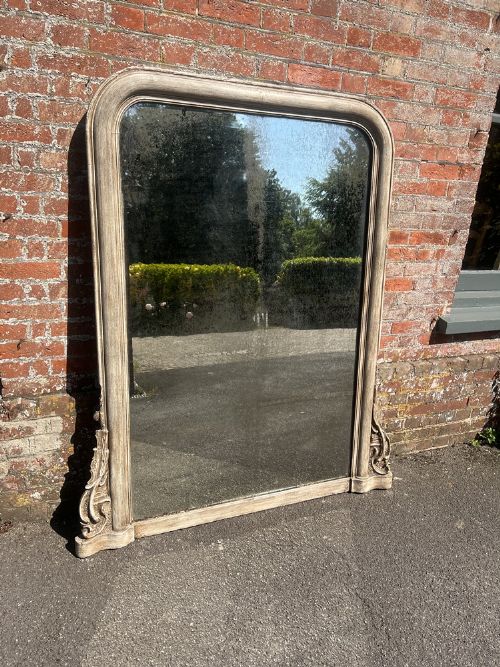


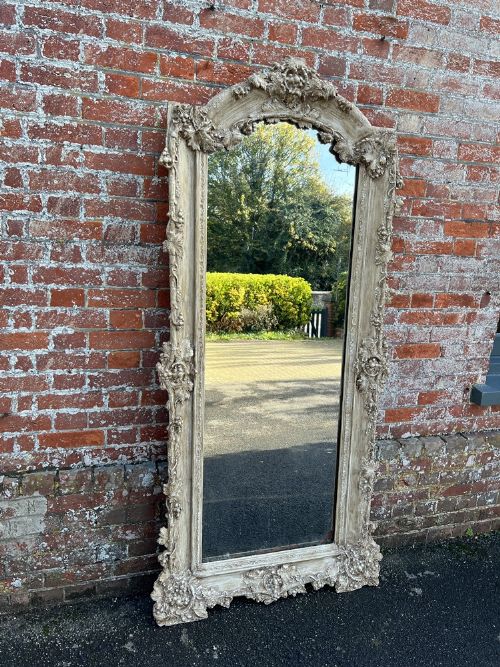


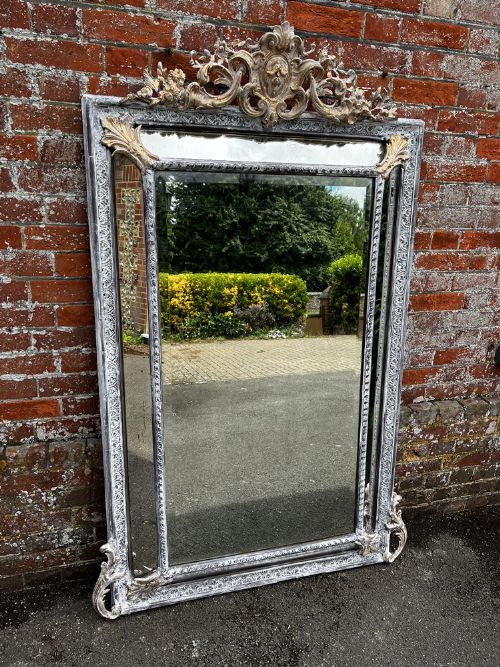


Grey Carved Gesso Mirror
A grey carved gesso mirror brings depth to a room through layered texture, combining sculpted wooden frames with moulded ornament.
Grey Carved Gesso Mirror
When you search for a grey carved gesso mirror, you encounter wall-mounted pieces designed to reflect light and anchor a room. The selections on this page span the mid-nineteenth century through the Edwardian era, showing both English and French origins.
The dominant forms are wall mirrors and large overmantels, often carrying arched, shaped, or rectangular tops. Examples such as cushion mirrors and bistro mirrors appear frequently alongside classical overmantel designs.
French pieces display influences from provincial, neoclassical, and chateau styles, while English pieces include circular gothic interpretations in oak and gesso. Each object combines a sturdy wooden carcass with built-up ornament ready to receive paint.
Materials and construction methods
The foundation relies on carved wood, frequently oak or pine, which forms the structural carcass of the frame. Artisans applied successive layers of gesso - a mixture of plaster and binder - directly onto the timber base to build up low-relief ornament and mouldings.
Once dry, the gesso layer was carved, smoothed, and painted grey, occasionally revealing underlying gold leaf or distress through wear. Heavy mirror glass, sometimes set with a cushion profile, completes the assembly.
Several mirrors carry the title bistro, nodding to nineteenth-century French cafés where these reflective surfaces doubled as light multipliers.
Distinctions in quality and execution
Quality rests in the crispness of the carved wood beneath the gesso and the depth of the moulded ornament itself. Pieces with deeply undercut foliage or cleanly articulated architectural details demonstrate superior workshop standards.
The handling of the painted surface also dictates character, where layered grey paint applied over historical gesso ages with an even distribution. Well-proportioned frames maintain structural integrity at the corners where the wooden mitres join.
The Grey Carved Gesso Mirror Glossary
- Gesso
- A plaster-based mixture applied to wood frames to create a smooth surface for painting or gilding. It allows for intricate, moulded relief work around the mirror border.
- Overmantel mirror
- A large horizontal mirror designed specifically to hang above a fireplace mantelpiece. These pieces often feature arched tops to draw the eye upward.
- Cushion mirror
- A frame style with a convex, sloping profile that pushes the mirror glass inward. This shape catches light from multiple angles across the room.
- Louis Philippe mirror
- A mid-nineteenth century French mirror style characterised by a rounded upper corners and simple, clean framing. It balances restraint with decorative presence.
- Gothic Revival
- A nineteenth-century architectural and decorative style drawing inspiration from medieval forms. In mirrors, this appears through pointed arches and geometric tracery.
Grey Carved Gesso Mirror: Frequently Asked Questions
Where should I hang an overmantel mirror?
These large mirrors sit naturally above a fireplace mantel to anchor the chimney breast and reflect light from surrounding windows. Their scale also suits placement above a low sideboard or console table in a dining room.
Ensure the wall fixings engage directly with structural studs or masonry to support the substantial combined weight of the wood, gesso, and glass.
How do I clean a painted gesso frame?
Dust the carved surface gently with a soft, dry brush to prevent dirt settling into the recesses of the gesso relief. Avoid using water, liquid cleaners, or solvents, which can soften the historic gesso composition.
Glass cleaner applied directly to a cloth rather than the mirror itself will protect the painted and carved borders from moisture damage.
What defines a French provincial mirror?
French provincial mirrors display simpler, more rustic interpretations of court styles, built for regional houses rather than Parisian salons. They typically feature softer carved details and straightforward painted finishes.
These pieces prioritise utility and domestic charm while retaining classical proportions and curved top silhouettes.
How can I tell a nineteenth-century mirror from a later piece?
Examine the construction of the wooden backing boards and the composition of the gesso layer for signs of age. Nineteenth-century frames often show hand-cut timber joints and micro-crazing in the painted surface.
The weight and subtle imperfections of the original mirror glass also help confirm the period of manufacture.