
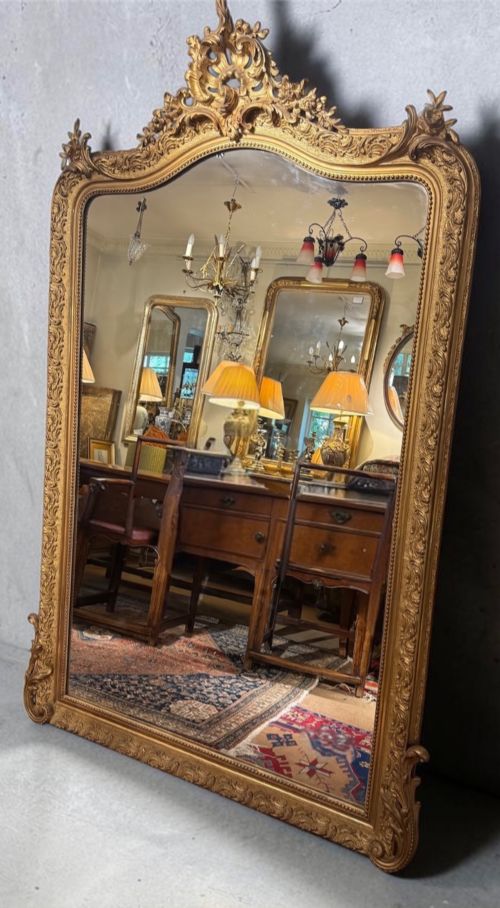


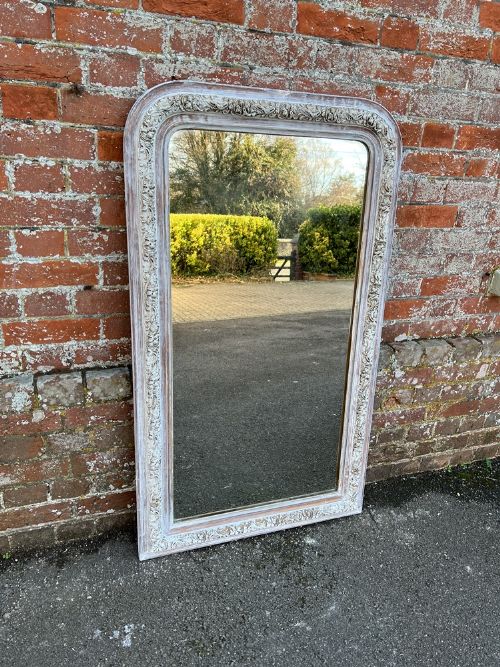

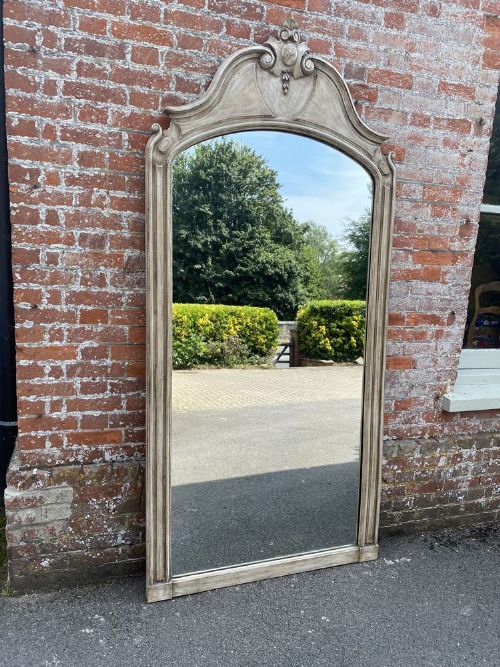


French Chateau Leaning Mirror
These french chateau leaning mirror pieces are grand architectural glasses that anchor a room, bringing height and reflected light to tall walls.
French Chateau Leaning Mirror
When you search for a french chateau leaning mirror, you are looking at substantial wall and overmantel glasses designed to rest upright against a room's boundary rather than hang centrally. The listings show these pieces emerging primarily from the nineteenth century, running from the eighteen-sixties through to the nineteen-tens.
The dominant forms you will meet on this page are large arched top and shaped top mirrors. They span French Rococo Revival, French Provincial, and Victorian aesthetics, often combining the grand scale of chateau furnishings with the practical utility of a dressing room or overmantel glass.
The origins lean heavily toward nineteenth-century France, alongside occasional English examples sharing the same monumental proportions. These are tall, commanding objects built to occupy significant wall space and draw the eye upward in high-ceilinged interiors.
What varies in quality
The depth and crispness of the carved wood and gesso ornamentation set individual pieces apart. Finer examples display deeply undercut carving and meticulously modelled plaster relief that retains its original definition.
The character of the surface finish dictates much of the visual hierarchy. Original gilt, silvered, and painted surfaces that show authentic age without crude intervention represent the upper tier of survivals.
The scale and proportion of the frame relative to the glass plate determine the architectural presence. Heavier, more substantial timber frames with integrated arched or shaped tops command greater visual authority in a room.
Some of these grand glasses still wear their original silver and gilt double life like a well-travelled coat.
The French Chateau Leaning Mirror Glossary
- Gesso
- A plaster-based mixture applied to wood frames to create a smooth surface for carving or gilding. It allows for intricate relief work that holds paint and leaf effectively.
- Giltwood
- Timber coated with gold leaf or a gold-coloured metallic finish. It provides a luminous reflective quality suited to formal nineteenth-century interiors.
- Overmantel
- A large mirror or painting designed specifically to hang or rest on the wall immediately above a fireplace mantelpiece. These pieces frequently match the grand scale of tall chateau rooms.
- Pier glass
- A tall, narrow mirror designed to fit the wall space between two windows. They often stand above small console tables in traditional drawing rooms.
- Cheval glass
- A freestanding mirror suspended on a frame that allows it to tilt. These tall dressing room glasses provide a full-length reflection.
French Chateau Leaning Mirror: Frequently Asked Questions
How do I style a leaning mirror?
Place the mirror directly on the floor against a sturdy wall, ensuring it rests at a safe angle. Allow the heavy frame to anchor the surrounding furniture without competing with smaller wall hangings.
Keep the floor space immediately in front clear to let the glass reflect natural light across the room. Pair the piece with simple low furniture to maintain the focus on its monumental scale.
Are these mirrors original to the nineteenth century?
The pieces recorded here date from the nineteenth and early twentieth centuries, capturing periods such as eighteen-sixty and eighteen-seventy. Their construction methods, materials like gesso and carved wood, and surface finishes reflect the manufacturing practices of those decades.
Examine the construction of the wooden backboards and the wear on the glass plate to understand its age. Original surfaces display consistent patination developed over generations of use.
What is the difference between an overmantel and a wall mirror?
Overmantel mirrors are traditionally proportioned to sit above a fireplace, often featuring wide horizontal or arched formats designed for that specific architectural location. General wall mirrors serve broader placement options across different rooms and wall spaces.
Both forms utilise carved wood and gesso construction, but their original intended placement dictates their dimensions and framing emphasis.
How do I care for giltwood and painted frames?
Dust the carved wood and gesso surfaces gently with a soft, dry brush to prevent accumulation in the intricate relief work. Avoid using chemical cleaners or excess moisture on original gilt or painted finishes.
Protect the glass with standard glass cleaner applied to a cloth rather than sprayed directly, preventing liquid from seeping behind the frame edges.