




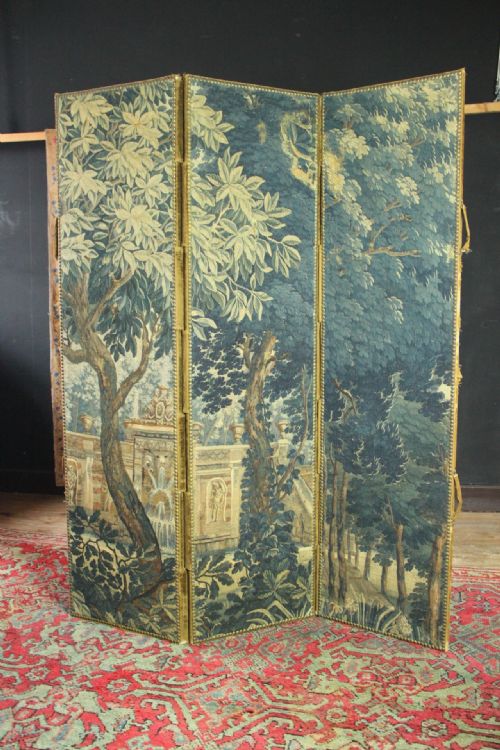


Green Verdure Tapestry
A green verdure tapestry brings quiet woodland scenes into a room, offering rich foliage and pastoral charm.
Green Verdure Tapestry
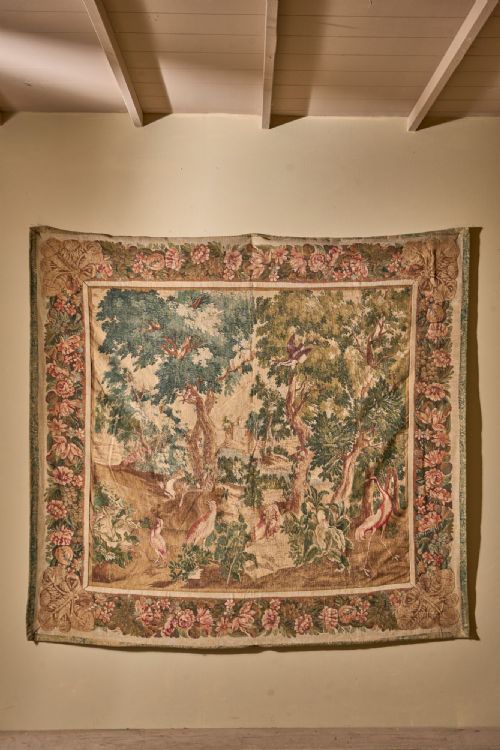
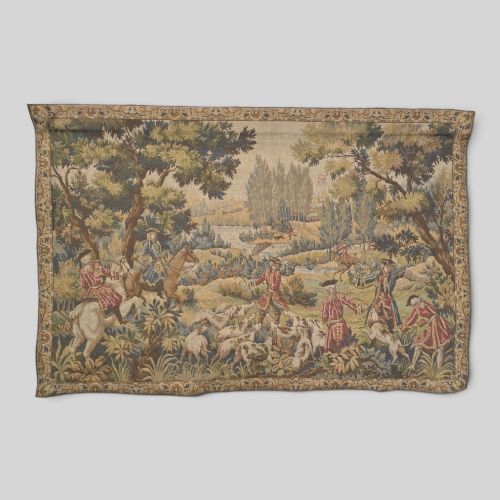
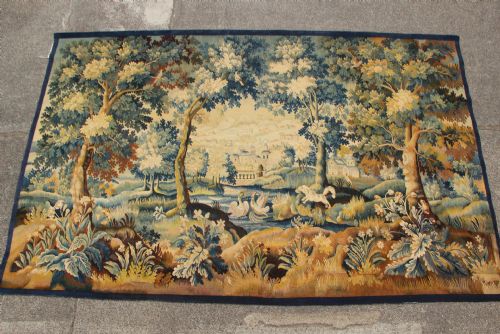
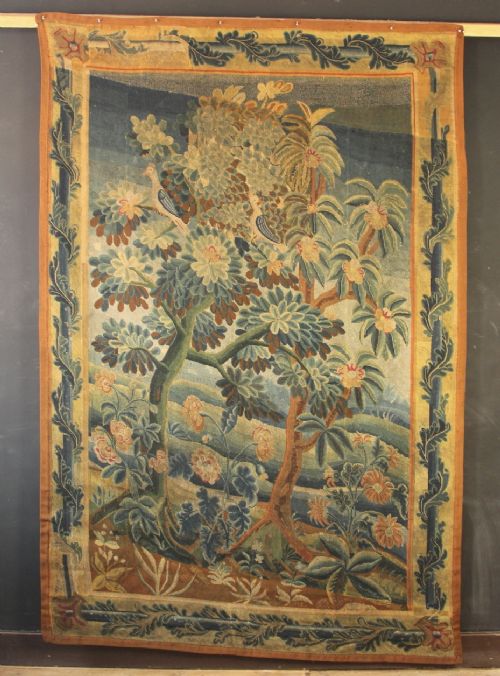
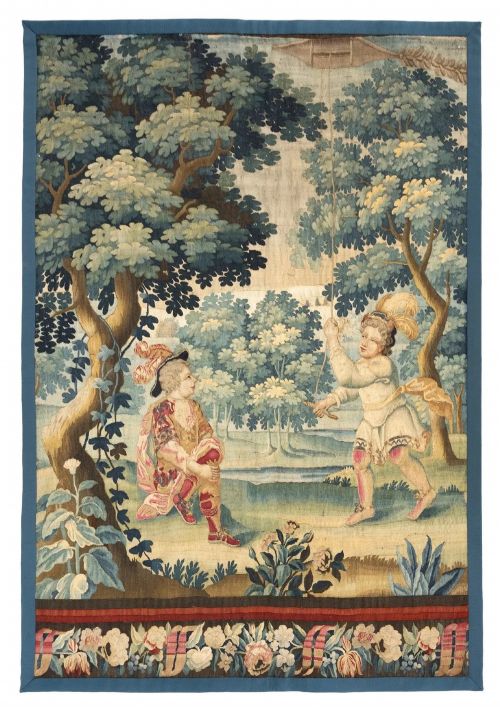
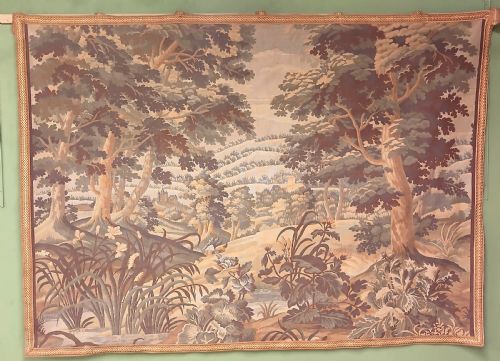
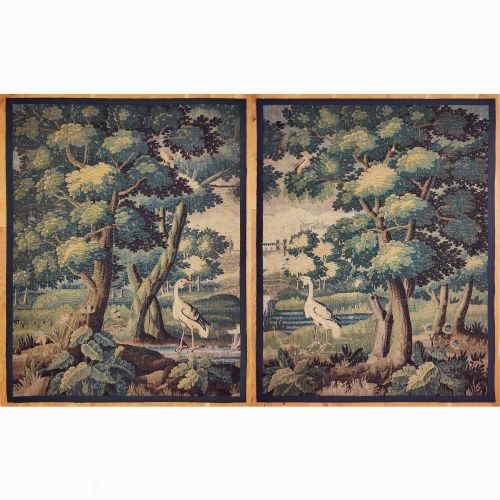
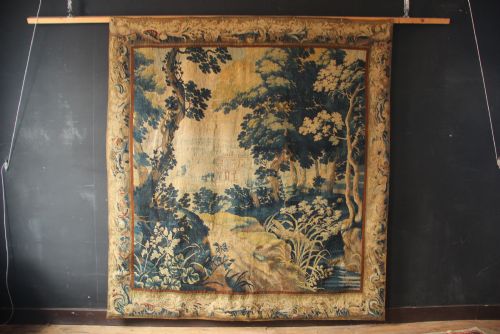
A green verdure tapestry presents woven landscapes dominated by leafy foliage, trees, and often distant chateaux or birds. When searching for a green verdure tapestry, buyers encounter large wall hangings, framed panels, long narrow panels, and occasionally upholstered armchairs or folding screens.
The pieces on this page span from the seventeenth century through to the early twentieth century, originating primarily from Flemish and French workshops including Aubusson and Audenarde. Seventeenth-century and eighteenth-century examples sit alongside nineteenth-century revivals and later works.
How they were made
These textiles rely on warp and weft construction, employing wool and silk threads, sometimes supported by cotton and linen. Weavers built the leafy compositions by hand on looms, manipulating coloured yarns to create depth in the foliage and landscape elements.
Wooden stretchers, walnut frames, and occasionally brass elements provide structural support for wall panels, screens, and furniture upholstery.
Listings feature pieces spanning from the 17th century through the 19th century up to 1920.
What varies in quality
The nuance of the colour palette and the subtlety of the botanical detail separate finer examples from simpler work. Gradations in the green tones, depicting leaves, trees, and undergrowth, show the skill of the weaver and the quality of the original dyes.
Complexity of composition also dictates quality, with elaborate woodland scenes containing game parks or architecture demonstrating greater artistry than repetitive foliage patterns.
The Green Verdure Tapestry Glossary
- Verdure tapestry
- A textile design featuring a landscape dominated by plants, trees, and foliage. These scenes often exclude human figures to focus entirely on lush woodland scenery.
- Aubusson
- A town in France renowned for its tapestry weaving traditions. Pieces from this centre often display lighter, pastoral French aesthetics.
- Flemish
- Pertaining to Flanders, a historical region famous for early weaving centres like Audenarde. Flemish works from the seventeenth and eighteenth centuries typically display deep, dramatic woodland tones.
- Panel
- A narrower or sectioned piece of tapestry. Panels were frequently produced as sets to line the walls of specific rooms.
Green Verdure Tapestry: Frequently Asked Questions
How do I hang a large tapestry?
Large wall hangings require even distribution of weight across the upper edge. A concealed wooden batten or a sleeve sewn to the reverse allows the piece to hang flat without placing undue strain on the historic fibres.
Direct sunlight fades the wool and silk yarns over time, so placement away from south-facing windows preserves the rich green tones of the foliage.
Where were these tapestries made?
Production centres concentrate heavily in Flanders and France. Towns such as Aubusson and Audenarde output many of the surviving wall hangings and panels seen from the seventeenth and eighteenth centuries.
Later nineteenth-century revivals continued these regional aesthetic traditions, often adopting earlier French baroque or chateau styles.
How do I clean a antique tapestry?
Professional textile conservators should handle any major cleaning or restoration work. Gentle surface dust removal using a soft brush with low suction through a mesh screen is suitable for routine maintenance.
Avoid vigorous rubbing, washing with water, or chemical solvents, as these actions destroy fragile historic threads and alter the original dyes.
What is the difference between Flemish and French styles?
Flemish verdure pieces from the seventeenth and eighteenth centuries typically feature dense, dark foliage and heavy, dramatic woodland compositions. They often evoke a sense of deep forest seclusion.
French equivalents, particularly those associated with Aubusson or later pastoral designs, tend towards lighter palettes, open vistas, and decorative elements suited to chateau interiors.